
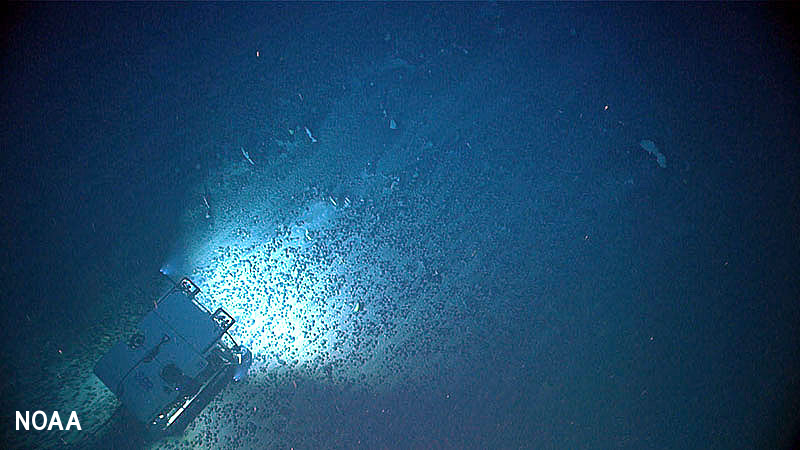
Scientists have discovered that the metal-rich lumps targeted by deep-sea miners are home to communities of tiny animals not found elsewhere on the ocean floor
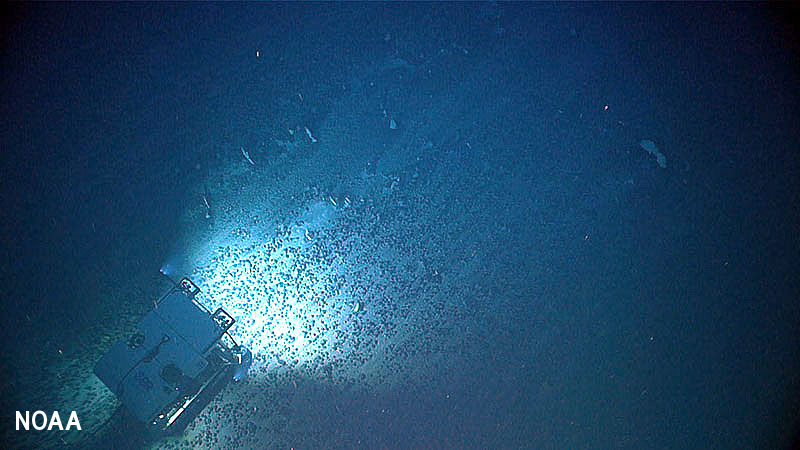
Scientists have discovered that the metal-rich lumps targeted by deep-sea miners are home to communities of tiny animals not found elsewhere on the ocean floor, raising fresh concerns about plans to harvest them.
The study, published in Scientific Reports, found that cracks and pores inside polymetallic nodules shelter creatures smaller than a millimetre. Researchers from the University of Bremen’s MARUM centre and the Royal Netherlands Institute for Sea Research examined 244 nodules from the Clarion-Clipperton Zone in the Pacific. They counted 4,139 animals, an average of 17 per nodule, with one holding 245.
Dr Coral Diaz-Recio Lorenzo said, “The crevices in the polymetallic nodules function as small shelters and provide a home to animals that we do not encounter in the soft sediment of the seafloor.”
The nodules lie 4,000 to 6,000 metres down and grow only a few millimetres every million years.
Professor Sabine Gollner, who was part of the study’s international research team, has said that commercial mining could cause irreversible loss of unique, undescribed biodiversity. It remains unclear whether the loss would lead to global extinctions, and the lead author, Dr Tanja Stratmann, is on a new expedition to the zone to find out.
The findings arrive as the deep-sea mining industry appears to edge closer to production. The US subsidiary of the Metals Company (TMC) has applied for an exploration licence and commercial recovery permit, and the National Oceanic and Atmospheric Administration (NOAA) found the application in full compliance with the information requirements. The company expects a permit before the end of the first quarter of 2027. That is TMC’s own forecast, and NOAA must still finalise an environmental impact statement.
The route bypasses the International Seabed Authority (ISA), the UN-backed regulator that has been slow to establish rules for commercial recovery. The ISA delayed those rules again in July. Washington has backed the move, with a new NOAA rule following Donald Trump’s executive order, aimed at countering China’s dominance in critical metals