
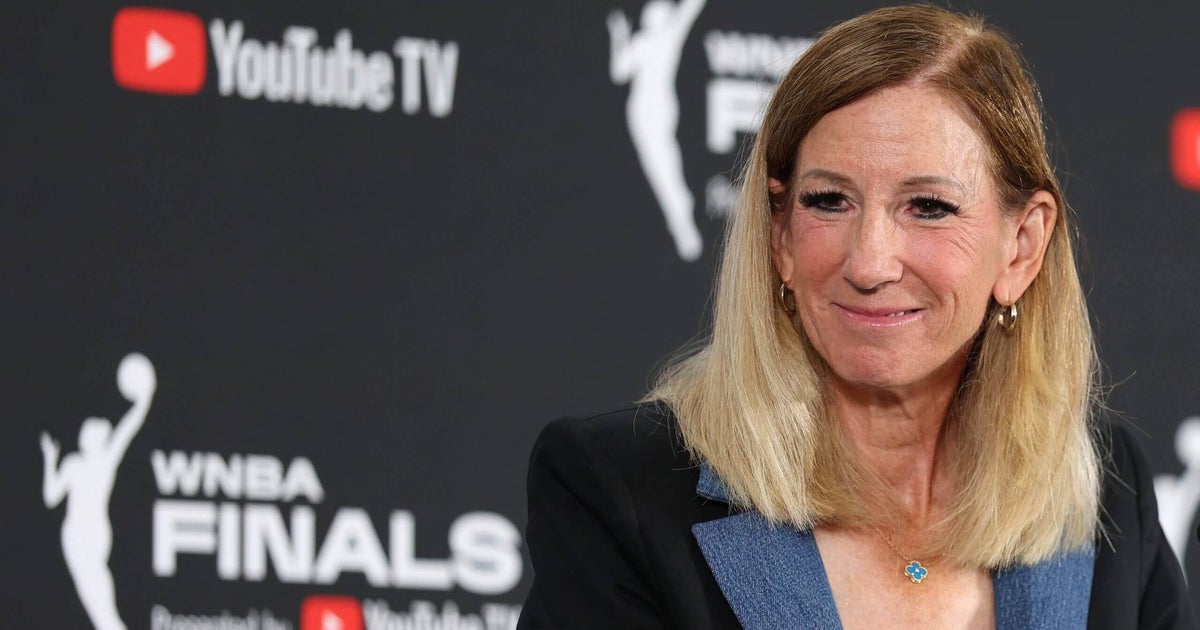
NEW YORK — Outgoing WNBA commissioner Cathy Engelbert addressed the league’s board of governors for the final time Monday.
The WNBA is thriving in a way it never has under any previous leader. But as Engelbert makes her exit, retiring by the end of the calendar year after her seven-year tenure, one of her decisions remains a top talking point among the league’s biggest stakeholders: the capital raise she led in 2022 resulting in 16 percent of the league being sold for $75 million.
Engelbert has been looking at ways for the WNBA to regain control of that stake as one of her final moves as commissioner, according to multiple league sources familiar with the matter who spoke on condition of anonymity because they were not permitted to discuss it publicly. The league’s capital structure was discussed at length during Monday’s meeting, but nothing was brought to a vote.
“We continue to talk about our capital structure and ways to take a look at it going forward in the future,” Engelbert said.
WNBA equity is broken down into three buckets: 42 percent of the league is owned by the NBA, another 42 percent is owned by WNBA team owners and the remaining 16 percent is controlled by a group of investors that bought into the league in 2022 for $75 million. This group includes former WNBA and NBA players like Swin Cash and Pau Gasol, current NBA and WNBA owners like Herb Simon, Ted Leonsis and Clara Wu Tsai and other prominent names like Condoleezza Rice and corporations like Nike.
The raise has been heavily scrutinized in the nearly five years since it was made because of the way it undervalued the league and convoluted its ownership structure.
NBA commissioner Adam Silver said the issue is “more complicated” than the simple question of whether or not it’s important for the WNBA to regain control of the 16 percent stake sold in 2022.
“The issue went more to the way that the percentage is structured,” Silver said. “There’s a preference based on the way the financial instrument was created. That creates some misalignment of incentives right now in the league. Most of the conversation wasn’t around the ownership of that percent, but aligning incentives for all the stakeholders and the league.”
Engelbert is the first person to serve the WNBA under the title of commissioner. All of her predecessors were league presidents. The title, Engelbert said on Monday, came with “full autonomy.” However, Silver’s involvement in business decisions has been on display throughout her tenure.
The same can be said of the 16 percent equity sale which Engelbert spearheaded, but ultimately it could have been vetoed by Silver. In September, after Engelbert’s retirement was announced, Silver shared some of his expectations for the new commissioner, including unifying players and ownership.
The search for a new commissioner was discussed during Monday’s meeting, but like the stake sale, nothing was brought to a vote. The league is currently in the process of screening candidates, which Engelbert said is “probably more than 12” at the current stage. Some of those candidates have had multiple discussions with the league, Engelbert said. She has not interviewed candidates yet, but said she will once the search is narrowed to a shorter list. Candidates will also be interviewed by a subset of the board of governors, ensuring their input on the decision.
Minnesota Lynx and Timberwolves co-owner Alex Rodriguez is not on that committee but said owners want to see someone who has experience.
“A very good leader,” said Rodriguez, the former New York Yankees All-Star third baseman. “Someone who loves basketball and the players. As a former player, I had a great relationship with (MLB commissioner) Rob Manfred, and I still do. That’s really important.”
Silver declined to share which owners will serve on the interview committee but said owners who aren’t directly involved will receive regular updates.
In total, Monday’s meeting lasted more than seven hours but included “very few votes,” Engelbert said.
It was the first time 18 teams were represented in the meeting, with the expansion Cleveland Sirens and the unnamed Detroit and Philadelphia teams joining the fold. Silver joined in the afternoon for roughly an hour.
Governors began arriving at roughly 10 a.m. ET, and the first to leave started trickling out around 5:30 p.m. Unlike the NBA’s board of governors meeting, which spans multiple days, the WNBA’s is a one-day event following dates set for league meetings with the competition committee (coaches and general managers) and the team presidents’ meetings.
Engelbert said one item was reviewed that came out of last week’s competition committee meeting. She declined to provide specifics but said it pertained to out-of-bounds replays. The competition committee will continue to meet in the offseason to discuss points of emphasis for the 2027 season.
Among those items are potential changes to draft eligibility, training camps held outside of team markets, draft pick protections and changes to trade-eligible draft picks. Engelbert said decisions pertaining to points of emphasis for the upcoming season will likely be decided in April during meetings that are conducted close to the Final Four.