
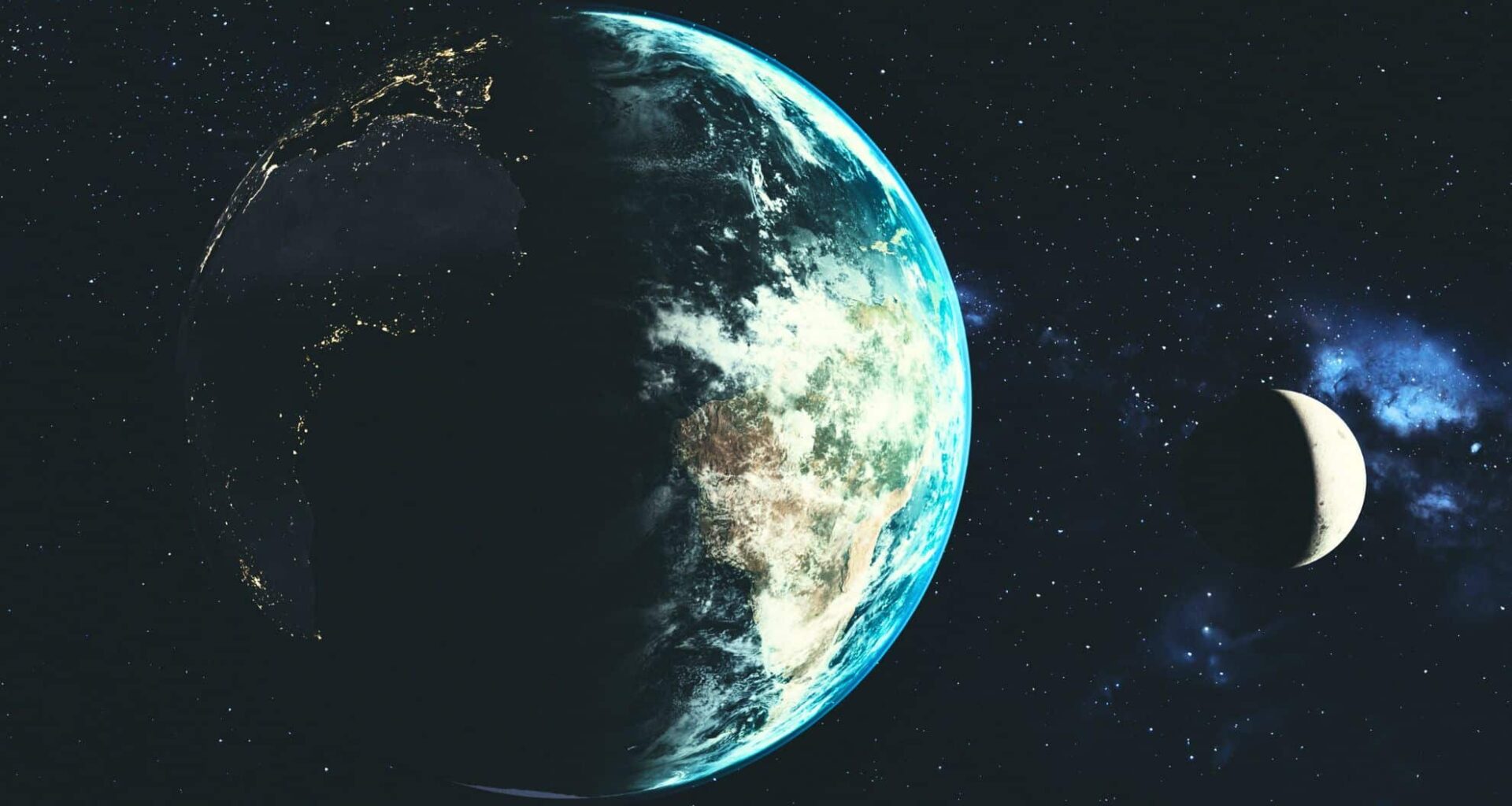
Something unusual is happening with our planet’s movement. For the past few years, Earth has been spinning just a little bit faster. This shift in its rotation is subtle—so subtle, in fact, that we don’t feel it in our daily lives. Yet, it has been enough to make headlines among scientists, especially as the year’s shortest day approaches. On August 5, 2025, Earth’s rotation will be faster than usual, making that day the shortest of the year.
A Shifting Spin
In recent years, Earth has been clocking in progressively shorter days. According to predictions, 2025 will see several such moments, with July 9, July 22, and August 5 marking some of the shortest days on record. The expected shortening is by mere milliseconds—around 1.3 milliseconds to 1.5 milliseconds—too small to notice.
However, for scientists who study Earth’s rotation, this has sparked serious interest. The International Earth Rotation and Reference Systems Service (IERS) has even suggested that a “negative second” might be added to global clocks by 2029 to keep time synchronized with the planet’s natural movement.
New estimates released on July 10 confirm that the shortest days of 2025 are expected to fall around July 9, July 22, and August 5. The latest figures suggest that the shortest day of the year overall may in fact turn out to be July 10, but this is still to be confirmed. The figures are based on precise observations and models, with systematic corrections to ensure accuracy.
The acceleration in Earth’s spin was first noticed in 2020, with shorter days recorded every year since. What’s intriguing is how unpredictable the phenomenon has been. Earth’s rotation, once thought to be relatively stable, is now behaving erratically. For reference, the shortest recorded day so far occurred on July 5, 2024, when Earth completed its rotation 1.66 milliseconds faster than usual.
The Moon’s Role in the Speeding Up
One factor that plays a significant role in this acceleration is the Moon. The Earth-Moon system is not static, and variations in the Moon’s orbit are known to influence the speed of Earth’s spin. When the Moon is positioned farther from Earth’s equator, it can cause our planet to spin a little faster. This phenomenon has been noted during times when the Moon reaches its maximum distance from Earth’s equator—such as on the predicted dates for 2025.
However, it’s not just the Moon. Other factors, such as the movement of Earth’s core and changes in the distribution of water across the planet, are believed to be influencing the planet’s spin. The melting of polar ice, volcanic activity, and even the shifting of Earth’s oceans are all part of the complex equation that might explain the speed-up.
A Glimpse into Earth’s Past
Interestingly, this isn’t the first time Earth has experienced changes in its rotation. Millions of years ago, during the time of the dinosaurs, the planet’s days were much shorter. Back then, Earth’s day lasted only about 23 hours.
This suggests that our planet’s rotational speed has always been subject to change, influenced by numerous dynamic factors, both internal and external. Today, we find ourselves in a period of acceleration, though whether this will continue remains uncertain.
The Implications for Timekeeping
For those in the field of timekeeping, this change could lead to significant adjustments. Atomic clocks, which are crucial for tracking Earth’s rotation with precision, have already begun to record these small discrepancies. If the planet continues to spin faster, adjustments might be required to ensure that our clocks remain accurate. This could mean adding or subtracting seconds to keep time aligned with Earth’s movements.
The addition of a “negative second” would be a rare, but necessary step to account for the discrepancy. In short, this acceleration is a reminder of how finely tuned the relationship between Earth and its rotation is. While these changes don’t impact our daily lives in a noticeable way, they do have real consequences for timekeeping systems, and for our understanding of Earth’s place in the universe.