
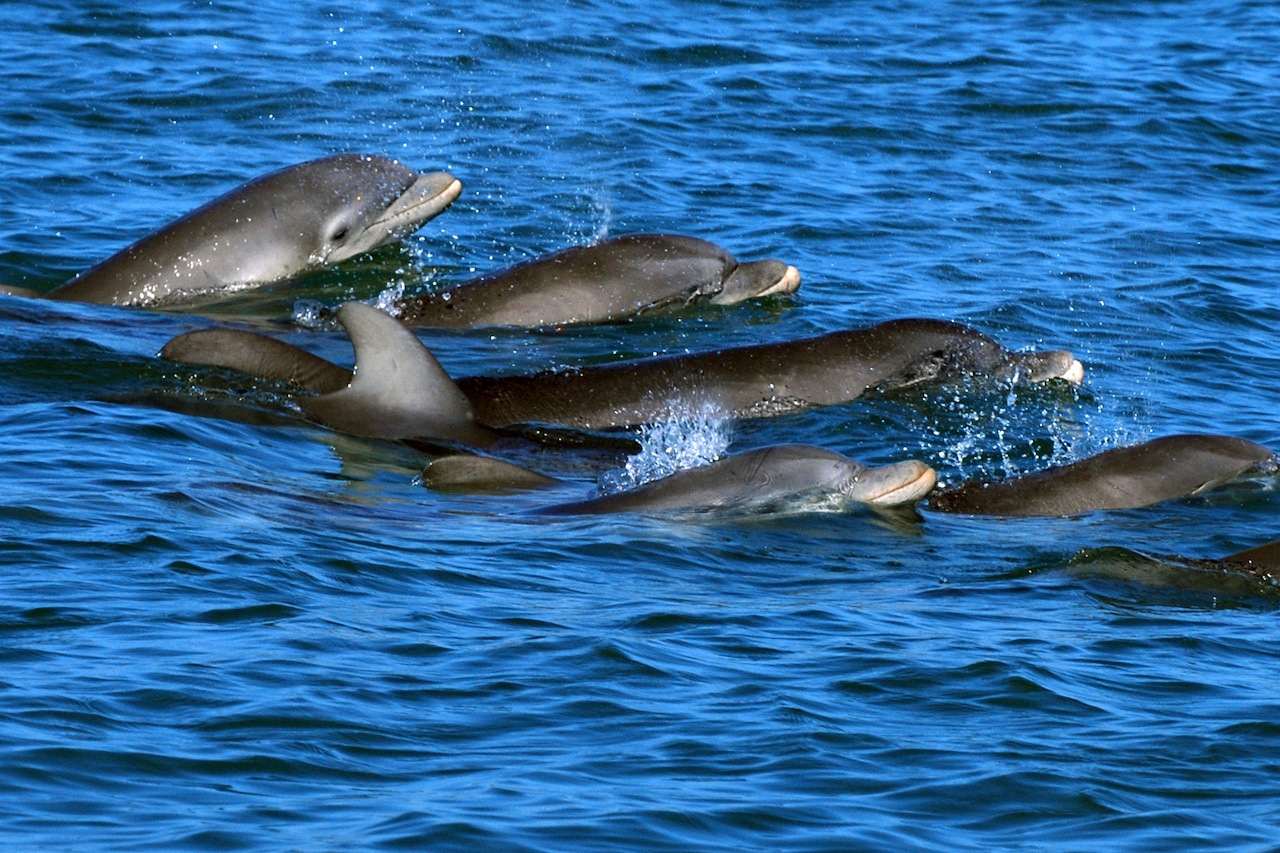
A bottlenose dolphin found on Deal’s beach Sunday evening had numerous shark bites all over its body and was euthanized, the Marine Mammal Stranding Center said Tuesday.
A beachgoer reported the dolphin to police at about 6:15 p.m. and an officer arrived at the Deal Casino beach to find a good Samaritan trying to save the dolphin by pouring water on it, Deal police Capt. William Hulse said.
The town’s fire and EMS departments responded to assist the beach lifeguards in protecting the dolphin until the stranding center arrived, Hulse said. A crowd had formed and quite a number of beachgoers saw the sad sight, as the dolphin had visible injures, he said.
The first responders helped carry the dolphin away, Hulse said.
The stranding center wrote in their reporting the dolphin, a subadult male, had good body condition and no obvious illness, but was lethargic and not very responsive. It had a mostly healed scar behind its dorsal fin and numerous shark bites, “several of which were quite severe.”
Bottlenose dolphins live for about 40 years in the wild, and subadults are anywhere from two to 12 years old.
The Brigantine-based stranding center, now in its 50th year, keeps statistics on all its interactions. They have responded to 31 dolphin strandings in 2025, 18 of them bottlenose dolphins.
None survived. They were either dead when the stranding center arrived, died before they arrived or had to be euthanized, the center statistics show.
In June, the stranding center worked for days to corral a dolphin that was swimming in a creek of the Delaware Bay in Cumberland County. That dolphin died shortly after the center and a team of rescuers captured the dolphin in an attempt to save its life.
The MMSC, as it’s known, has come into contact with 6,370 mammals since 1975, and 110 so far this year.
The bottlenose dolphin ranks second in the species they have assisted the most, at 816, after loggerhead sea turtles, at 1,519. Harbor seals are next, at 644.
The center operates a rehabilitation hospital, and currently has five seal “patients,” receiving treatment before they are released back into the ocean. The organization posts patient updates and footage of their return to the waters on their YouTube page.
In May, they released four seals that were rescued from New Jersey beaches.
Thank you for relying on us to provide the local news you can trust. Please consider supporting NJ.com with a voluntary subscription.
Kevin Shea may be reached at kshea@njadvancemedia.com
If you purchase a product or register for an account through a link on our site, we may receive compensation. By using this site, you consent to our User Agreement and agree that your clicks, interactions, and personal information may be collected, recorded, and/or stored by us and social media and other third-party partners in accordance with our Privacy Policy.