
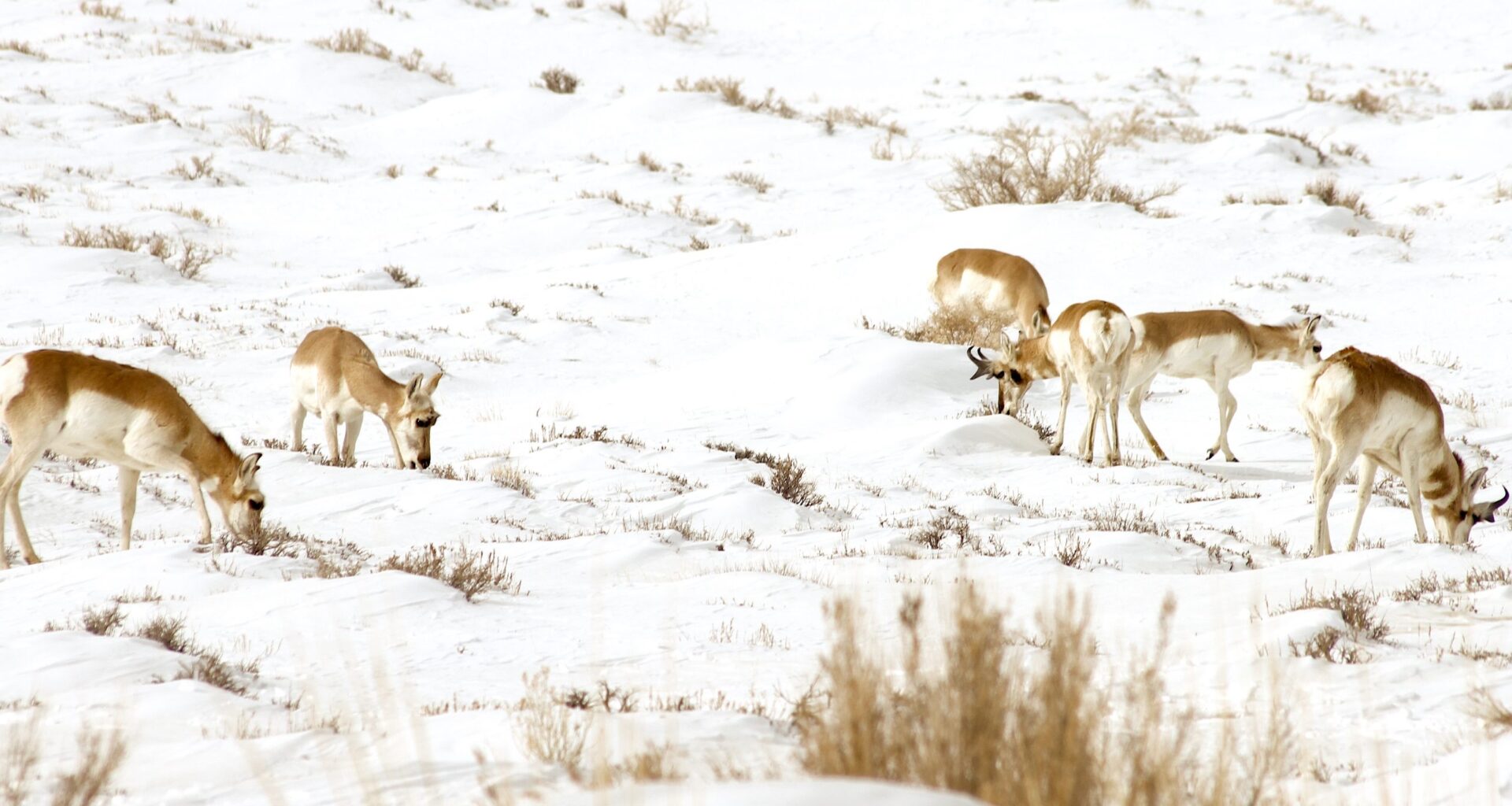
Proposed pronghorn migration corridor protections flowing by Jim Magagna’s west slope Wind River Range ranch didn’t look right to the longtime livestock industry lobbyist.
Two portions of the Sublette Pronghorn Migration Corridor — the “Red Desert” and “East of Farson” segments — were “basically separate,” “much shorter,” lacked bottlenecks and “don’t have any of the same risks” as the other eight segments traversed by the long-studied Green River Basin pronghorn herd, Magagna told WyoFile.
“If they need a formal designation — which I tend to think they probably don’t — that ought to be a separate process,” said Magagna, executive vice president of the Wyoming Stock Growers Association.
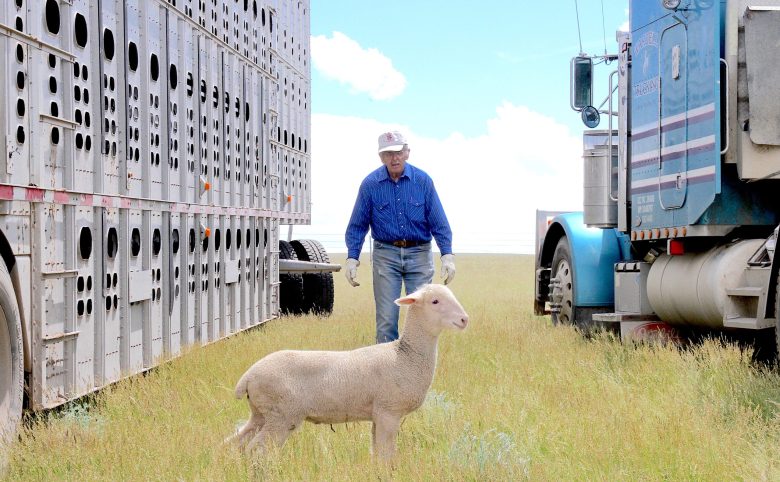 Jim Magagna guides a separated lamb back to its flock at his southwestern Wind River Range ranch in July 2023. (Mike Koshmrl/WyoFile)
In public meetings, a formal comment letter and in conversations with “various people at the top,” Magagna let it be known that he wanted the 270,000-plus acres dropped and not designated as a migration path. That’s about one-tenth of the proposed corridor’s overall acreage. The request, he said, was not based on the migration paths going through his ranch and federal land grazing allotments.
On Tuesday, the public learned that Magagna is in line to get his wish.
The Game and Fish Department outlined its current proposal ahead of next week’s Wyoming Game and Fish Commission vote on whether to advance the state’s first protected pronghorn corridor. If approved, the commission’s recommendation would then go to Gov. Mark Gordon — the next step in a politically fraught process that’s been going on for six years and counting.
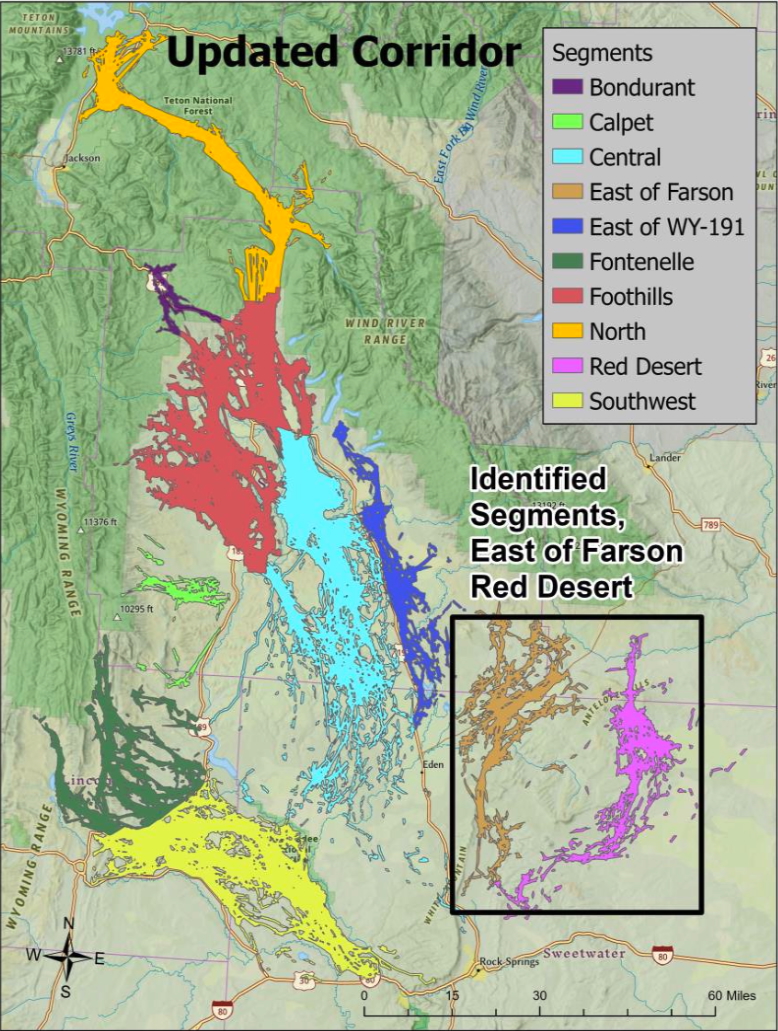 Wyoming Game and Fish Department officials are no longer recommending the designation of two southeastern segments formerly considered part of the Sublette Pronghorn Herd’s migration corridor, illustrated in this map. The segments would be “identified,” but not “designated” and not afforded policy protections if Game and Fish commissioners agree to the change. (WGFD)
One document shows that the state wildlife agency no longer wants to designate the “Red Desert” and “East of Farson” segments as part of the migration corridor. The recommendation doesn’t mention Magagna’s input, instead citing a lack of “high-use” habitat in the area, no bottlenecks and “limited threat levels” as the rationale for dropping two of the pronghorn corridor’s ten segments.
Game and Fish officials couldn’t be reached Tuesday or Wednesday morning for an interview.
Rich Guenzel, a retired Game and Fish biologist who personally endowed a pronghorn-specific conservation fund, sees the move as detrimental to pronghorn.
“My recommendation to the commission is that they go with the biology,” he told WyoFile. “This is your opportunity to get the best [outcome] for wildlife. We shouldn’t water it down on our own, we should take our best shot.”
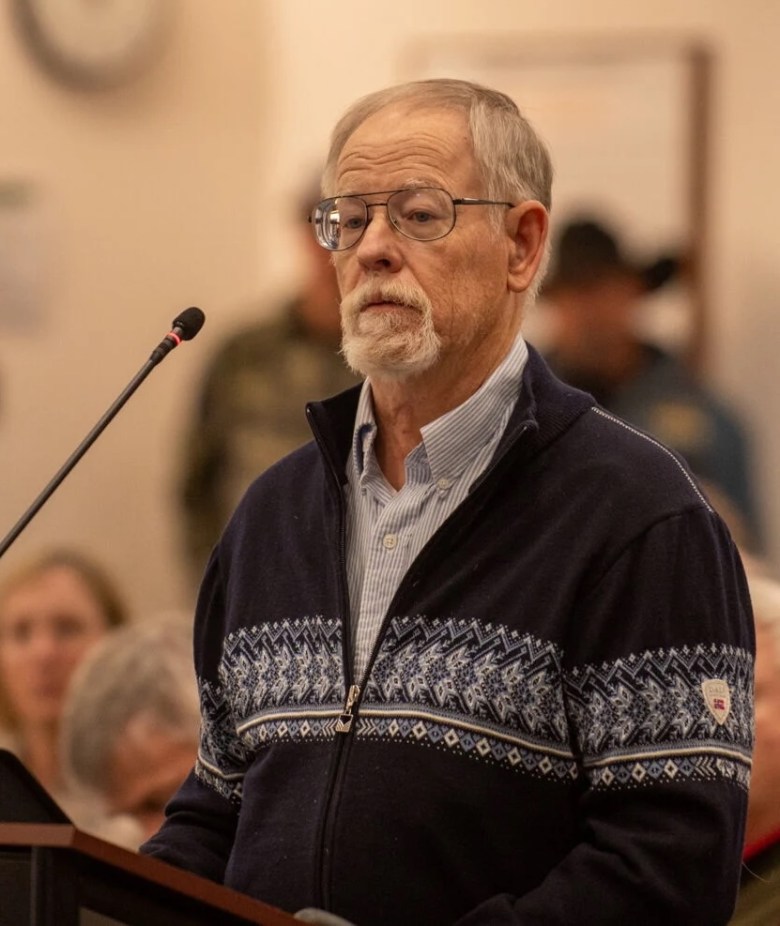 Rich Guenzel, a former wildlife biologist with the Wyoming Game and Fish Department, listens as Game and Fish commissioners ask him questions in 2024. (Billy Arnold/Jackson Hole News&Guide)
Guenzel, who’s a member of the Wyoming Outdoor Hall of Fame, pointed out an “area working group,” which will include industry representatives, has yet to convene and will have an opportunity to tinker with the migration protection proposal stemming from the state agency’s science-based assessment. Then the actual decision will be made by Gov. Mark Gordon or a future governor, he said.
“If it’s going to be a political decision,” Guenzel said, “let the politicians own it.”
The Wyoming Game and Fish Commission has shown some appetite for shooting down politically influenced wildlife management proposals from its department. In July, the governor-appointed body reversed planned hikes in hunting quotas for mountain lions in the Laramie Mountains.
“If it’s going to be a political decision, let the politicians own it.”
rich guenzel
At least one conservation group that has tracked the sluggish implementation of Wyoming’s migration policy voiced similar concerns to Guenzel. Greater Yellowstone Coalition staffer Jared Baecker said he supports Game and Fish’s earlier inclusion of all 10 migration segments, which used data from over 600 GPS-collared pronghorn tracked over two decades.
“The Wyoming Game and Fish Department’s data has demonstrated the importance of the East Farson and Red Desert segments to pronghorn survival during the winter of 2022/2023,” Baecker wrote in an email. “Excluding these areas from designation goes against the North American model of including the best-available science in wildlife management.”
The Game and Fish commission will also consider authorizing some additions to the proposed pronghorn corridor. The tacked-on areas stem from 54 animals fitted with GPS collars between fall 2022 and this spring, and include 5,900 acres of “high use” corridor, 29,000 acres of “medium use” corridor and 119,000 acres of “low use” habitat.
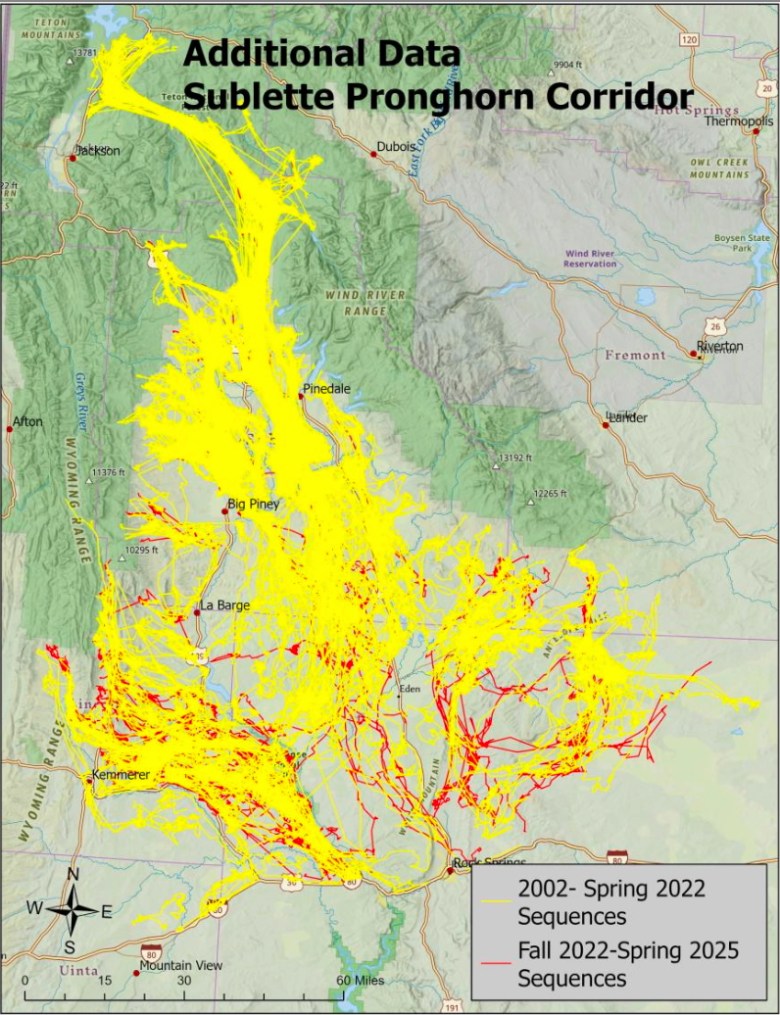 Continued monitoring of the Sublette Pronghorn Herd has tentatively added tens of thousands of acres of habitat to the proposed migration corridor. New acreage is in red. (WGFD)
The added habitat is a drop in the bucket relative to the expanse of the overall migration corridor, which was sized up at 2.6 million acres — larger than Yellowstone National Park — prior to the planned removal of the “Red Desert” and “East of Farson” segments, which would lop off the 270,000-plus acres.
Although the corridor covers a lot of ground, only its bottlenecks, totalling 27,375 acres, would be subject to rigid policies governing surface-disturbing activities. And nearly half of the bottleneck acreage would be exempt from protections because it occurs on private land, which isn’t subject to restrictions imposed by Wyoming’s migration policy.
Wyoming’s migration policy has been ballyhooed and called one of the first and most robust forays into the conservation of wildlife migration. But the current policy — in 2019, due to controversy, it was updated and codified as an executive order under Gordon — has still never been used to designate a corridor in a state where dozens have been scientifically mapped. The Sublette Pronghorn Herd’s migration is the first attempt.
At 8:30 a.m. Sept. 10 in Lander, the Game and Commission is scheduled to vote on whether Gordon or a future governor should formally designate the state’s first migration corridor under the new policy.