
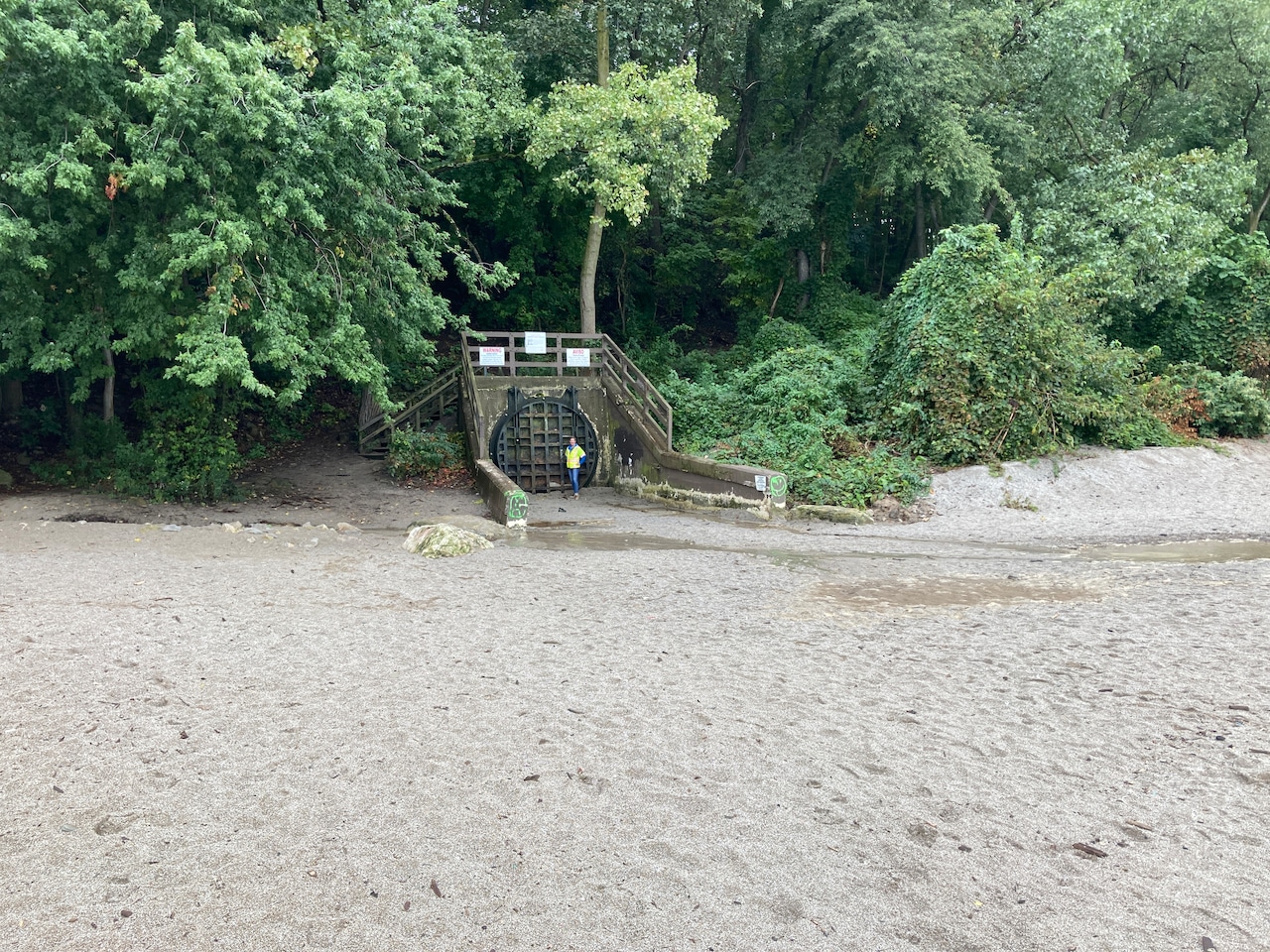
CLEVELAND, Ohio — Wading into the water at Edgewater Beach, Cleveland’s popular swimming spot west of downtown, has been discouraged several times this summer.
Three separate warnings came after a sewer outfall at the western edge of the beach discharged onto the sand, dumping a mixture of stormwater and raw waste into Lake Erie.
After each discharge, E. coli levels soared.
On July 24, for example, the outfall emptied for 25 minutes, pushing bacteria counts in the water off the beach from just 4 colony-forming units (CFUs) per 100 milliliters of water to 4,840 the next day — far above safe levels for swimming.
Animal droppings and runoff contribute to bacteria levels, so they can’t all be blamed on the sewage discharge. But district officials believe it’s time for the outfall, which dates back to the 1880s, to be eliminated once and for all.
“It would be something good for Northeast Ohio,” said Darnell Brown, former Cleveland chief operating officer and current chairman of the sewer district’s board.
At a recent board meeting, a district engineer outlined a preliminary $20 million plan that might fix the problem by building a 1,400-foot tunnel, 10-to-12 feet in diameter, beneath the park.
The tunnel would reroute any overflow before it reaches the existing gate that would otherwise send the discharge rushing down to the beach.
The outfall at the beach serves as one of many relief points in the system that are only activated when tunnels filled with both stormwater and raw sewage become overwhelmed after heavy rain.
Doug Lopata, the district’s program manager for combined-sewer overflows, said engineers recently discovered a design tweak that would allow the proposed new tunnel to act as a kind of floodplain, spreading out the flow rather than just channeling it, which could finally eliminate discharges at Edgewater.
The Edgewater outfall once discharged 40 to 50 times a year during the 1970s. While upgrades have reduced that number to about 20 in total over the past decade, climate change is expected to increase the number of storms capable of overwhelming the system.
Building the new tunnel will require cooperation from Cleveland Metroparks, since construction would temporarily disrupt parts of Edgewater Park. A meeting between the district and Metroparks is planned for later this month.
If approved, final design work could begin in 2027, with construction completed in 2028.
“That’s our hope,” Lopata said. “Some people have told me I’m a little aggressive with that schedule.”
The Edgewater outfall, which is highly controlled despite its occasional discharges, is not part of the $3 billion consent decree the sewer district reached with the U.S. Environmental Protection Agency in 2010 to reduce systemwide overflows from its combined sewers.
That landmark agreement, known as Project Clean Lake, has led to massive storage tunnels and other improvements aimed at cutting down the amount of raw sewage released into Lake Erie and its tributaries.
If you purchase a product or register for an account through a link on our site, we may receive compensation. By using this site, you consent to our User Agreement and agree that your clicks, interactions, and personal information may be collected, recorded, and/or stored by us and social media and other third-party partners in accordance with our Privacy Policy.