
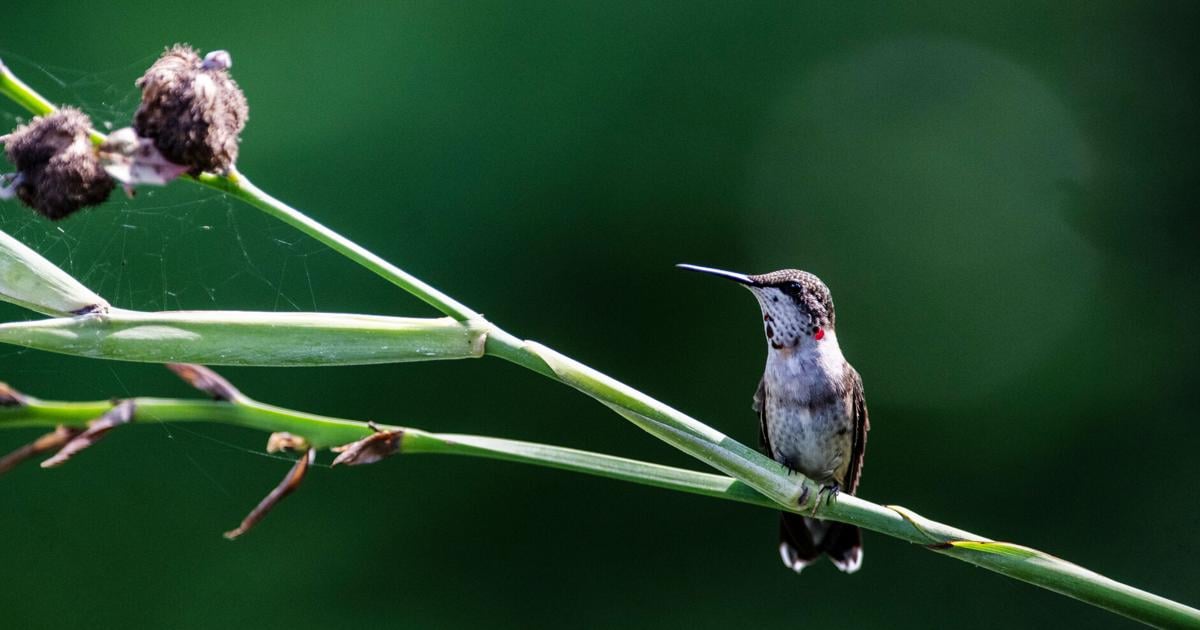
As hummingbirds migrate for the winter, hundreds of the agile creatures are flocking to nectar-filled feeders across south Louisiana, where some will stop to refuel before heading even further south.
That means that over the next few months, eager bird watchers in the state should expect to spot an influx of the small birds through the end of the year.
The ruby-throated hummingbird — the only species to nest and breed in Louisiana — is most common, according to Erik Johnson, assistant professor at the LSU School of Renewable Natural Resources and ornithologist.
Their migration peaks towards the end of September, he said, and most ruby-throats will be back in the tropics by October.
But it’s around that same time that ‘winter’ hummingbirds arrive. Species like Rufous, Allen’s, Anna’s, buff-bellied, black-chined, broad-tailed, broad-billed and calliope hummingbirds are among the 14 species that have been recorded in Louisiana during the off-season
“I personally had eight different hummingbirds in my yard last winter,” Johnson said. “They all survived the snow and the freeze and it was because I was getting out at like five in the morning to swap out the feeders to make sure they weren’t frozen.”

Broad-billed Hummingbird
Broad-billed Hummingbirds are found mainly in Arizona in summer in streamside woods, foothills and canyons. Broad-billed are active and flip tails about while hovering.
PROVIDED PHOTO BY DENNIS DEMCHECK
Winter hummingbirds
Louisiana is in the midst of a hummingbird turnover, Johnson said, as the tiny birds travel thousands of miles from their northern breeding grounds.
Since the ruby-throats are the only species to breed in eastern North America, their migration patterns are slightly different from other non-native species.
“Our local birds that breed here in Louisiana, they’re probably mostly gone by now,” Johnson said. “They’ve already started migrating, so most of the birds we’re seeing at feeders are coming from places further north.”
How to attract them to your yard
Using their slender bills and forked tongues, hummingbirds can guzzle nectar from long, tubular flowers — but they’re just as likely to lap up nectar from a colorful feeder.
“They’re just looking for red,” Johnson said. “They’re looking for flowers. They’re looking for that color signal, and so a big feeder sitting out on the edge of somebody’s home is going to be really attractive.”
Choosing a red feeder might be your best bet, according to the Baton Rouge Audubon Society, which also recommends people stay away from yellow feeders since they also attract bees and wasps.
Hummingbirds flit through a backyard in the Kenilworth neighborhood as they stop for sustenance during their migration south Wednesday evening, September 27, 2023, in Baton Rouge, La.
STAFF PHOTO BY HILARY SCHEINUK
To fill your feeder, mix one-quarter cup of sugar per cup of water. Avoid using any artificial sweetener or food dye, since both can be harmful to the birds.
Johnson suggests people replenish their feeders twice a week to keep the nectar fresh.
“If you want to attract wintering hummingbirds, keep your feeders going even after you stop seeing the ruby-throats migrating through, towards the end of October,” Johnson said. “[If] you get a winter hummingbird, consider yourself extremely lucky.”
For guaranteed hummingbird sightings, Johnson suggested birdwatchers stop by the hummingbird festival in Hammond on Sept. 20, where visitors can admire the feathered gems at at the LSU AgCenter research station.