
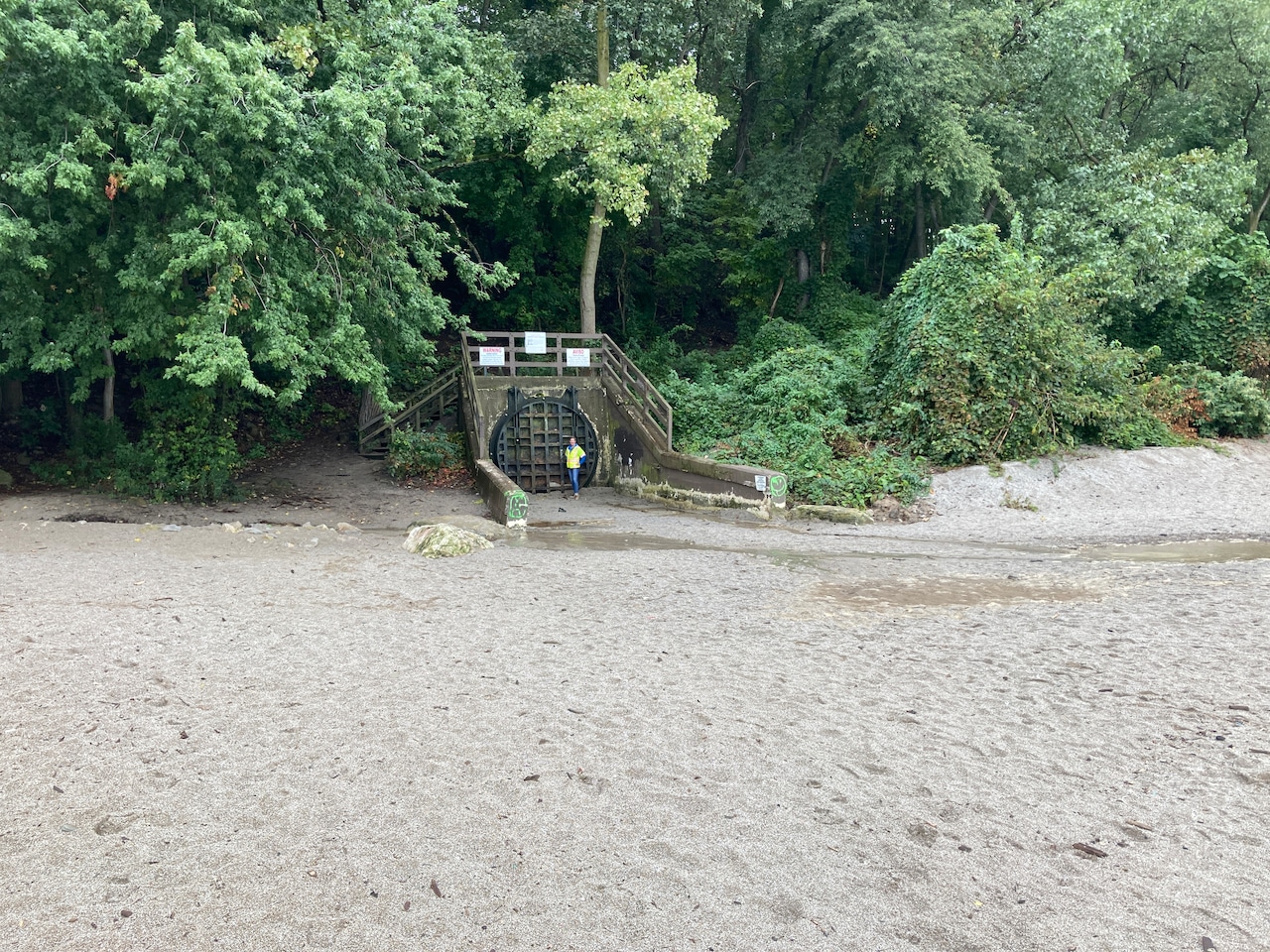
CLEVELAND, Ohio – The Northeast Ohio Regional Sewer District has a plan to permanently prevent raw sewage from discharging onto Cleveland’s popular Edgewater Beach.
The proposal involves a new multimillion-dollar tunnel that would redirect combined storm and sanitary sewage away from the outfall at the beach, which is a relief point for when the system gets overwhelmed during heavy rain.
The plan was recently presented to the district board of directors. Here are 5 takeaways from the original article:
1. Ending sewage overflows at Edgewater Beach
Sewage overflows at Edgewater have been a long-standing issue, as they have throughout Cleveland’s combined sewer system, which funnels stormwater and sanitary sewage though the same pipes on their way to the district’s treatment plants.
The Edgewater outfall, which dates to the 1880s, creates a public health concern and prompts swimming advisories every time it is activated. While the problem used to be much worse, there have been three overflows this summer.
2. A new tunnel is the centerpiece of the proposed fix
The plan involves constructing a new 1,400-foot tunnel, 10-to-12 feet in diameter, to reroute sewage backups before they are discharged onto the beach. Engineers recently discovered a key design element that would allow the tunnel to function as a “floodplain,” spreading out the overflow rather than just acting as a conduit.
Doug Lopata, the sewer district’s program manager for combined-sewer overflows, expressed confidence that this new configuration should prevent any more discharges at the high-profile beach location.
3. The project carries a $20 million price tag and an aggressive timeline
The sewer district has preliminarily estimated the project will cost $20 million. Officials are hopeful for a rapid timeline, with construction bids potentially going out in the third quarter of 2027 and a target completion date sometime in 2028. However, Lopata acknowledged that this schedule is considered “a little aggressive.”
4. The problem is historic and high-profile, despite improvements
While improvements over the years have significantly reduced the frequency of overflows from 40-50 per year in the 1970s to about 20 in the past decade, the Edgewater outfall remains a prominent public issue. Every discharge triggers media attention and swimming advisories warning of elevated E. coli levels.
5. The plan faces key hurdles before construction can begin
The project requires selecting an engineering firm to come up with a final design, after which the construction phase will be put out for bids.
This story was written with the assistance of AI.
If you purchase a product or register for an account through a link on our site, we may receive compensation. By using this site, you consent to our User Agreement and agree that your clicks, interactions, and personal information may be collected, recorded, and/or stored by us and social media and other third-party partners in accordance with our Privacy Policy.