
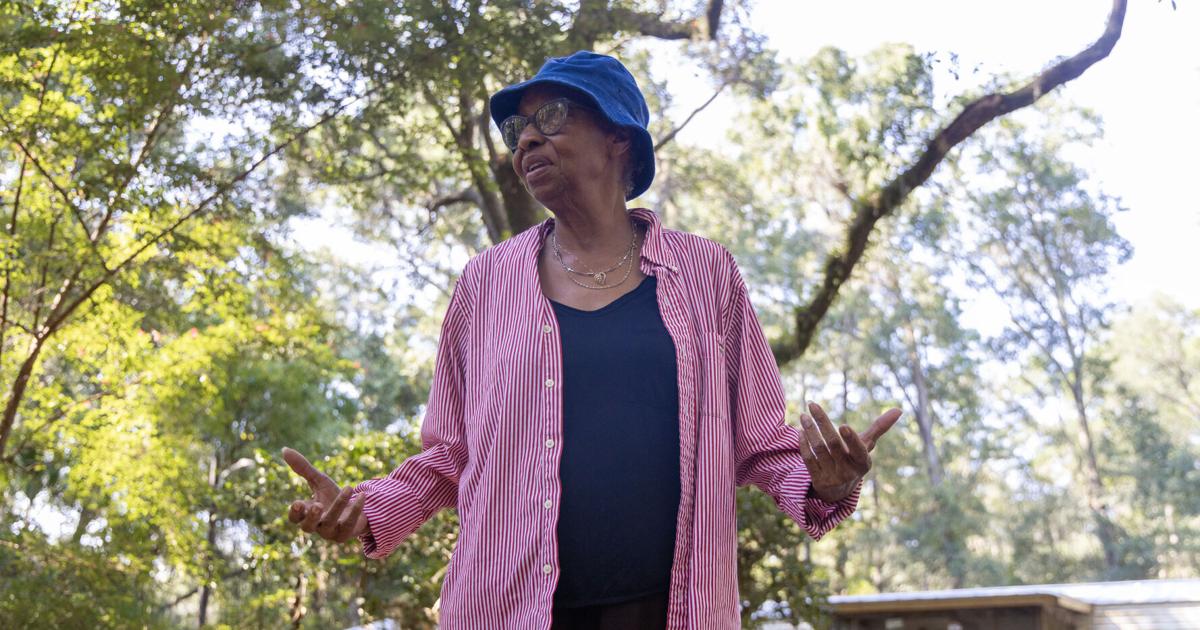
Among the concerned is Yvonne Wilson, whose great-grandmother was enslaved on Haig Point when it was a plantation.
“We have people who come to this island. They come to this island and say it’s so beautiful,” the 72-year-old said. “Once they get here, for some reason, they tend to want to change it.”

Don Hunter, CEO of Haig Point, a private community on Daufuskie Island, expresses his thoughts on incorporation on Tuesday, August 19, 2025.
Gullah culture’s long goodbye
Gullah people shaped Daufuskie’s history and culture for centuries, and particularly in the years and decades following emancipation. Enslaved Africans had been brought here to work on the 11 plantations that existed before the Civil War on the island, which stands across the Calibogue Sound from Hilton Head.
Freed slaves bought land to farm and worked on the former plantations. The local economy flourished through oyster production.
Around the turn of the 20th century, shellfish slingers slugged homemade moonshine and wine at social events organized by the Oyster Union Society. The local population swelled to more than 2,000 people.
But the industry would not last. Pollution from the Savannah River ended the oyster harvest in 1959. Without work, residents left in droves, and with them, the once-prominent Gullah culture.
By the 1980s, developers began to descend, building lush residential communities aside golf courses.
Sallie Ann Robinson speaks about issues with incorporating Daufuskie Island in her home on Tuesday, August 19, 2025.
Sixth-generation Daufuskie Islander Sallie Ann Robinson teaches tourists about her home and its Gullah history. She recalls Haig Point management meeting with residents about their plans to join the community. At that point, people on the island needed work, she said.
“The jobs that came were cutting grass, washing dishes, cooking,” Robinson said. “That wasn’t work people were looking for.”
Perhaps the largest erasure of Gullah history came from the Melrose resort, a luxury community along the island’s eastern edge. Wilson was among a group of residents who sued, alleging Melrose built its welcome center atop a century-old cemetery. She traveled the country asking for money to fight the developer.