
Oregon faces a string of job losses, but the new director of Prosper Portland envisions growth through collaboration with city agencies and private developers.
PORTLAND, Oregon — Portland’s ongoing push for economic growth comes at a time when Oregon’s labor market appears to be faltering, with nearly 25,000 jobs lost in the past year and downtown vacancies prompting calls to convert offices into housing to attract investment.
State employment economist Gail Krumenauer said Oregon has shed 2,700 positions in the most recent month alone and is trailing national recovery figures. Normally, a leader — or a “high flyer,” so to speak — in job growth during economic rebounds, the state has slipped into negative territory over the past year.
Most of the decline has been in manufacturing, dropping 9,400 jobs — roughly 5% of its workforce — while construction and finance each lost about 4% amid high interest rates.
But it’s not all doom and gloom. Krumenauer said private health care and social assistance remain strong, adding about 10,000 jobs for a 3.2% annual gain.
A buzzword that’s become increasingly common — economic uncertainty — is likely the culprit for the downturn, said Bahram Adrangi, professor of economics at the University of Portland. Businesses big and small, from agriculture to manufacturing, are reeling from it — and it’s creating a lot of consternation, she said.
“Uncertainty is the killer of business,” Adrangi said.
So, what does this mean for Portland?
Prosper Portland’s new executive director, Cornell Wesley, said the city must lure outside investment to counteract the slowdown. He pointed to the low cost of office space as a potential draw, saying that a $30-per-square-foot rate is attractive to national and even international investors.
“We would welcome the opportunity to continue to partner with organizations like the Portland Housing Bureau as we begin to reimagine what some of those assets can look like, whether that’s an affordable home situation or whether that’s workforce housing,” Wesley said.
He added that any turnaround will require close cooperation among city agencies and private developers. That collaboration, Wesley said, is just as important in neighborhoods beyond downtown.
The Gateway district, on Portland’s east side, has faced years of slow economic progress. City Councilor Jamie Dunphy recently called Gateway “the biggest failure of the organization,” citing that Prosper Portland has spent in total $88 million trying to bring the neighborhood to life, Willamette Week reported.
RELATED: Gateway Fred Meyer location to close
Wesley acknowledged the challenges faced in the district but defended Prosper Portland’s work, saying the agency is committed to the area’s success and cannot carry sole responsibility.
“It is important that we work closer with our media partners so that they are equipped with real-time information around the investments and the impact that has been yielding in Gateway,” Wesley said.
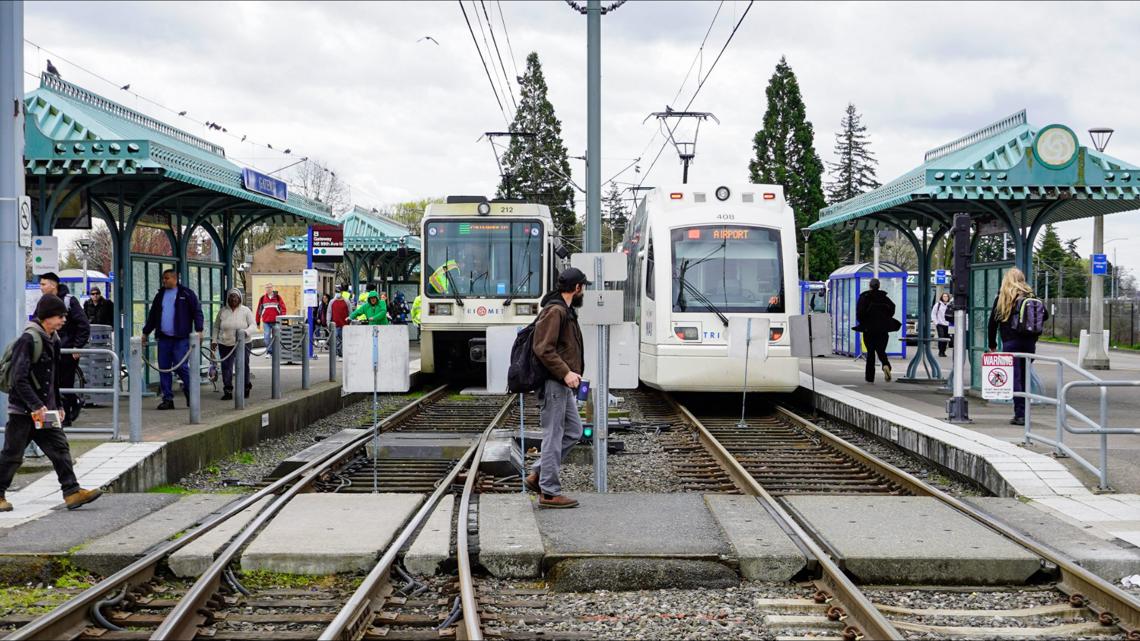
He cited the Green Line transit investment and new childcare services as examples of ongoing improvements.
But that change could be made more difficult with the national uncertainty — that U-word again — that Adrangi warned about. He said that national uncertainty — ranging from trade policy to global market volatility — is discouraging investment across industries. Even if the Federal Reserve cut rates, consumer confidence remains weak.
“Lower interest rates mean there’s a sale on credit,” Adrangi said, “but the consumer spending is down … I’m not sure that’s going to send them rushing to consume.”