
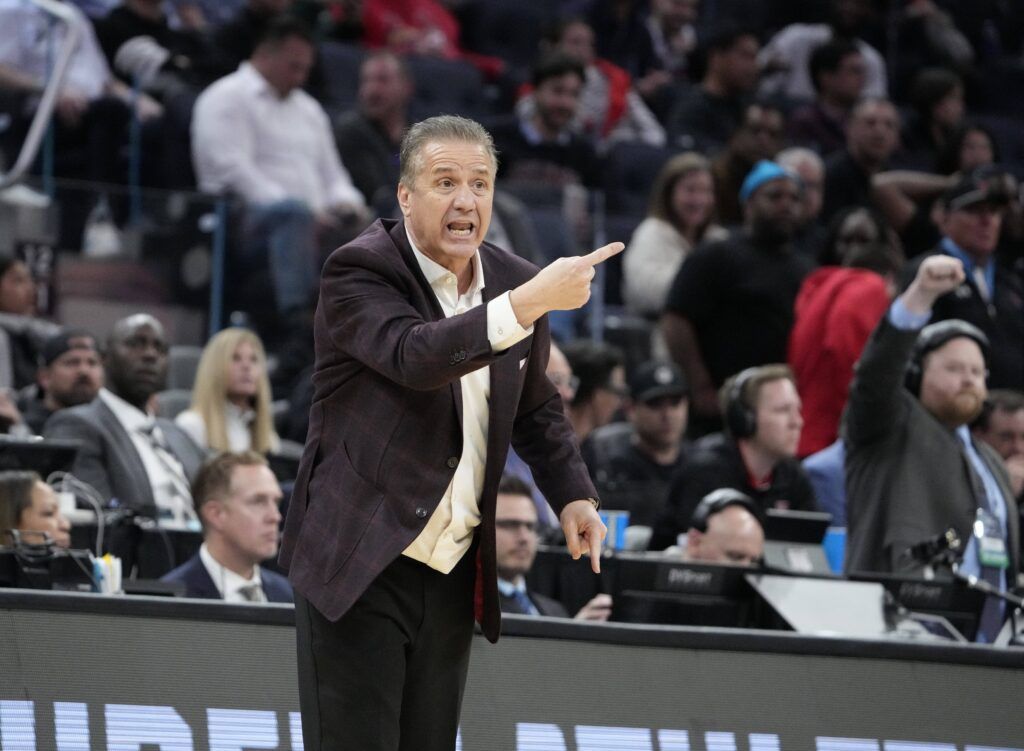
John Calipari sat in front of Little Rock’s Rotary Club 99 and delivered a warning that should make every college basketball fan uncomfortable. The Arkansas head coach painted a picture of athletes caught in a system that promises freedom but delivers something far more dangerous: players who transfer multiple times, never graduate, and face crushing financial reality when their playing days end.
Calipari’s concerns go beyond wins and losses. He’s talking about mental health, financial stability, and what happens when the NIL money stops flowing.
Why Does John Calipari Think Multiple Transfers Hurt Players?
Calipari’s sharpest criticism targeted players who transfer multiple times during their college careers. During his Rotary Club appearance, he questioned whether athletes who transfer four times could realistically graduate from their final school.
“If a kid transfers four times, is he going to graduate from that school? There’s no way. You can’t graduate. So now you’re going to be done playing without a college degree. You have no ties to the last school you went to,” Calipari stated.
Coach Cal at Little Rock’s Rotary club 99 on the
biggest issue with Major College Athletics…
The transfer portal. Great stuff from Coach. pic.twitter.com/hYKiPRw2Aq
— Steve Sullivan (@sully7777) July 15, 2025
The Arkansas coach described a troubling scenario where players finish their college careers without degrees or meaningful connections to their final institutions. These athletes then struggle when transitioning from significant NIL earnings to entry-level salaries in the real world.
“You’re offered $55,000 in your first job, and you go, what? $55,000? Do I have to show up? Are they going to, you got me an apartment, right? Or a car,” Calipari explained.
What Financial Reality Do Former Players Face?
Beyond the academic concerns, Calipari’s worries about the psychological impact of financial changes run deeper. He shared personal insight about the mental health challenges of economic instability, noting that experiencing poverty after having money can be particularly devastating.
“I’ve been poor, and you know what’s worse than being poor? Coming across some money and then being poor again. That’s the worst,” he told the gathering.
The coach’s comments align with research indicating that multi-transfer athletes face higher rates of anxiety and depression compared to their single-school counterparts.
Calipari’s concerns about financial adjustment problems reflect broader worries about how NIL money and transfer freedom create unrealistic expectations for post-college life.
How Would Calipari Fix the Transfer Portal?
Calipari has consistently pushed for stricter transfer rules, proposing a system that allows one penalty-free transfer followed by mandatory sit-out periods for additional moves.
“You can transfer once without penalty, because you picked the wrong school, the coach lied to you, there was another player that came, that you didn’t know about, one time, and after that, you’ve got to sit,” he explained.
He has publicly supported the SCORE Act, bipartisan legislation that would restore one-time transfer rules while mandating mental health services for athletes.
The coach believes that limiting transfers would address what he sees as the root cause of many problems in college basketball. He suggested that players often transfer for financial reasons rather than legitimate concerns about their situations.
“It isn’t because they’re mad at this or that. ‘I can extort you, and if you don’t give it to me, I’m going over here,’” Calipari said.
This shift toward unlimited transfers has fundamentally changed college basketball, where players now move freely between schools for better financial opportunities, raising questions about whether athletics or education remains the primary focus.