

It’s almost impossible not to notice our daylight continuing to shrink. Just keep the date Sept. 25 in mind. That’s the last time that the amount of light between sunrise and sunset exceeds nighttime. After that, darkness overtakes our days, and we have to wait until St. Patrick’s Day 2026 for the amount of daylight to once again surpass the amount of nighttime — a full six months away.
Indeed, here in this part of the world, our daylight changes dramatically with the seasons, but the daily loss of light accelerates the most in September as the Earth’s axis tilts away from the sun. And this week, the days shorten at the fastest rate, with just over 2 minutes and 50 seconds of daylight disappearing every single day as those sunrises get later and those sunsets get earlier. During the entire month, the length of daylight drops by 1 hour and 22 minutes in our region.
This process culminates in the autumnal or fall equinox, which this year is Monday, Sept. 22, at 2:19 p.m. — also the start of astronomical fall in the Northern Hemisphere (meteorological fall started Sept. 1). At the equinox, the sun appears directly above the equator, resulting in roughly the same amount of day and night around the world. It’s one of only two times of the year when this happens. The other is the spring or vernal equinox.
 The autumnal equinox occurs on Monday, Sept. 22.Boston Globe
All of this doesn’t mean we need to change our clocks, however. Daylight saving time (DST) doesn’t end until Sunday, Nov. 2, when we “fall back” and turn our non-automatic clocks back an hour.
The other thing that’s happening is that our sun angle is getting lower. Obviously, each day the sun comes up above the horizon and then rises to a certain point in the sky. In the dead of winter, it doesn’t get much higher than 23 degrees above the horizon, and then at peak summer, it’s about 71 degrees above the horizon. Now we’re just about in the middle at around 50 degrees. This lower sun angle means it doesn’t feel as hot even on warm days, and also plants are starting to shut down from the difference in light.
Here’s how much additional daylight Boston gains (and loses) each day
Boston adds the most daylight per day in March – nearly three minutes – and the city loses daylight at the fastest pace in late September.
Lower sun angle and less light are two of the three components of what’s occurring right now. The last also involves the sun: It’s continuing to rise farther south each morning and set farther south each evening. Right around the equinox, the sun will rise at exactly due east and set at exactly due west. From that point forward, the sun will come up south of east and set south of west until we reach the winter solstice on Dec. 21, at which point the sun will slowly start migrating back to the north again before reaching due east and due south, sunrise and sunset, respectively, near the spring equinox.
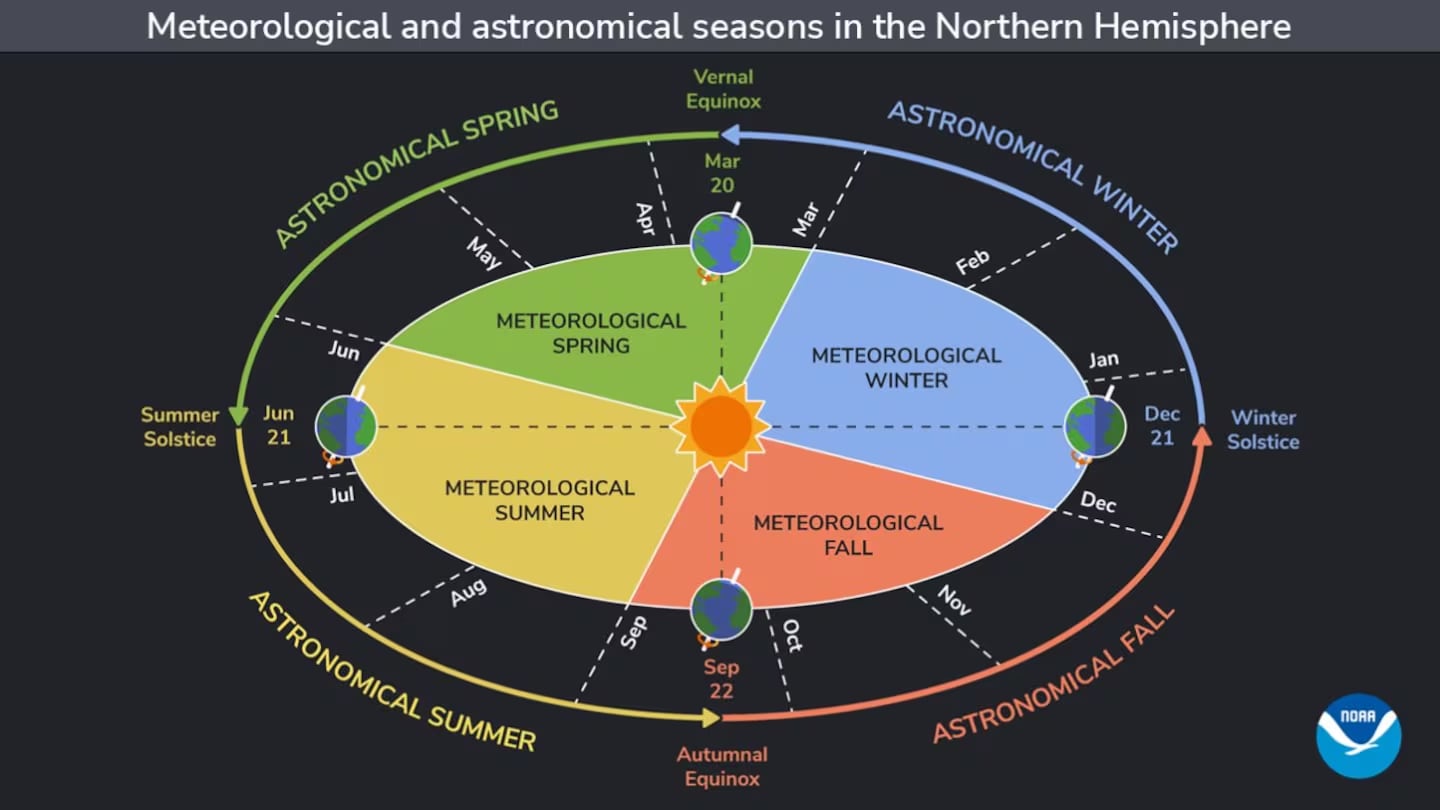 Astronomical seasons are based on the position of the Earth in relation to the sun, whereas meteorological seasons are based on the annual temperature cycle. The Earth’s annual trip around the sun forms the basis for the astronomical calendar in which seasons are defined by two solstices and two equinoxes. NOAA
It can be mentally taxing to be losing all this light so quickly, but it’s also a bit of a choice how we respond to what is inevitable. The earlier darkness gives us a chance to enjoy more of the evenings and not feel so much pressure to be outside. Nature takes its cues from less light. We could learn a bit from it. Slowing ourselves down and embracing the coming darkness.
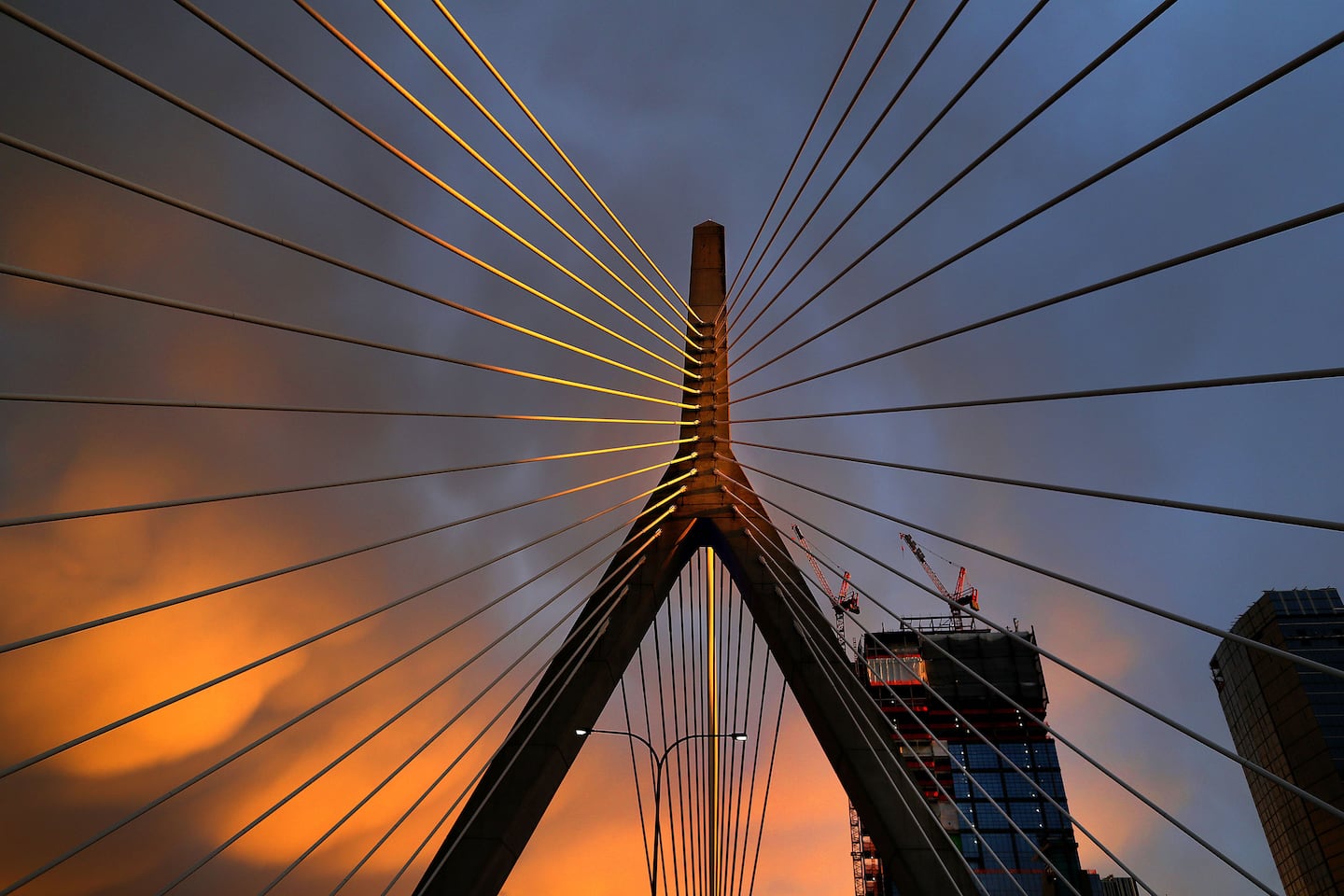 The cables of the Leonard P. Zakim Bunker Hill Memorial Bridge catch part of the setting sunlight over Boston.John Tlumacki/Globe Staff
Sign up here for our daily Globe Weather Forecast that will arrive straight into your inbox bright and early each weekday morning.