
Seven venomous snakes call Louisiana home, including coral snakes, cottonmouths, rattlesnakes and copperheads.
According to the Centers for Disease Control, 7,000 to 8,000 people get bitten by venomous snakes each year in the U.S., with about five of those cases resulting in death.
What’s the cardinal rule of keeping yourself — and the snakes — safe, according to experts? Leave them be.
“A lot of venomous snakes bites are the result of people trying to kill snakes,” said Chris Austin, curator of amphibians and reptiles at the LSU Museum of Natural Science and biological sciences professor. “All snakes would much rather slither away from you.”
It’s also easy to misidentify a snake without proper training, he said.
“In all cases, it’s best to just leave them alone,” Austin said.
Venomous snakes in Louisiana
Here’s the rundown of Louisiana’s venomous snakes, according to the Louisiana Department of Wildlife and Fisheries.
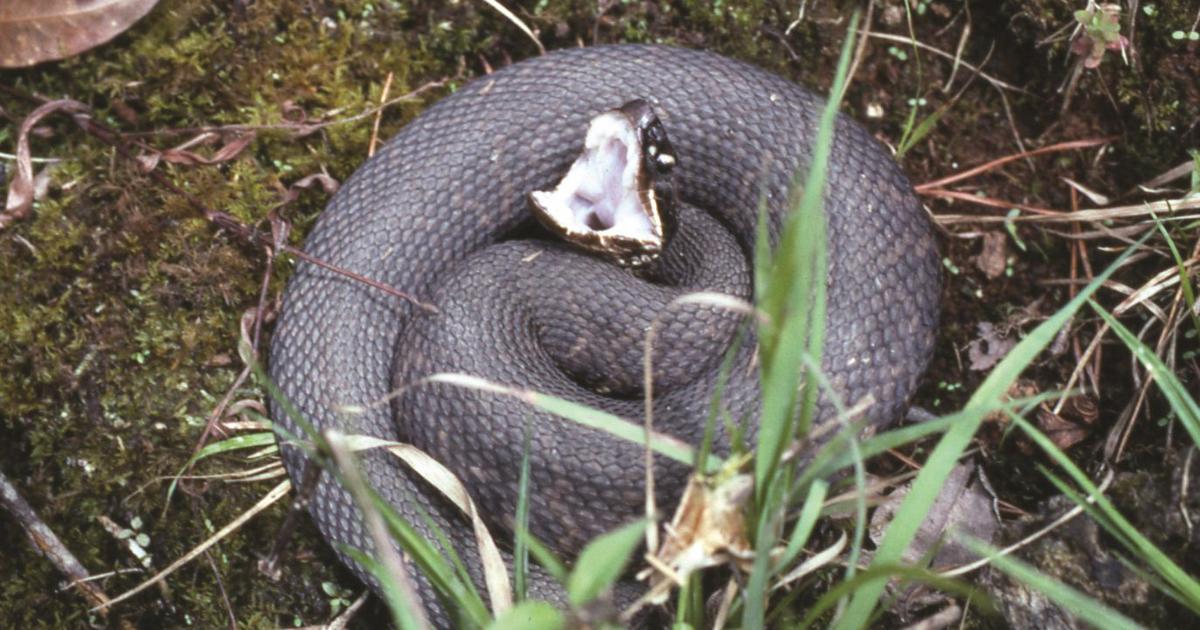
Cottonmouth

The cottonmouth, also known as a water moccasin, is one of the two most common venomous snakes in south Louisiana.
Types: Northern CottonmouthWhere they are found: Swamplands and ponds, lake and stream borders throughout Louisiana. They like dense canopies and often coil near water. Identifiers: Dark tan to very dark brown/black. Black or dark brown crossbands. White line from corner of the eye along the angle of the mouth.
Coral snake
Texas coral snake
CONTRIBUTED PHOTO BY THE LOUISIANA DEPARTMENT OF WILDLIFE AND FISHERIES
Types: Harlequin coral snake, Texas coral snakeWhere they are found: Florida Parishes above Lake Pontchartrain (Harlequin coral snake), Western Louisiana as far south as Calcasieu Parish (Texas coral snake).Identifiers: Red, yellow and black bands. A popular rhyme to distinguish from mimic snakes in the Southern U.S. is, “Red and yellow can kill a fellow; red and black, friend of Jack.” However, most snake experts would advise to leave all snakes alone rather than putting too much faith in rhymes.