
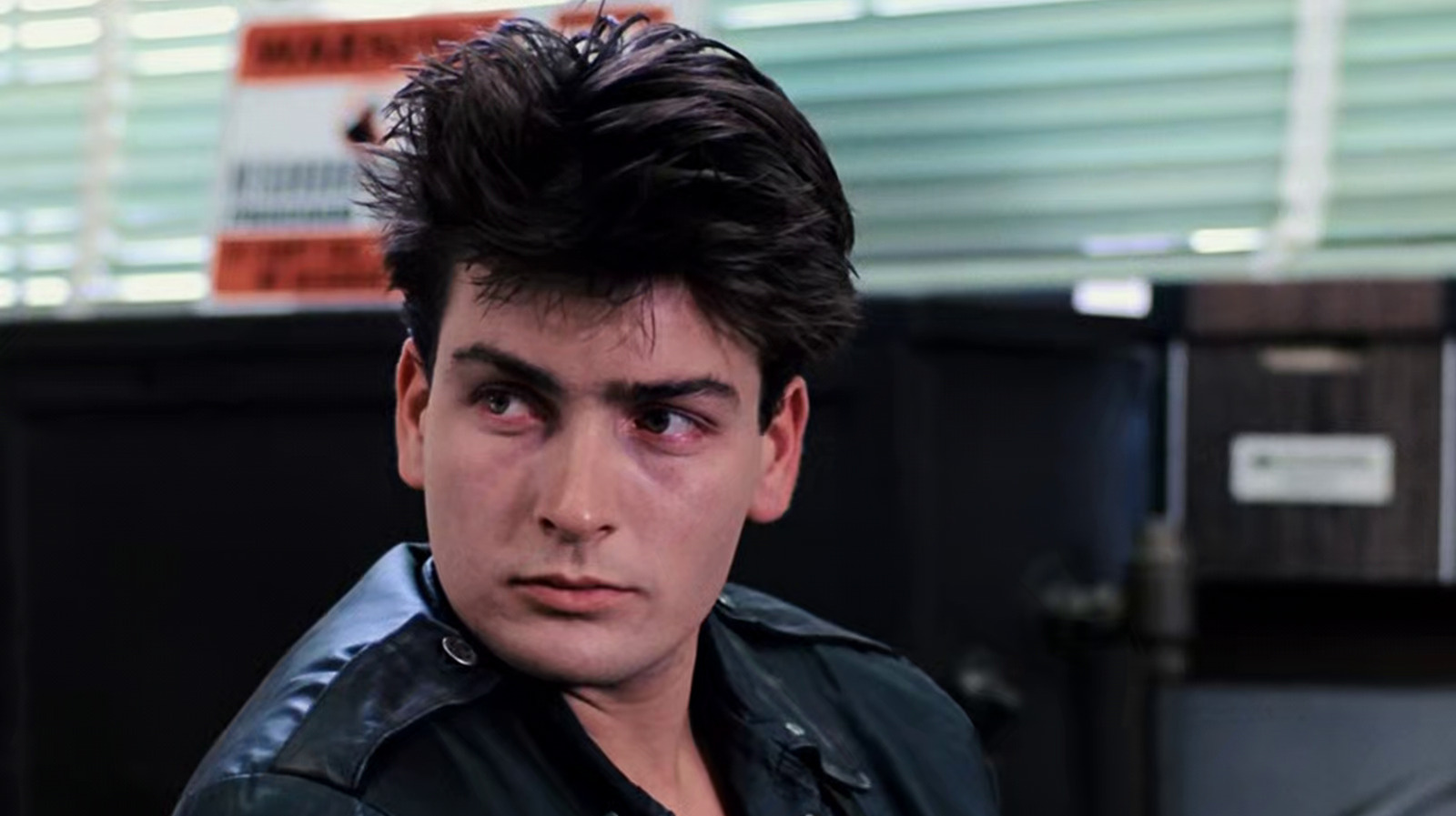
Hands down, one of my favorite bits in Netflix’s latest two-part documentary on Charlie Sheen, “AKA Charlie Sheen,” is when the actor recalls (with a big smile on his face) how he prepared for his scene in John Hughes’s beloved teen comedy, “Ferris Bueller’s Day Off.” It’s one of those rare moments in the doc that’s not about #winning, tiger blood, or the myriad other scandals that merged with Sheen’s public persona, but instead is about a performer reminiscing about his early years when he was still filled with enthusiasm and excitement, eager to prove he had what it takes to make it in this chaotic and unreliable business.
The opportunity came about thanks to Sheen’s co-star and friend, Jennifer Grey, who recommended him to Hughes. At this point, the actor mostly had forgettable parts to his name, so he was more than thrilled to nail this chance, even if it was only a cameo. According to him, he borrowed his brother’s leather jacket, darkened his eyes with cigarette ash, fixed his hair, and went down to Long Beach to meet with the director. When he got there, Hughes glanced at him while walking through a parking lot and said, “You look great, kid. See you next week.” That’s how auditions went sometimes in the ’80s, folks.
Still, Sheen decided to get all methody for his role of “Troubled Boy in Police Station.” His character in the film is a sort of weary, punk-rock rebel who has some run-ins with the law due to his substance abuse issues. Sheen wanted to embody that the best he could with a “purely organic method approach.” He said, “I just figure if I show up looking tired, that’s going to be an asset. I need to look tired, so I’m gonna be tired. There was no booze, no dope, there was nothing involved in that night preparing for this.”
It was a solid plan … until it fell apart. The night before the shoot, Sheen stayed up late on purpose, even though his call time was at 6 AM. He set the alarm for 4:30, giving himself an hour and a half to be ready and get to the location, but he did what most of us do at that age: canceled the alarm and went back to grab an extra 10 minutes of sleep. That turned into one and a half hours, and Sheen woke with a panic, running like hell to get to the shoot as fast as he could. Luckily for him, Hughes didn’t make a big deal out of it (proving again how well he understood the mind and behavior of teenagers) and shot the scene that later became a point of reference in Sheen’s career.