
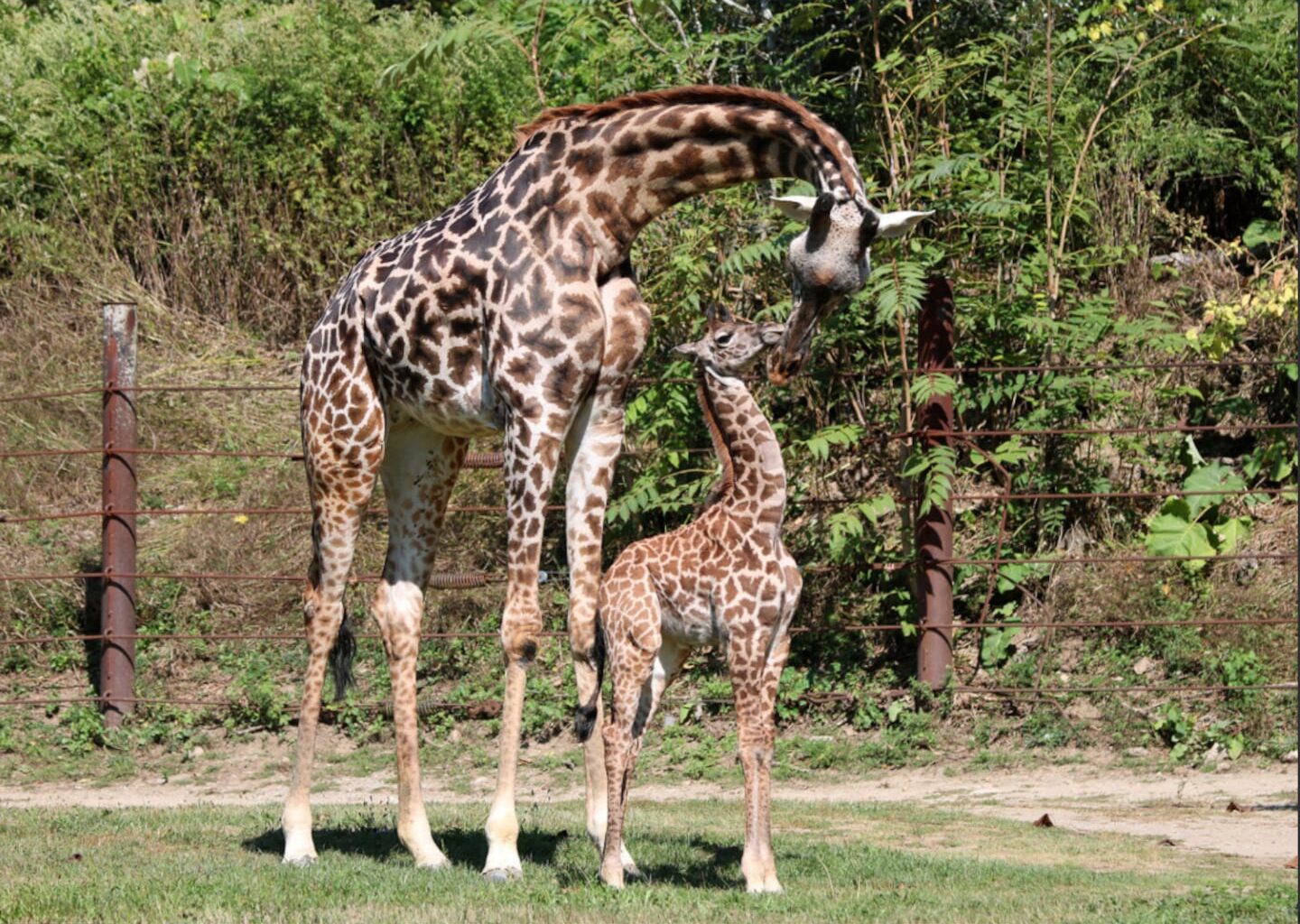
But after receiving intensive medical care, including several plasma transfusions, the calf learned to nurse from a bottle and was taken back to the zoo on Aug. 19.
The 7-foot-tall calf was later reintroduced to his mother, named Amari, which proved a lengthy and complicated process because the pair had been separated for so long, Dr. Malu Celli, vice president of animal care at Zoo New England, said Friday.
“They don’t have a normal mother and calf bond,” she said. “It’s not uncommon for animals to sort of move on.”
But after several weeks of overseen visits, Amari is now “nuzzling, licking, smelling, and guiding the calf around their shared space,” zoo officials said this week.
Celli said Amari has learned to treat the calf as another “member of the herd,” if not her offspring.
“She was, in the end, accepting of him, and not aggressive or pushing him away,” she said. “It’s just not the same frequency and zeal that a mother would have.”
The calf doesn’t have the same reserve, Celli said, and follows Amari around the enclosure, modeling his behaviors after hers.
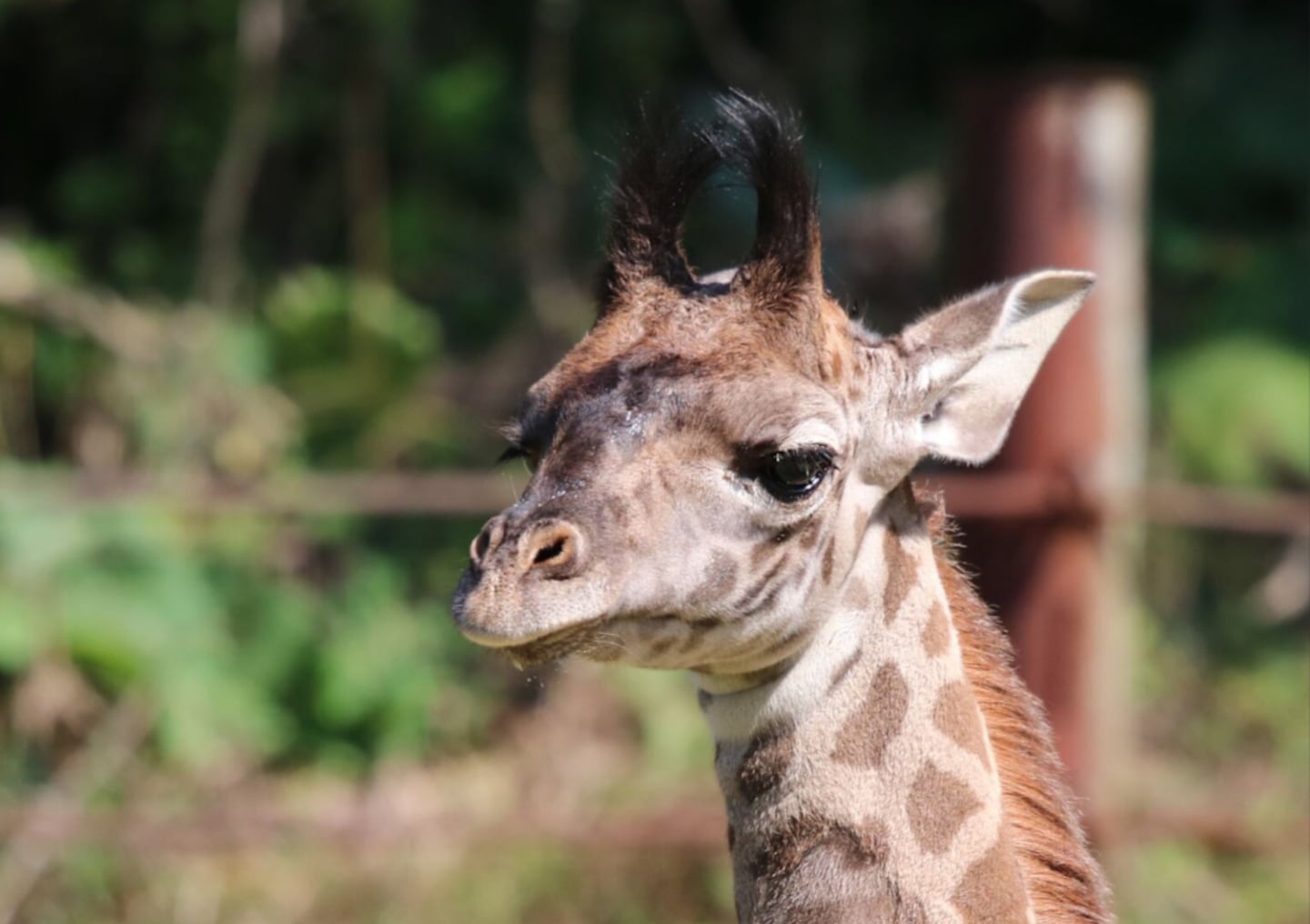 A close-up of the calf. Zoo New England
Zookeepers are now working on getting the calf better acquainted with his father, named Chad, whom the calf sees “on a regular basis,” Celli said.
“Chad has several calves, so I hope it’s not going to be different,” she said. “That’s our next step.”
In the meantime, the calf is eating heartily and is doing “really well” with its training, Celli said.
“We use a jingle bell to call him over,” she said. “Even when they’re out on exhibit, which is quite large, he’s still learned to associate the jingle bell with food.”
The zoo is holding an auction for people to bid on possible names for the calf. The auction, which closes Sept. 28, can be found at www.zoonewengland.org.
Truman Dickerson can be reached at truman.dickerson@globe.com.