
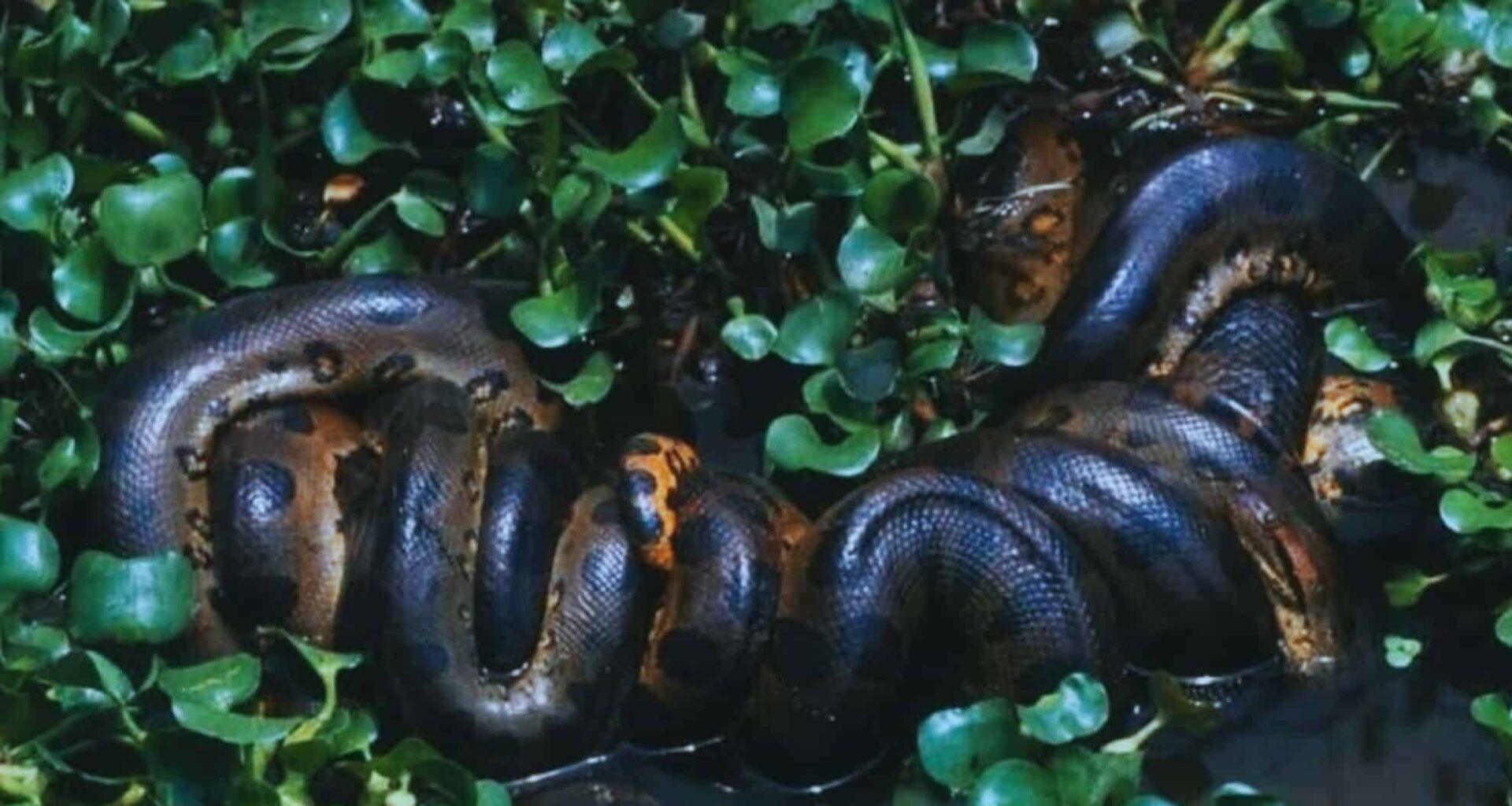
In a remarkable turn of events, a team of scientists has uncovered a discovery that could reshape our understanding of the world’s largest snakes. Far from the bustling cities, deep within the Ecuadorian Amazon, an extraordinary species was identified — one that might just redefine what we thought we knew about these elusive creatures.
An Unexpected Expedition Leads to the Discovery
Led by Professor Bryan Fry from the University of Queensland, a team of researchers embarked on a mission that was meant to document the wonders of the natural world for National Geographic’s new series Pole to Pole with Will Smith.
What they found in the remote Baihuaeri Waorani Territory, a seldom-visited area in the heart of the Amazon, has sent shockwaves through the scientific community. It was here, amidst the dense foliage and winding rivers, that they discovered the northern green anaconda (Eunectes akayima), a species previously unknown to science.
The Waorani Territory, largely unexplored by outsiders, was an ideal location for this expedition. Guided by indigenous hunters who knew the land intimately, the team paddled down rivers, following the ancient paths and legends that spoke of massive, elusive snakes lurking in the depths of the jungle. The scientists were prepared for a thrilling adventure, but they could never have anticipated the scale of what they would uncover.
A New Giant: The Northern Green Anaconda
The northern green anaconda, which the team identified during their journey, is not only a significant discovery — it could potentially grow over 20 feet (6.1 m) long, breaking previous records for the largest known anaconda. This species may even challenge the existing record holders, further cementing its place in the world’s wildlife history. The team managed to capture several specimens, including one that measured an impressive 20.7 feet (6.31 m).
This giant snake thrives in the shallow rivers of the Amazon, waiting for prey in the murky waters. Its sheer size and power place it among the largest reptiles ever found in the region. The discovery has raised a host of new questions for scientists: Could there be even larger individuals hiding in these untapped areas of the jungle?
Local Legends: Giants of the Amazon?
What makes this discovery even more captivating is the long-standing local legend of snakes that grow beyond 24 feet. Indigenous groups in the Waorani Territory have long believed in the existence of these giant anacondas, with stories passed down through generations.
Some locals claim to have seen snakes exceeding 7.5 meters (around 24 feet), a claim that is now being examined with renewed interest. Could these larger-than-life creatures be real? If true, the northern green anaconda could soon earn the title of the world’s largest snake.
These tales, often dismissed as folklore, have now gained an air of legitimacy thanks to the team’s discovery. It seems that the Amazon holds far more mysteries than anyone had imagined.
The Amazon’s Hidden Giants
The expedition’s success is a reminder of how much remains to be explored in the Amazon. While the northern green anaconda may be the most sensational discovery of the trip, it highlights the rich biodiversity of a region that still hides many of its secrets. The area where these snakes were found is known for its isolation and inaccessibility, making the discovery even more remarkable.
As the team delved deeper into the jungle, they found themselves increasingly in awe of the land’s wild, untouched beauty. The northern green anaconda is only one piece of a much larger puzzle that awaits exploration. How many other giants are hiding in this vast, unexplored wilderness? Only time — and more expeditions — will tell.