
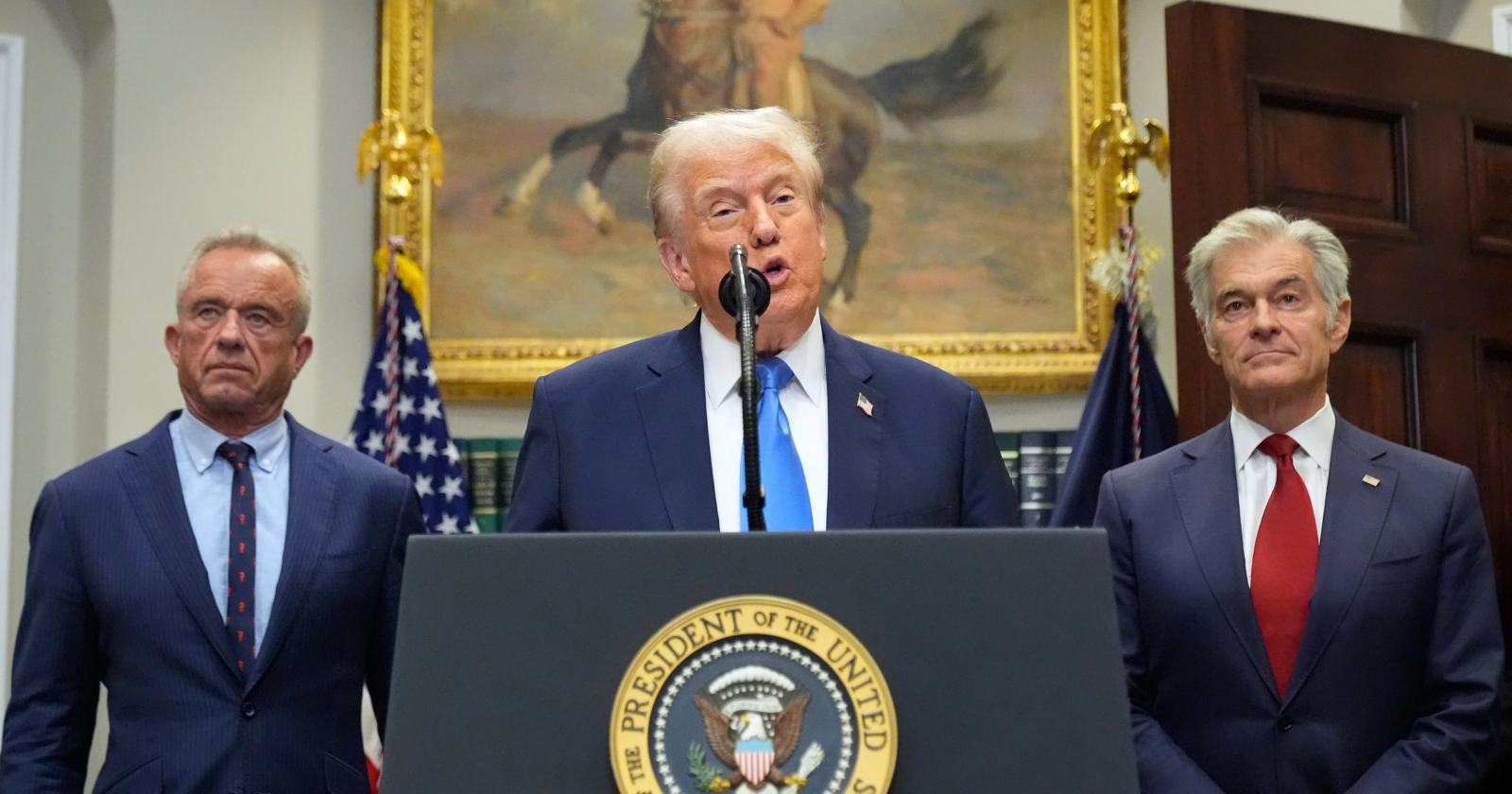
Last night, Donald Trump told the public that his administration had made an unprecedented scientific discovery: taking Tylenol (the most popular brand of acetaminophen in the United States) during the first months of pregnancy causes autism. Clearly, the entire medical, pharmaceutical, and scientific community quickly denied the claim, pointing out not only that there is no irrefutable evidence to support it, but also that autism existed long before acetaminophen. The President’s speech triggered a domino effect on the topic of genome editing, embryo selection, and bioengineering, which are beginning to outline the contours of a new possible humanity. These technologies are no longer just cutting-edge science confined to academic labs, but are gradually, and with much controversy, entering the market thanks to private individuals with enormous financial resources. Orchid Health, for example, is a startup that almost entirely sequences the genome of an embryo using five cells and offers clients undergoing assisted fertilization an overview of genetic risks for complex diseases such as Alzheimer’s, obesity, or mental distress.
Trump: People in Cuba can’t afford to buy Tylenol, and they have virtually no autism.
We’re governed by the absolute dumbest people in the world
pic.twitter.com/QjJ1DaVafz
— Republicans against Trump (@RpsAgainstTrump) September 22, 2025
It is an expensive service that, as the Washington Post says, “already integrates the dimension of data and ‘prediction’ into conception.” In other words, wealthy parents can know in advance whether their future child might face health problems and act preventively. But it’s not only about genetic selection based on health. Startups like Heliospect Genomics are offering wealthier clients the possibility of “choosing” embryos also based on traits such as expected intelligence, height, and weight. In some cases, these services are sold for tens of thousands of dollars, especially when considering multiple embryos and large-scale screenings. According to an investigation by the Guardian, Heliospect claims to have helped at least a dozen couples with these technologies, with packages costing up to $50,000. Legally, such practices are not banned in the United States, but the ethical debate, as one might imagine, remains heated.
How does genome editing work?
Alongside these practices, however, an even more radical hypothesis is emerging: polygenic germline editing. Unlike “normal” genome editing, which intervenes on single genes or tissues and is not inherited, this approach would directly modify the DNA of embryos, eggs, or sperm, acting on multiple genes simultaneously and passing the changes on to future generations. The implications are enormous: according to Nature, within a few decades, the first humans with genetically enhanced traits could be born.
Naturally, such a horizon has not escaped the Silicon Valley billionaires. Sam Altman, CEO of OpenAI, has already supported startups active in reproductive genetics, while Peter Thiel has been funding frontier biotechnology projects for years. Another figure who has made headlines in this field is Brian Armstrong, founder of Coinbase, who has publicly declared his intention to fund a startup dedicated to embryonic editing via CRISPR to address genetic diseases. Given the billionaires’ interest, many observers fear, however, that the goal is not the inclusive spread of these technologies, but the creation of tools reserved for a narrow elite. This issue intersects with the growing popularity in the Bay Area of a pronatalist philosophy: the idea that people considered most gifted should have many children to pass on their abilities and ensure the progress of civilization. A vision also endorsed by figures such as Elon Musk, and one that, combined with the possibilities of genetic engineering, opens scenarios of extreme inequality.
A new DNA for everyone or just for a few?
If these technologies remain the prerogative of a few, the risk is the emergence of an irreversible fracture, where for the first time in history it would not only be economic or social criteria dividing humanity, but also biology. A separation that could redraw the very foundations of human coexistence. These examples show that this is not just a hypothesis: companies and individuals with means are already experimenting, investing, and in some cases practicing genetic screening on embryos with the intent of influencing not only physical well-being but also traits today considered “preferences.”
Today we are not yet facing a new human species in the biological sense of the term, since for now there are no populations separated by irreconcilable mutations, permanent reproductive barriers, or deep evolutionary divergences. But a “genetic-elite” species could soon emerge, with early, almost exclusive access to technologies enabling genetic choices, while the majority remains excluded, not by their own decision but due to economic, geographic, or regulatory limits. In the end, the issue is less technical than it seems. It is about who decides which genetic tools become normalized, who funds them, who regulates them, and who controls the moral narrative. Billionaires like Armstrong, Thiel, Altman, and Musk are not just spectators but actors shaping the contours of that possible future.