
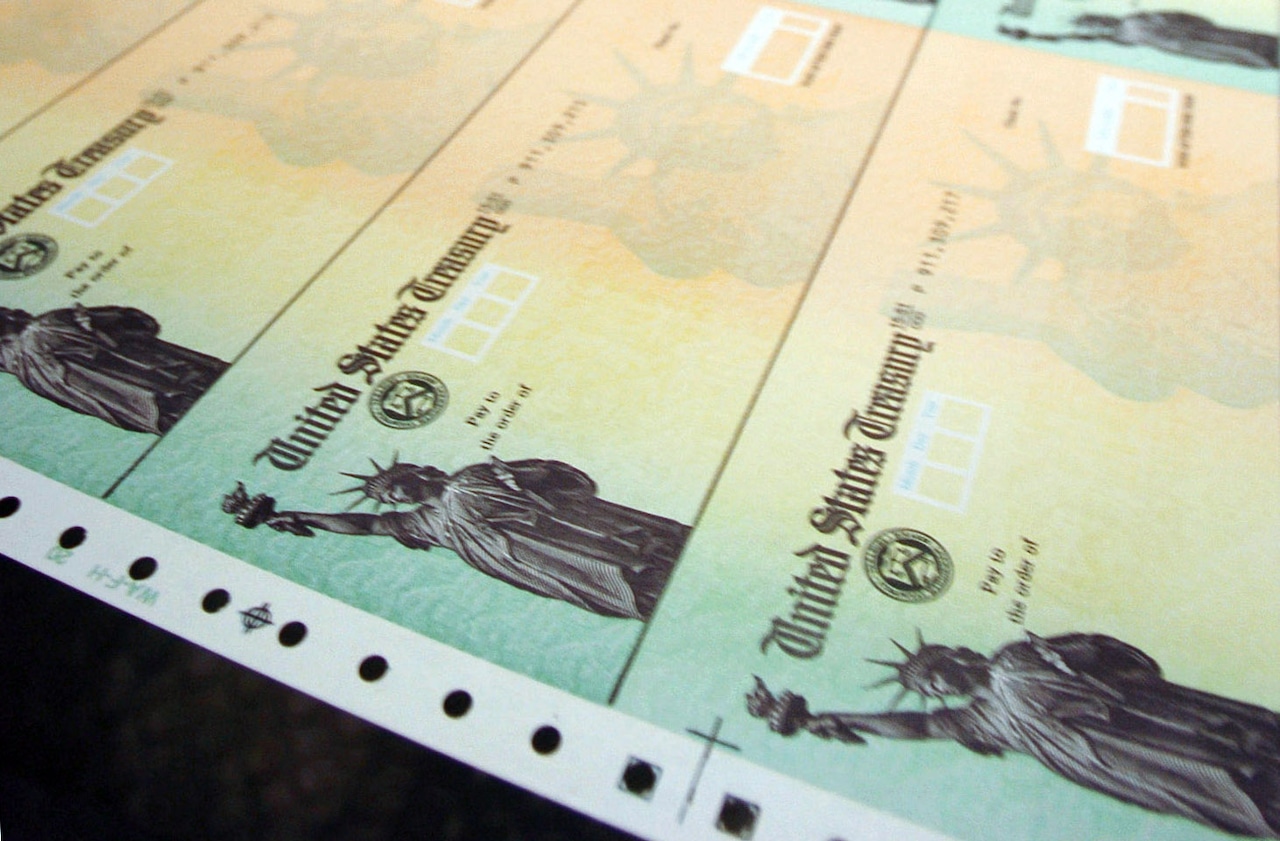
A huge change is in store for Social Security checks, and it has some people up in arms.
That’s because the Treasury Department will stop issuing paper checks for tax refunds, Social Security payments, and most other federal programs on Sept. 30, which is all part of an executive order with a plan for modernizing the government.
Though experts widely agree that electronic payments are faster to process and less susceptible to fraud and theft than paper checks, advocates who work with the small percentage of those who still receive checks say the change is being rushed out and worry that some beneficiaries won’t learn of it unless their payment comes through.
More than 5 million people receive physical checks from the government, a group largely composed mostly of seniors, people with disabilities, immigrants and others without bank accounts — “populations that may be more challenged by having to change the way they receive their federal benefits,” Jennifer Tescher, founder of the nonprofit Financial Health Network, told The Washington Post.
To Treasury officials, reducing paper checks has been a long-standing bipartisan goal. Checks are more likely to be reported lost, stolen, or altered, or returned undeliverable, compared to electronic payments, per the officials.
Also, it’s worth noting that check fraud has increased in recent years: Banks issued 680,000 reports of check fraud in 2022, nearly double that of 2021, according to a White House fact sheet.
Additionally, electronic payments are more cost-efficient — less than 15 cents per transaction compared with 50 cents to issue a check. The government estimates the move will save millions of dollars a year.
In July, Treasury started mailing beneficiaries information about the Sept. 30 deadline with instructions about alternative payment options. The administration is also sending mass emails, posting on social media and updating call-center scripts to raise awareness about the change, per officials.
However, Kathleen Romig, a former Social Security Administration official who is now employed by the left-leaning Center on Budget and Policy Priorities, said people still might not be aware they have to sign up for an alternative payment method or be able to do so quickly.
For those without a bank account, the government has provided a phone number people can call if they’d like to sign up for a Direct Express Card, which is a debit card-like offering that can be reloaded by the government.
But Romig said she tried calling the number in late August but “couldn’t get through to a person.”
“Some people are just not going to be able to manage the steps,” Romig said to the outlet.
There could also be complications that can arise if people don’t fully understand how Direct Express cards work, per some advocates. Millions of debit cards with stimulus money were mailed out during the pandemic. But they were delivered in plain envelopes without government insignia, where some Americans mistook them for junk mail.
Congress passed a law in the 1990s to phase out checks for many payments, though not tax refunds. The effort has been largely successful: About 94 percent of all refunds, or about 81 million out of 86 million payments, were issued electronically in the 2025 filing season.
Fewer than 1 percent of the people receiving payments from the Social Security Administration, Railroad Retirement Board or Defense Department get paper checks, according to agency spokespeople.
“This is really the toughest nut to crack: this last 1 percent or less than 1 percent,” Romig said to the outlet.
The administration has said that waivers will be available for beneficiaries with certain hardships, such as remote living arrangements or mental impairments, though they will be granted in “rare circumstances.” Adults 90 years old and older can also request an exemption. But it’s unclear whether the same criteria and process will be used for tax refunds.
The Treasury Department is “committed” to helping “address financial access for unbanked and underbanked populations,” officials said.
But a spokesperson for the Social Security Administration said it is “proactively” contacting beneficiaries to let them know of the change. “Where a beneficiary has no other means to receive payment, we will continue to issue paper checks,” the spokesperson said to The Washington Post.
The Defense Finance and Accounting Service also will keep issuing paper checks “when necessary” and plans to increase its communications with payees, according to agency spokesperson Steve Burghardt.
If you purchase a product or register for an account through a link on our site, we may receive compensation. By using this site, you consent to our User Agreement and agree that your clicks, interactions, and personal information may be collected, recorded, and/or stored by us and social media and other third-party partners in accordance with our Privacy Policy.