
We may earn revenue from the products available on this page and participate in affiliate programs.
Domino Reno: Before + Afters, DIYs, and Advice From the Pros
Subscribe now to get our newsletter in your inbox.
Shag-carpeted bathrooms and fluorescent lighting don’t scream “dream house.” But for Seattle-based designer Jessica Nelson’s clients, who lived just 10 minutes down the road, the cabin’s location—nestled between a thick patch of forest and the ninth hole of their favorite golf course—made it a dream worth chasing. “They’d been eyeing it for years,” says Nelson. “When it finally came up for sale, they called me right away.”
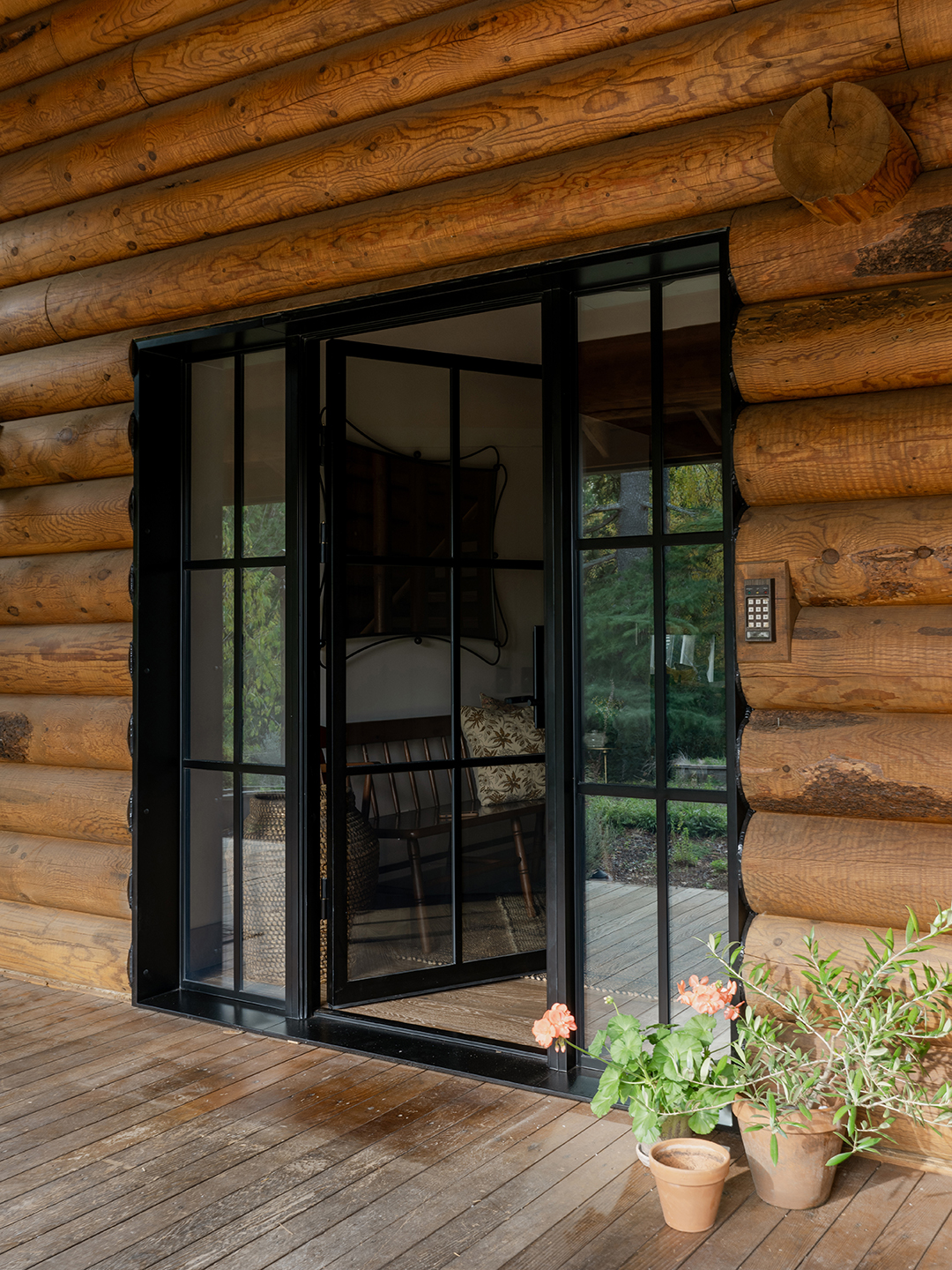 The front door, after.
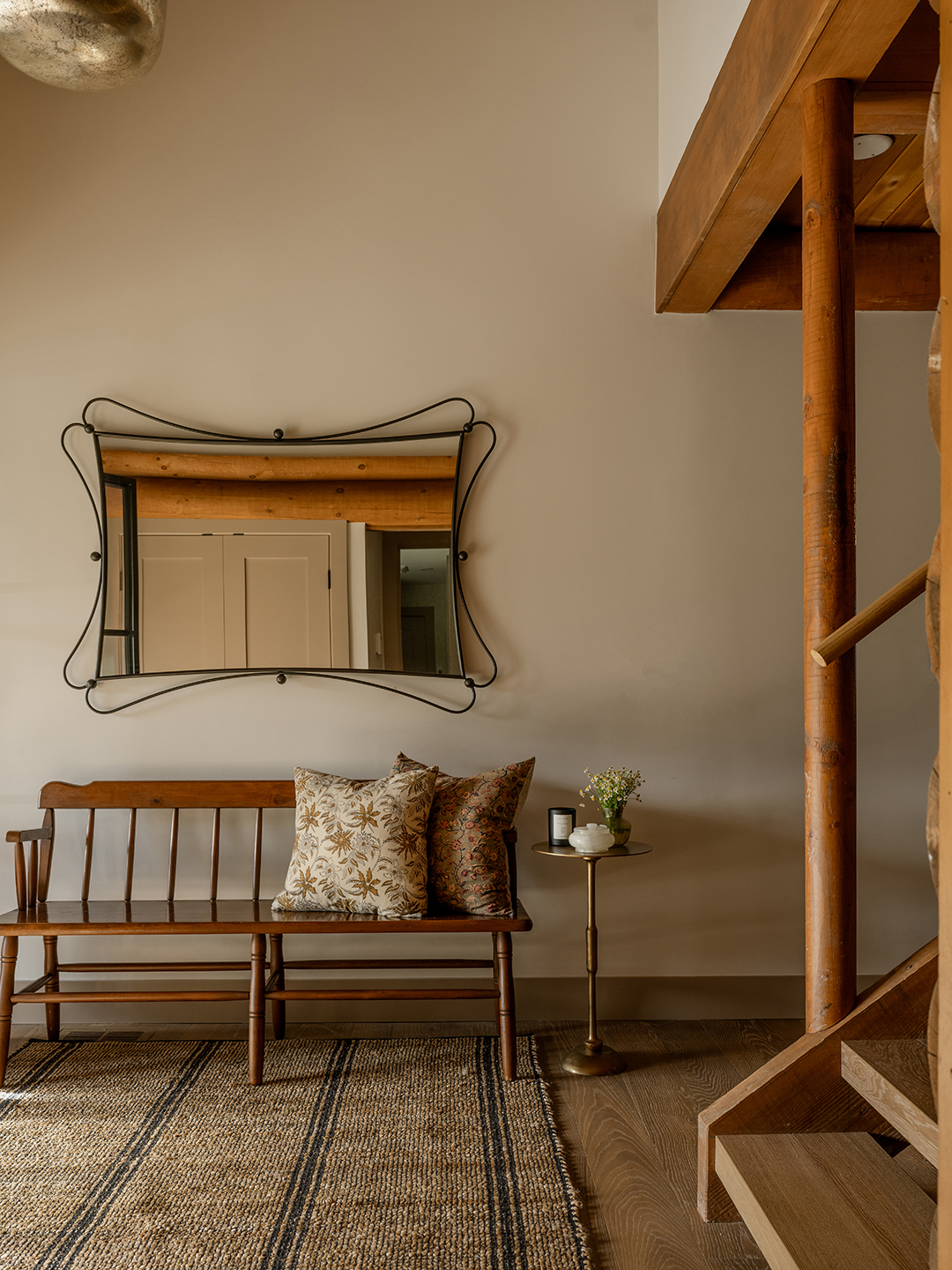 The entryway, after.
Despite its quirks, Nelson saw promise in the home’s bones. “The logs, the river rock fireplace, the floating stairs—we knew if we updated everything else, those elements would shine,” she says. Working with her go-to contractor, Nelson kicked off a top-to-bottom renovation that respected the property’s rustic shell while dramatically modernizing the layout and palette. “It’s still a log cabin,” she says. “But now it feels serene, not stuck in the ’70s.”
Making a White Kitchen Work in a Wood Cabin
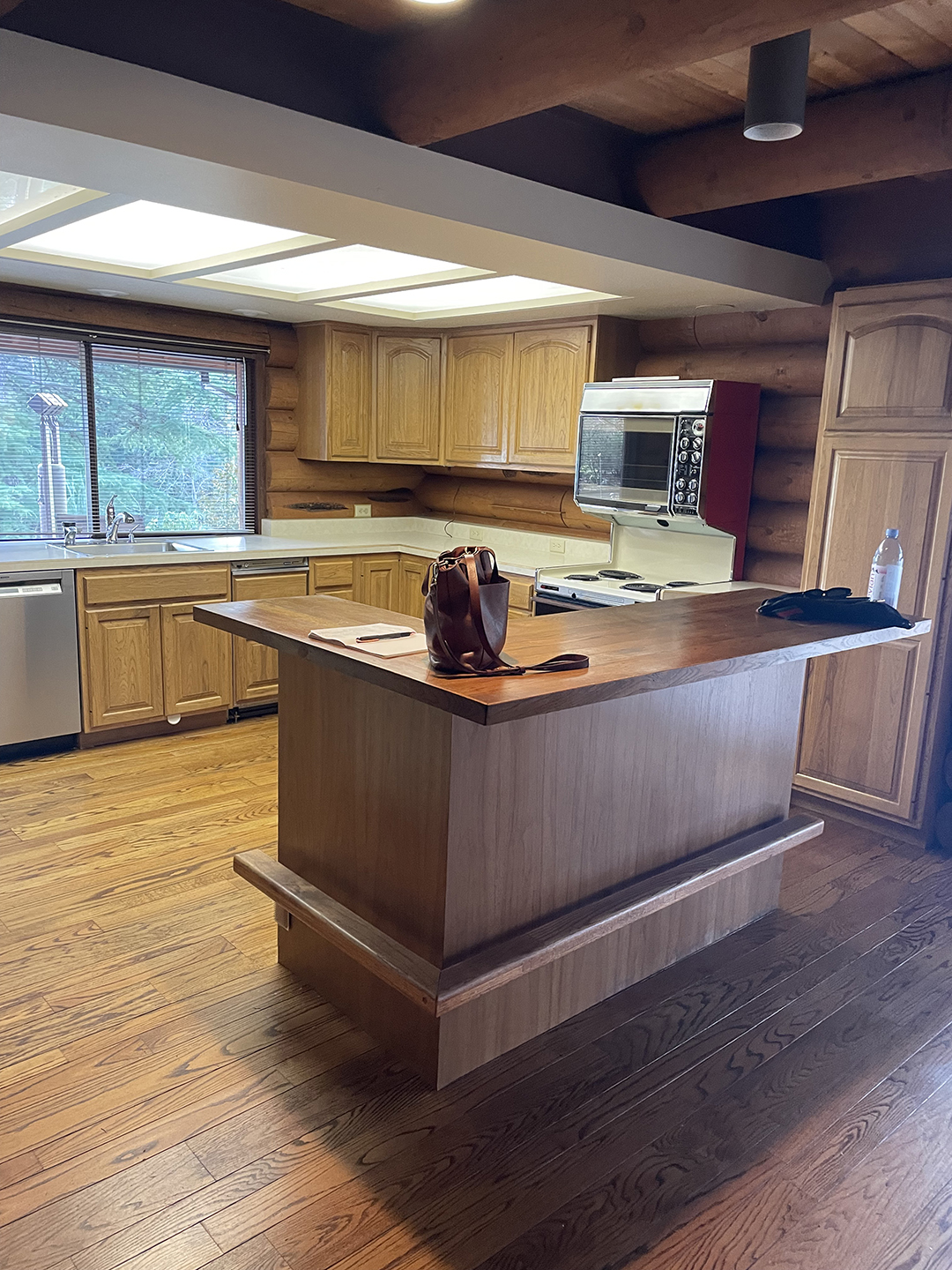 The kitchen, before.
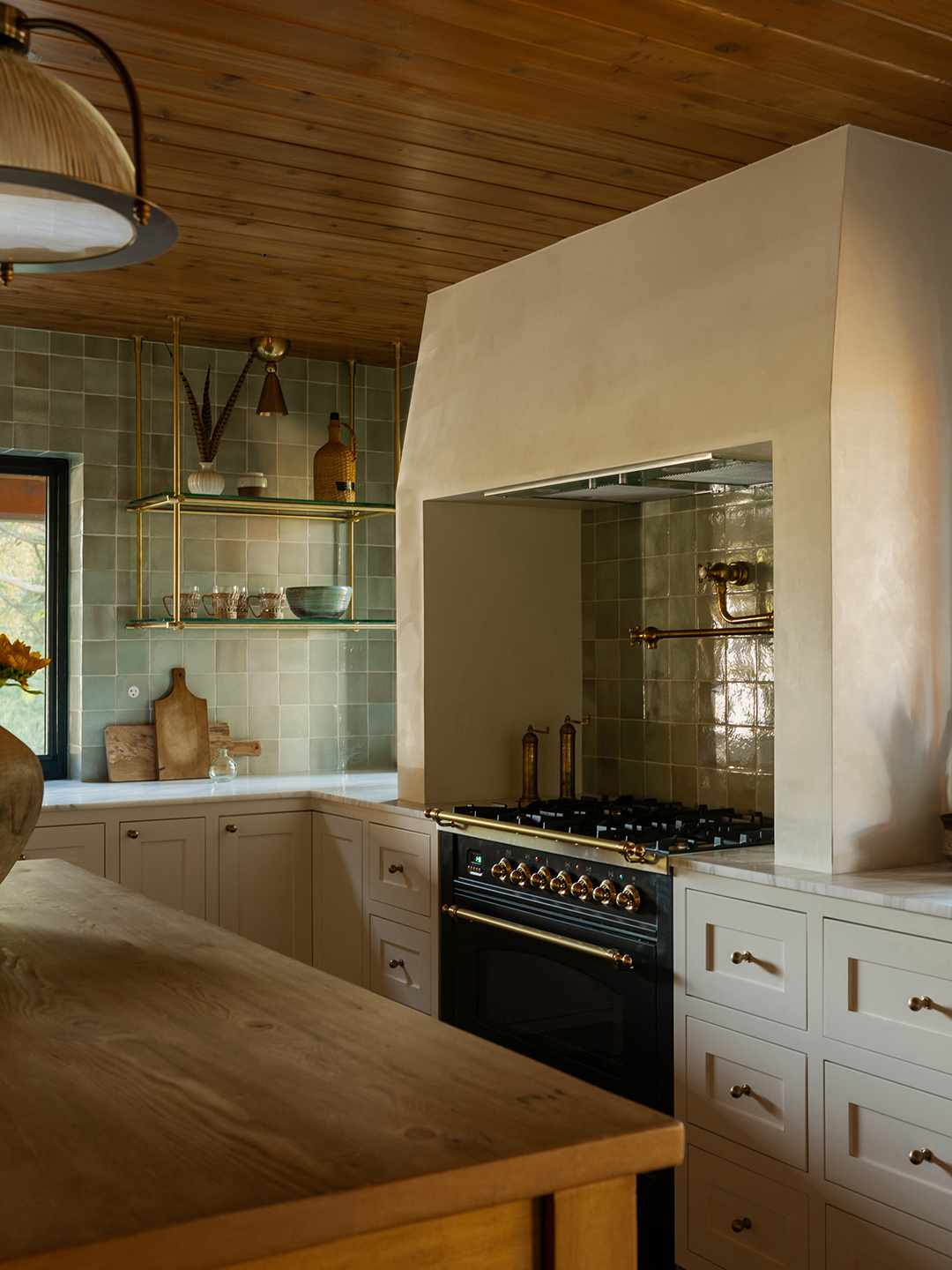 The kitchen, after. Pot Filler, deVOL; Roman Clay, Portola Paints.
A low ceiling and awkward peninsula separated the kitchen from the rest of the main floor, while the aforementioned fluorescent panels made the space feel more high school cafeteria than mountain getaway.
“We knew the kitchen had to feel light,” says Nelson. “But how do you make a white kitchen work in a house made of logs?” The answer: Nelson widened the window above the sink for a view of the fairway, installed a custom plaster hood for a softer texture, and added a vintage oak island to anchor the space. A green terracotta tile backsplash ties the space to the wooded lot outside.
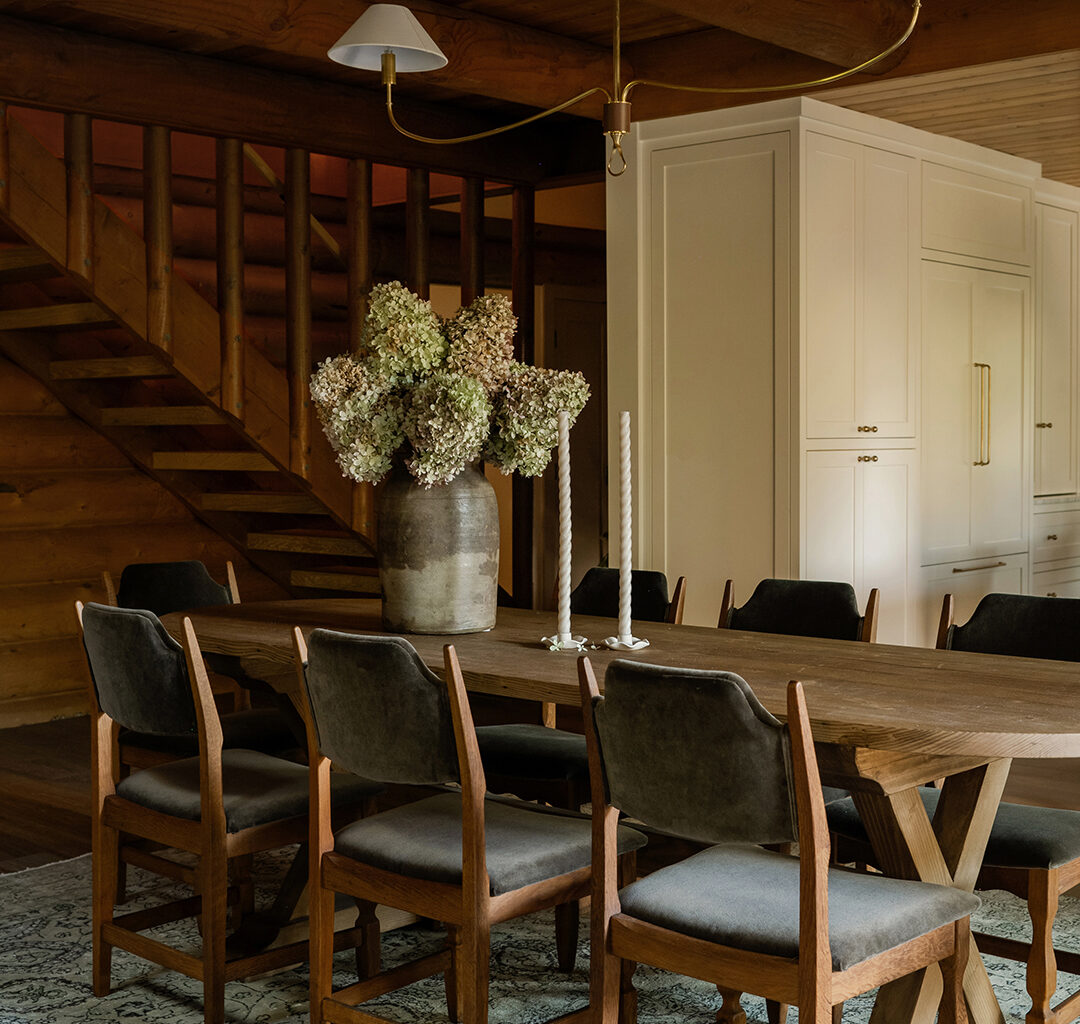
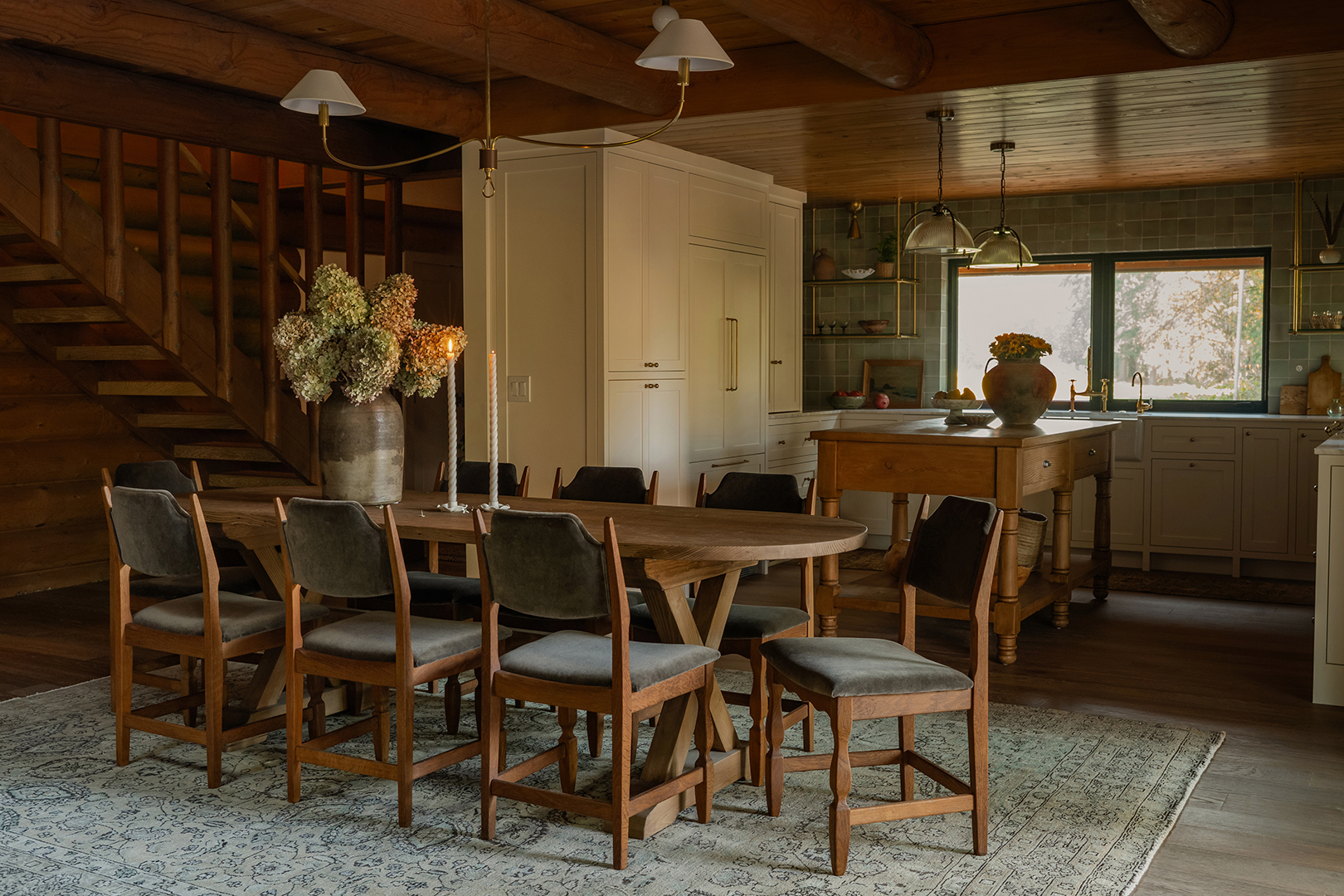 The dining area and kitchen, after. Island, Elsie Green; Pendant Lights, Shoppe Amber Interiors.
And that drop ceiling? Gone. Nelson replaced it with new tongue-and-groove paneling to blend with the original logs—an upgrade that was easier said than done. “Where the new ceiling meets the curved logs, the carpenters had to carefully scribe and cut each piece,” she explains. “It’s the kind of detail no one notices unless it’s done wrong.” Now, the joinery reads as effortless, though it was anything but.
Choppy Bathroom Layout? Open It All Up
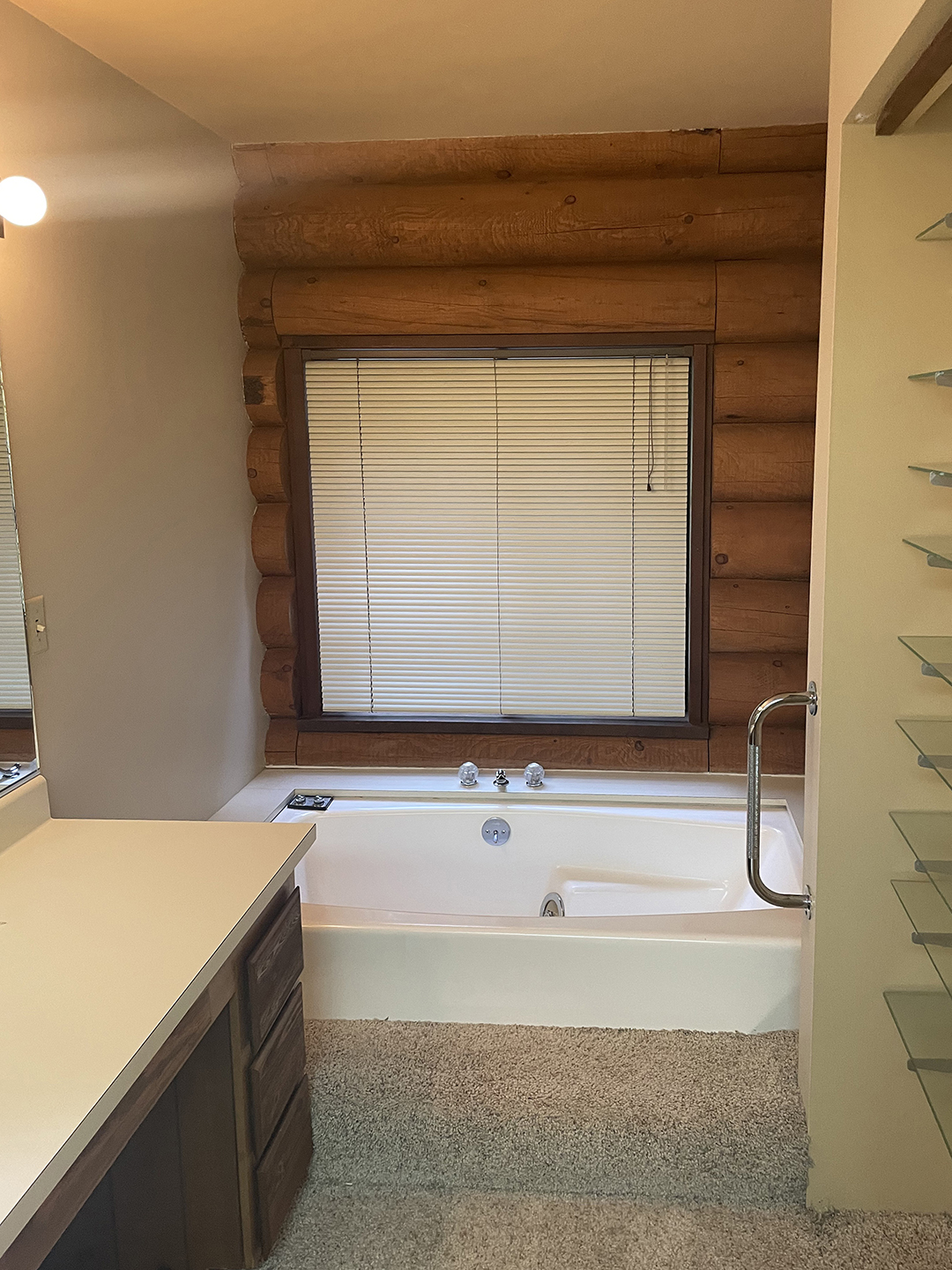 The primary bathroom, before.
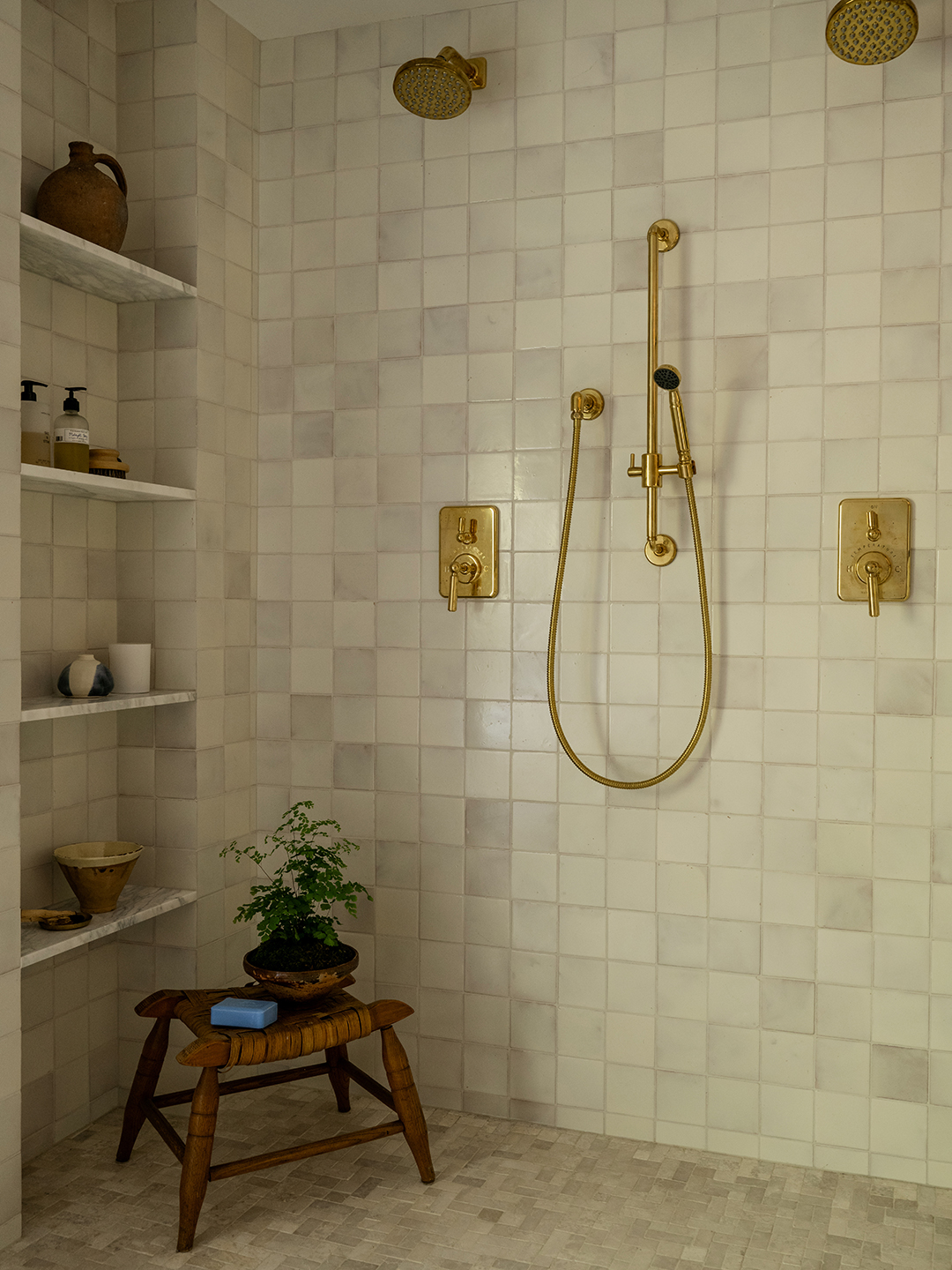 The primary bathroom, after. Floor Tile, Tile Bar; Wall Tile, Cle Tile; Shower Head, Waterworks.
The bathrooms weren’t just outdated—they were carpeted. In the primary suite, a walled-off layout divided the space into awkward zones: the tub in one corner, a vanity in another, and the only sink oddly separated from both. “It felt more like a maze than a bathroom,” Nelson says.
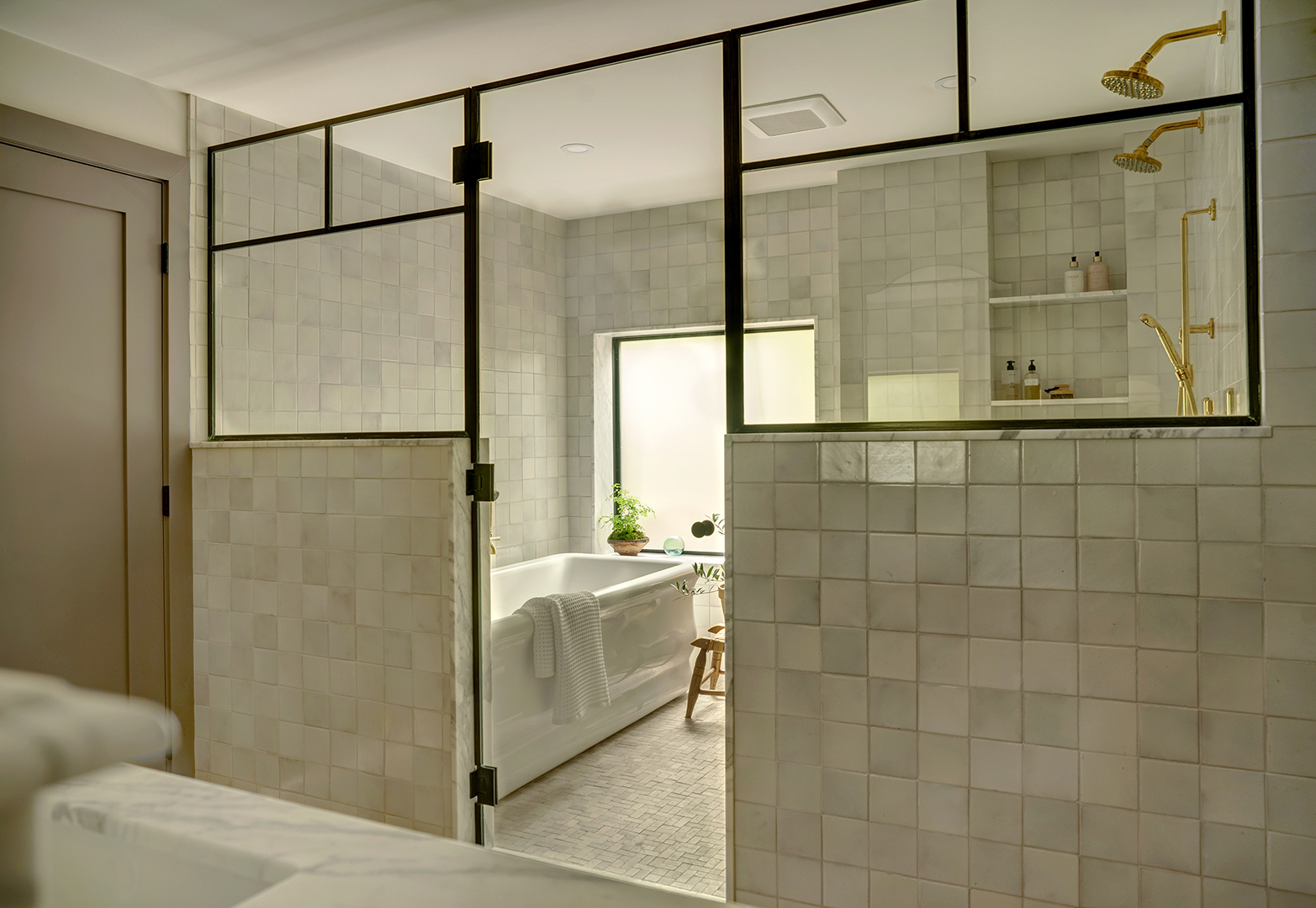 The primary bath, after. Tub, Vintage Tub & Bath.
To increase light and function, she knocked down non-structural walls and created a serene wet room with a freestanding tub and walk-in shower; the vanity sits just outside of it. Calacatta marble, unlacquered brass, and plaster finishes keep the space from feeling heavy. “The house already has a lot of texture,” Nelson notes, “so we wanted the materials to feel calm and natural, but still luxe.”
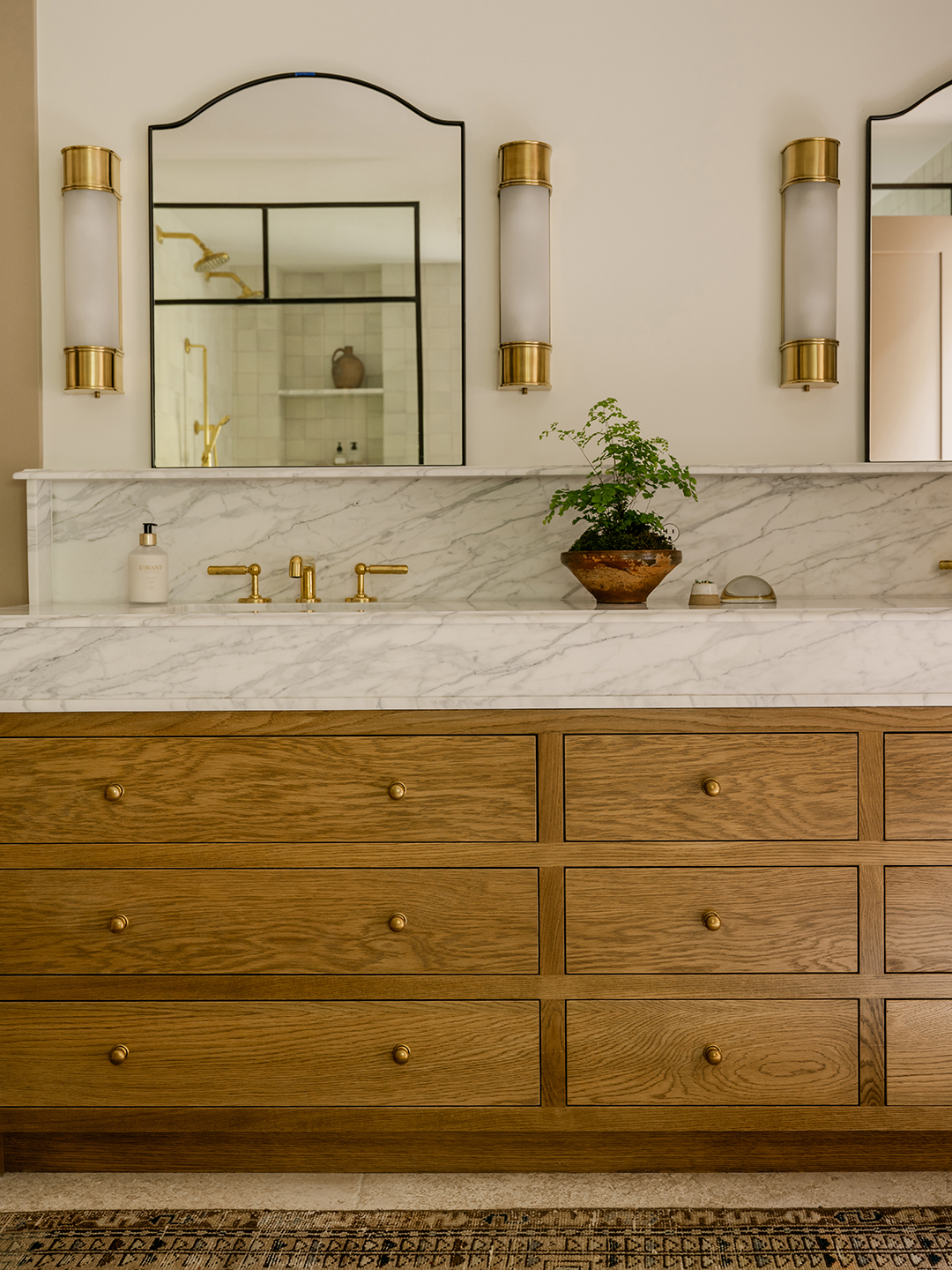 The primary bath, after.
Upstairs, the layout in the kids’ bathroom floor plan stayed the same, but it got a full finish refresh with leafy wallpaper, a soapstone counter with green veining, and warm oak cabinetry that nods to the surrounding forest.
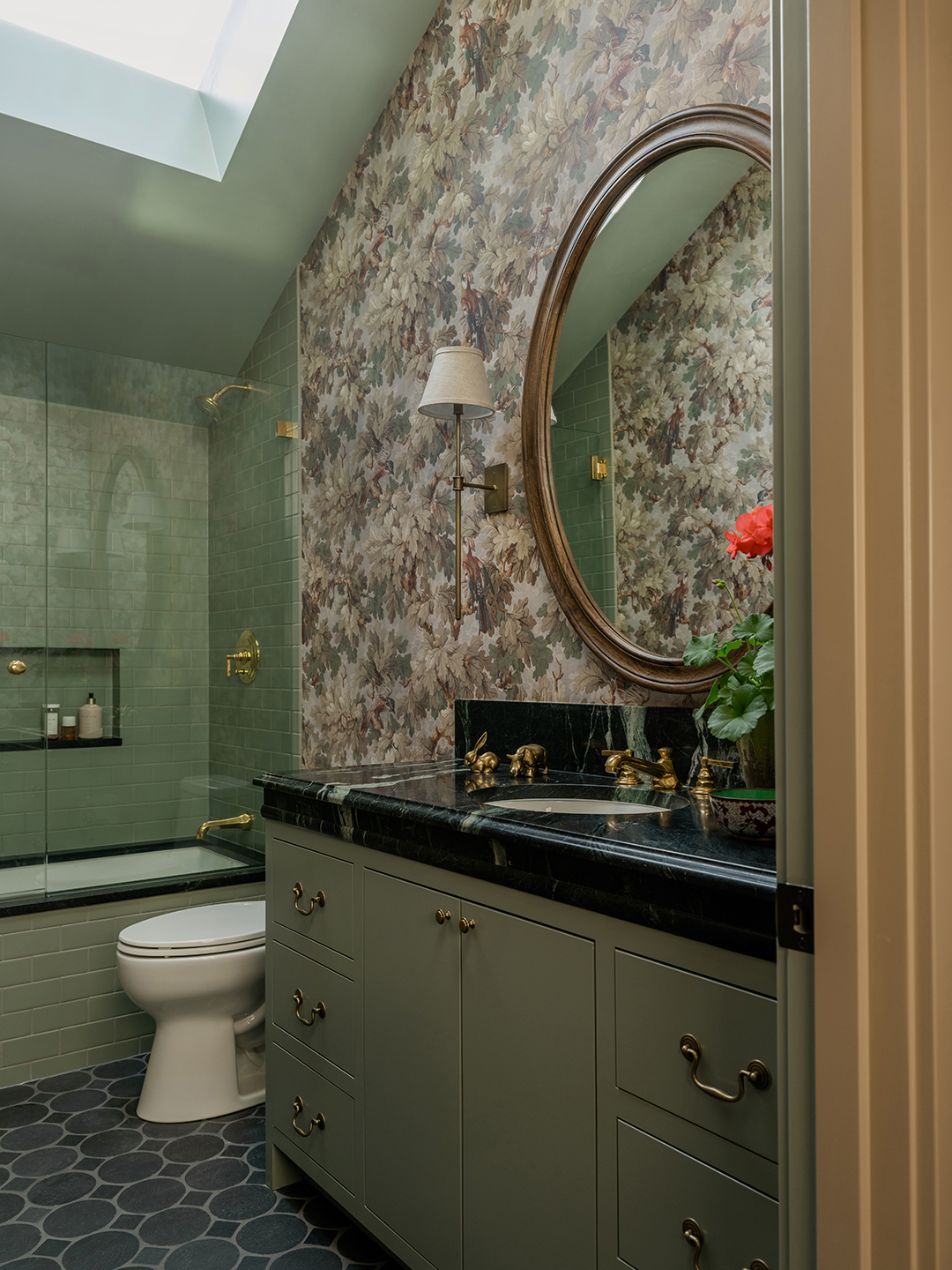 Upstairs bathroom, after. Sconces, Urban Electric; Mirror; Shoppe Amber Interiors; Pulls, Lee Valley.
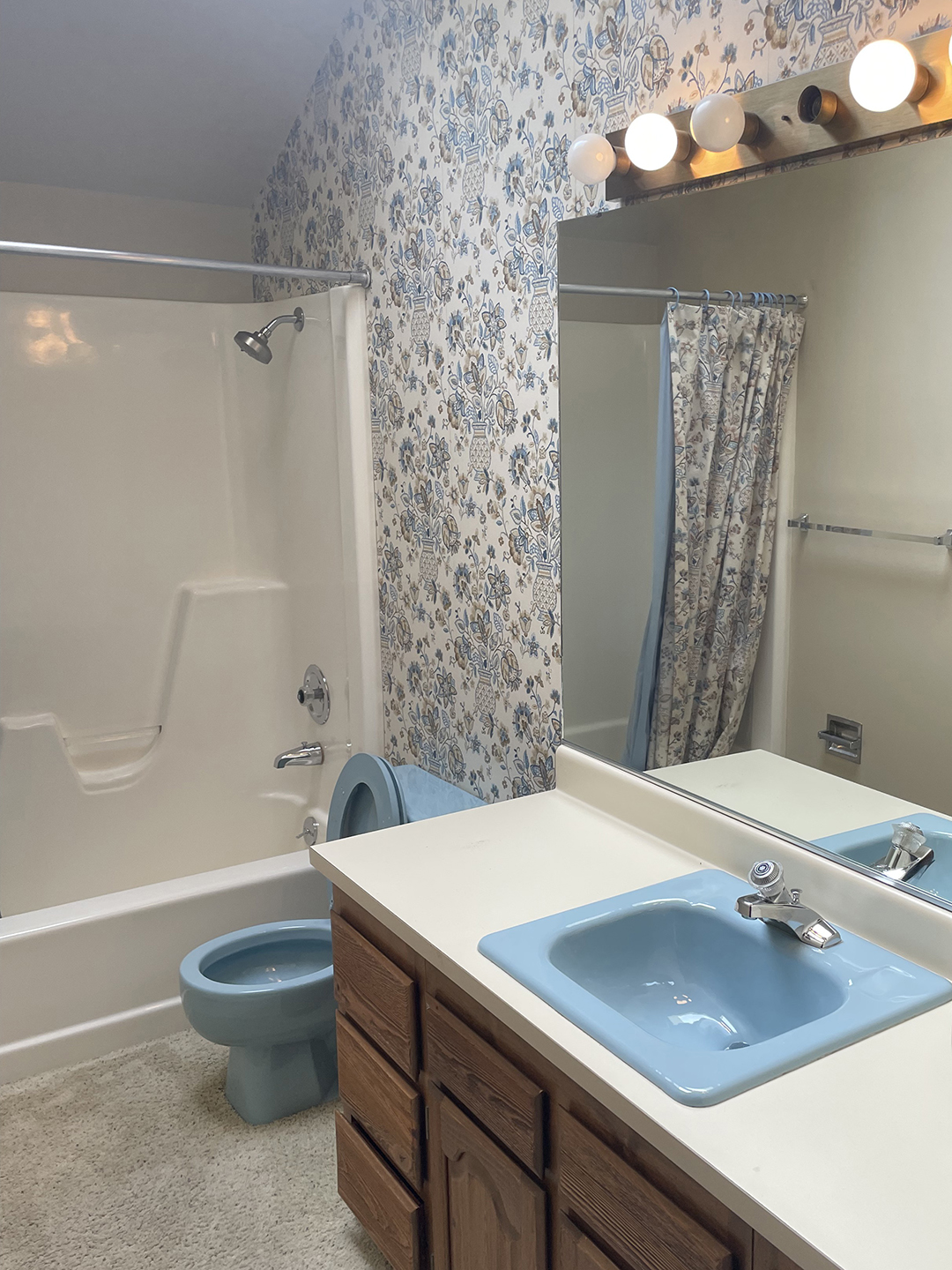 Upstairs bathroom, before.
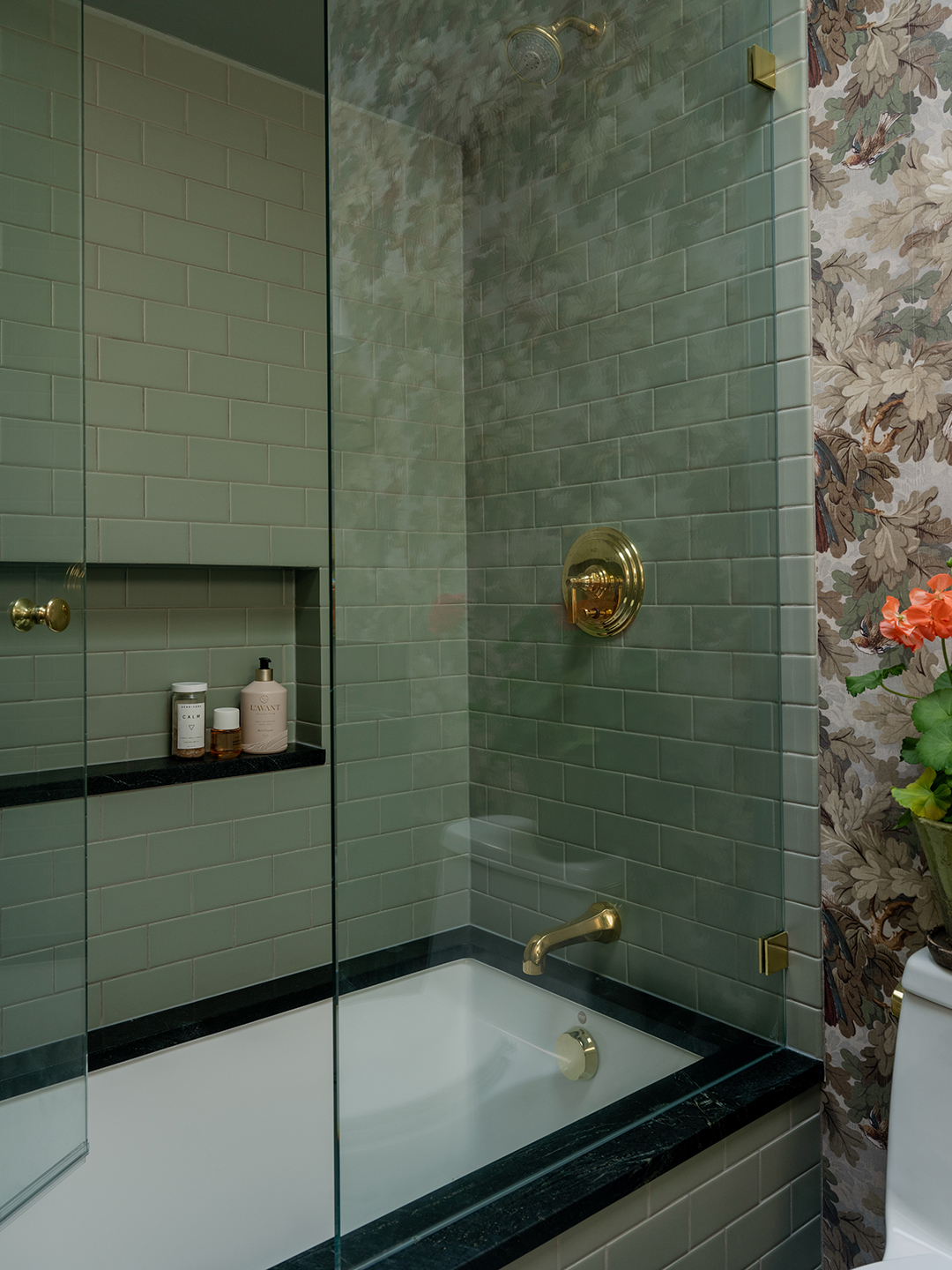 Upstairs bathroom, after.
Bedrooms That Let the Logs Speak
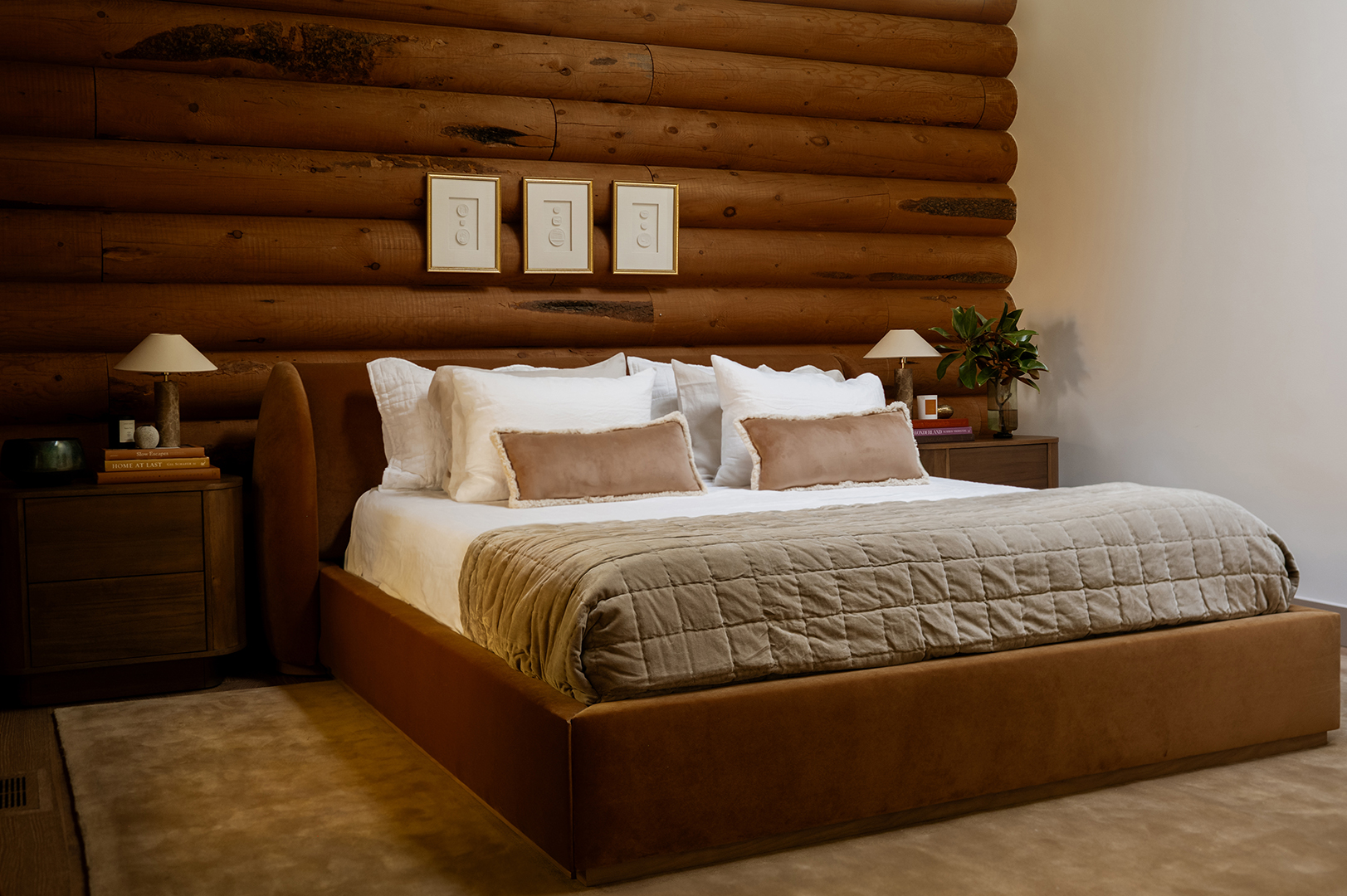 Primary bedroom, after. Bed Frame, Maiden Home; Coverlet, Quince.
The bedroom sits just off the main living area, and while Nelson didn’t move any walls here, the end result is still striking. “I knew we needed a trim color that wouldn’t clash with the logs,” she says. After testing seven or eight options, she landed on a cool brown that subtly complements the natural wood without skewing too red. The rest of the palette comes through via the textiles: an upholstered headboard, natural linens, and a plush rug underfoot. “It’s one of the most serene rooms in the house,” Nelson says.
The upstairs was once a loft open to the shared living space below, but with two kids, privacy was essential. “We closed it in and made it a true bedroom,” says Nelson. One of the designer’s favorite discoveries? The way the scalloped edges of the logs play against the new drywall, creating charming transitions no one saw coming.
A Fireplace Too Good to Gut
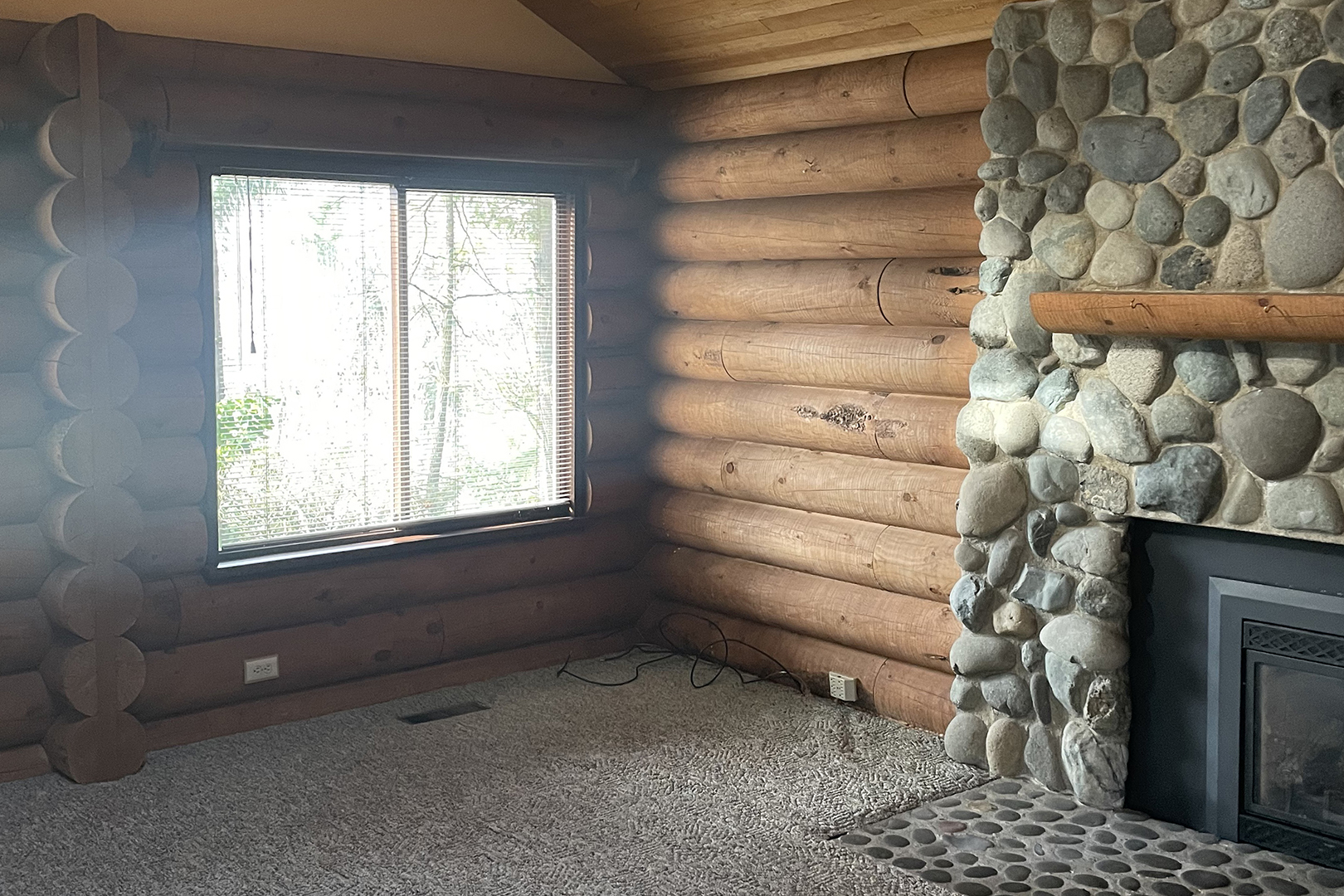 The living room, before.
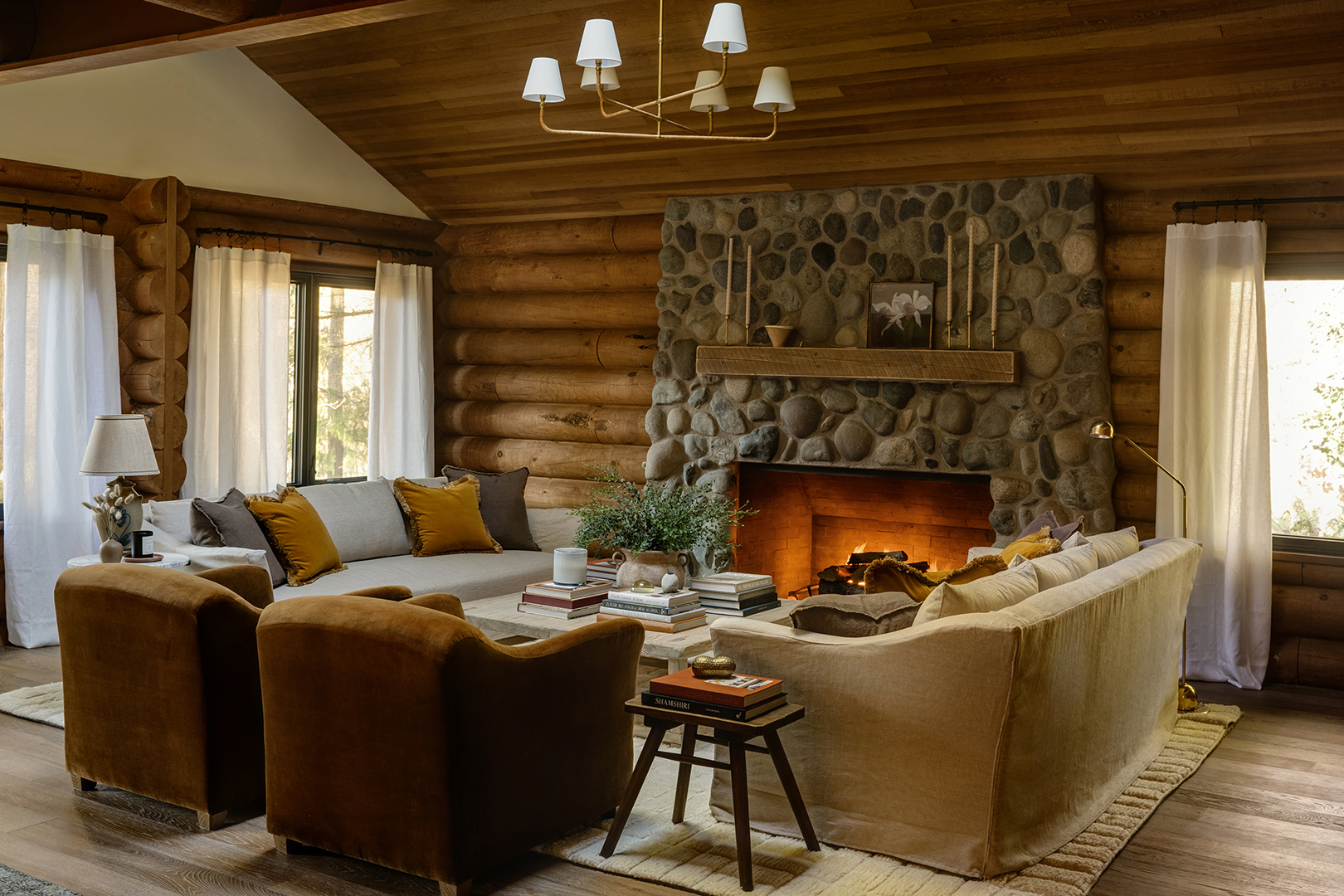 The living room, after. Chairs, Crate & Barrel; Sofa, Maiden Home.
The living room’s river rock fireplace was one of the first things Nelson knew had to stay. “She was on the fence at first,” Nelson says of the homeowner. “But I told her—there’s no way we’re touching this.” Re-creating that kind of natural stonework today would cost a fortune, not to mention lack the original’s charm. Instead of replacing it, Nelson gave it a gentle upgrade: a new gas-powered log set, a honed soapstone hearth, and a squared-off wood mantel. Now, the fixture feels like the soul of the space.