
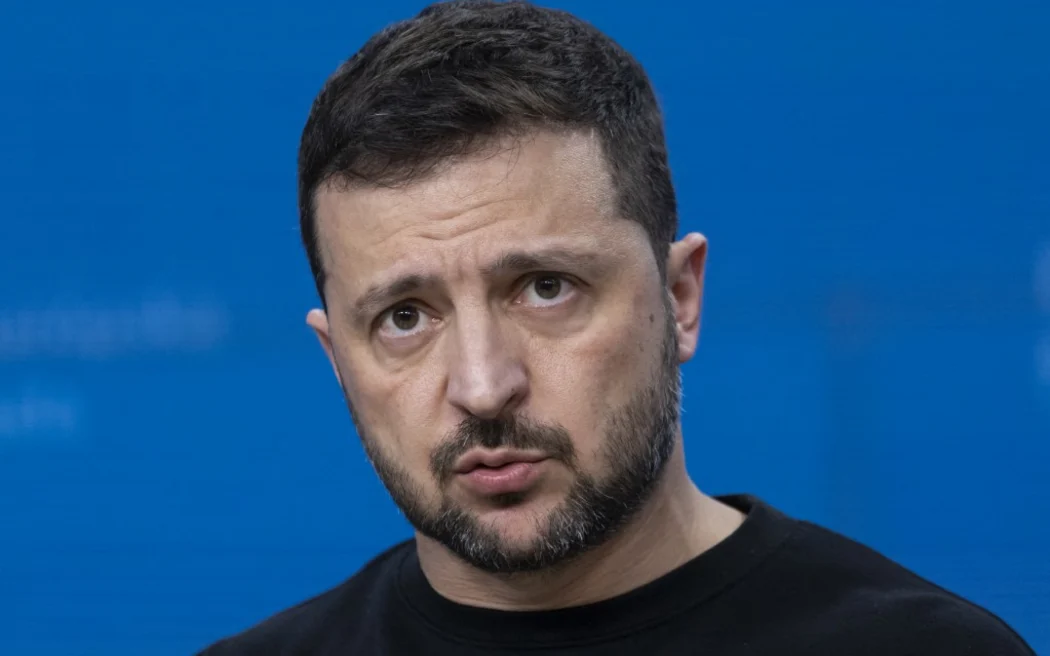
Ukrainian President Volodymyr Zelenskyy has formally announced that his government has presented the United States with a request for military equipment valued at roughly $90 billion. The proposal, which he has described as the “Mega Deal,” marks one of the largest procurement efforts sought by Ukraine since Russia’s invasion began in 2022. It underscores both the scale of Ukraine’s military needs and the country’s determination to secure long-term support from its allies.
The arms package submitted to Washington is not a signed agreement but rather a detailed list of requested weaponry. Zelenskyy stated that the proposal includes illustrations and specifications, though he cautioned that the matter is highly sensitive. The full scope of the package has not been disclosed publicly, but it is expected to encompass advanced air defense systems, long-range weapons, and other high-tech capabilities that Ukrainian forces have sought repeatedly over the course of the war.
Alongside the primary proposal, Zelenskyy outlined what he termed a “Drone Deal,” which would involve the United States purchasing Ukrainian-manufactured drones. Kyiv has significantly expanded its drone production and deployment in recent years, viewing the technology as a central component of its defense strategy. A U.S. commitment to buy and integrate Ukrainian drones would not only strengthen battlefield capacity but also deepen industrial ties between the two countries.
The announcement comes at a time of heightened Russian military activity, with increased missile and drone attacks targeting Ukrainian cities and infrastructure. In response, Ukraine has sought additional Patriot air defense systems and has already deployed one delivered by Israel, with more expected later in the year. Zelenskyy emphasized that maintaining and expanding such defenses is critical to protecting Ukraine’s population centers and ensuring the stability of its energy grid ahead of the winter months.
While the proposal signals Kyiv’s intent to shift from reliance on donations toward large-scale procurement, it also raises questions about the political and financial feasibility of such a request in the United States. Any arms package of this magnitude would require negotiation, congressional approval, and significant funding allocations. Previous rounds of U.S. assistance have generated debate among lawmakers, reflecting broader divisions in American politics over the scope and duration of support for Ukraine.
The timing of the announcement is also strategically important. By publicizing the request, Ukraine underscores its commitment to sustaining the war effort and signals to Russia that it expects to strengthen its defenses significantly in the months ahead. At the same time, the move puts pressure on Washington to respond, either by meeting the request in full, scaling it down, or proposing alternative forms of assistance.
The scale of the proposal also highlights the ongoing shift in Ukraine’s defense posture. Rather than viewing arms assistance as short-term relief, Kyiv is now positioning itself as a purchasing partner preparing for a prolonged struggle. The request reflects not only battlefield necessity but also a broader effort to integrate Ukraine more deeply into Western defense supply chains.
As discussions move forward, the focus will be on the response from Washington and how quickly any agreements can be reached. Until then, the $90 billion proposal remains an ambitious plan that illustrates both the severity of Ukraine’s challenges and its reliance on U.S. partnership to withstand Russia’s continuing assault.
