
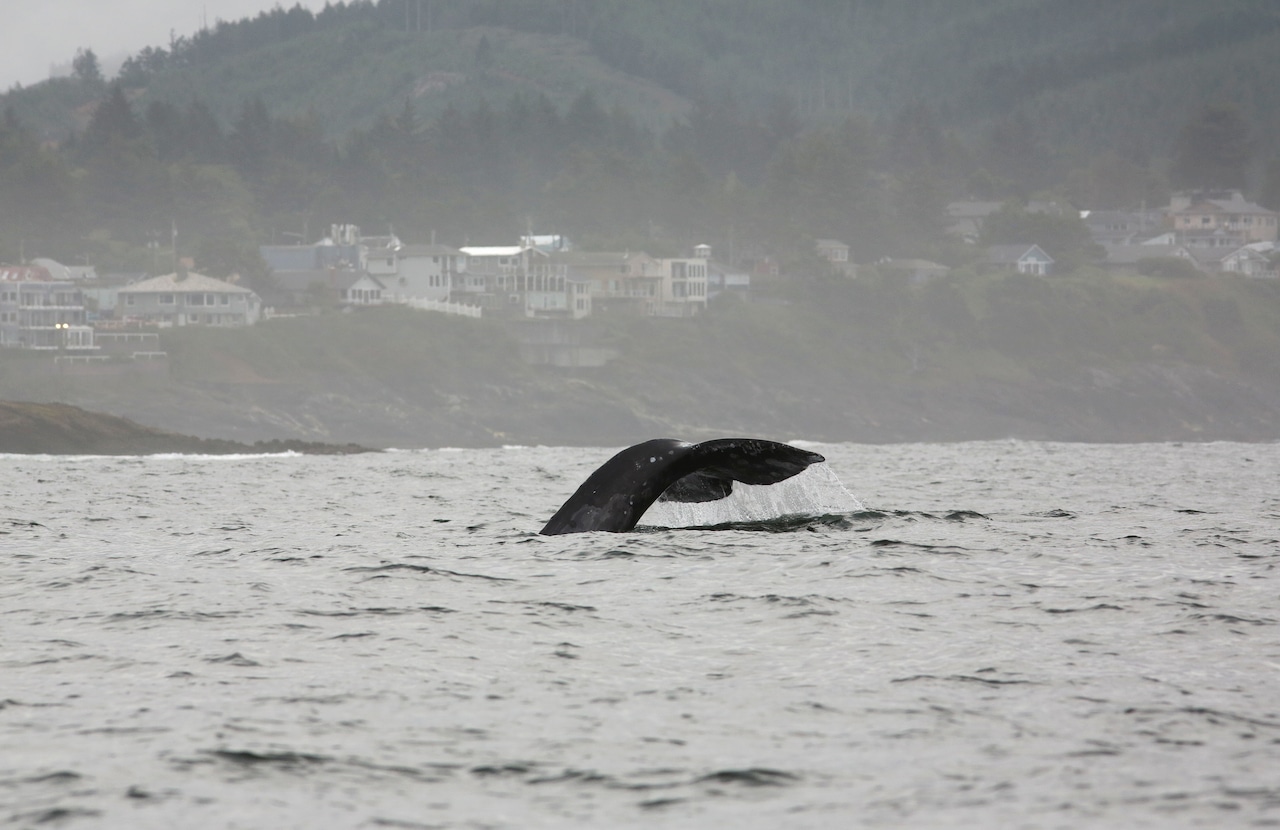
Depoe Bay isn’t called the “whale watching capital of the Oregon Coast” for nothing. There’s fascinating marine science behind why this small coastal town offers some of the most reliable whale sightings anywhere in the Pacific Northwest.
On a recent episode of the Peak Northwest podcast, co-host Jamie Hale explained why some of these Pacific Ocean whales are sticking around the central coast destination.
Generative AI was used to summarize a recent episode of the Peak Northwest podcast. This story was reviewed and edited by The Oregonian/OregonLive.
While thousands of gray whales migrate past Oregon during their epic 10,000-mile round-trip journey between Baja California and Alaska each year, Hale explained, a small population of about 250 whales breaks from the migration pattern to hang around Depoe Bay.
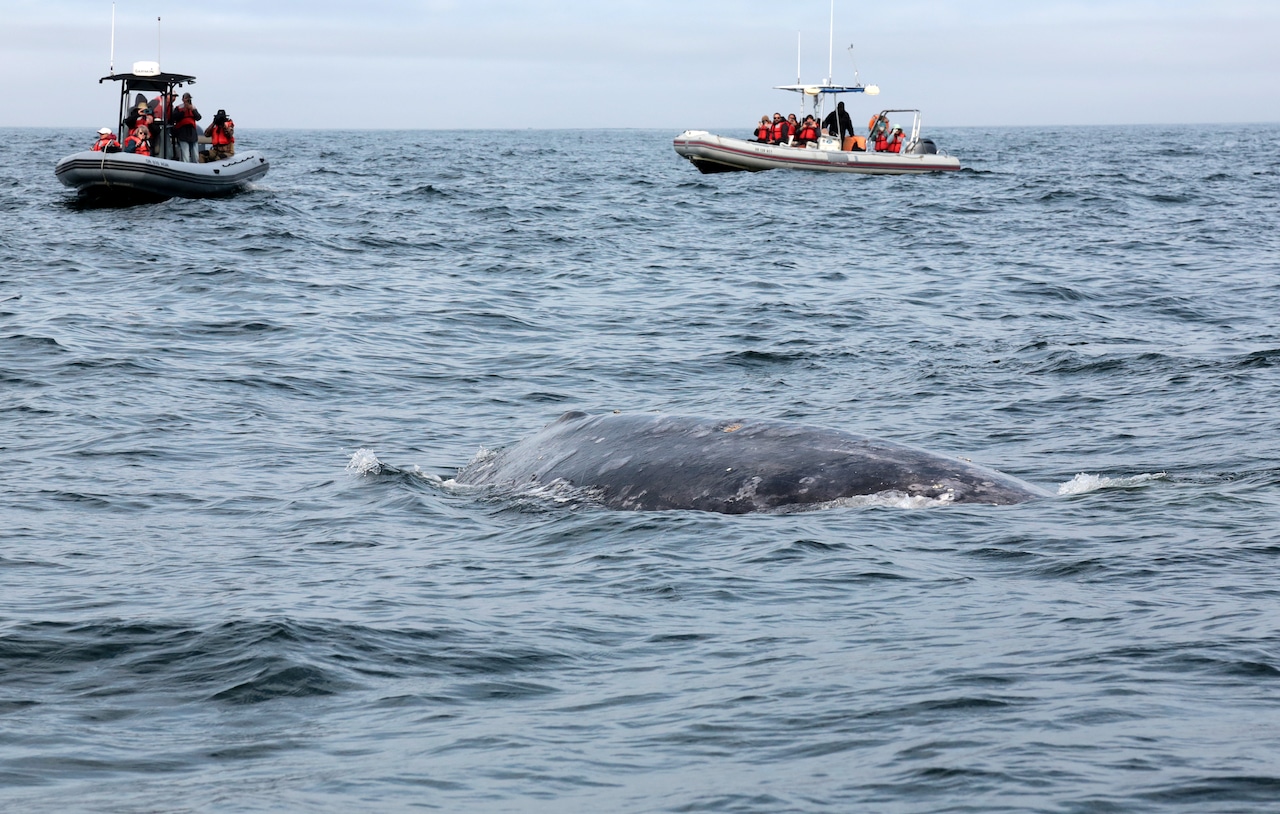 A gray whale surfaces just offshore of Depoe Bay on the central Oregon coast, spotted by several whale watching boats. The animals were seen on a whale watching tour with Whale Research EcoExcursions. Jamie Hale/The Oregonian
Local marine biologist Carrie Newell uncovered the scientific reason through determined (and somewhat unglamorous) research that involved collecting fresh whale excrement to see what they were eating.
“She found tons and tons of mysid shrimp, which are little tiny shrimp that live in the kelp beds… they thrive because of this deep, volcanic, rocky shoreline there,” Hale explained.
This creates a whale buffet unlike anywhere else on the Oregon coast.
“The gray whales are going there and just eating their body weight in tiny shrimp every single day and there’s enough of them there that it sustains the population – at least a small population,” Hale said.
This distinctive underwater ecosystem creates a perfect viewing opportunity for visitors. The “summer resident” whales stay close to shore to feed in these productive kelp beds, making them visible from multiple vantage points.
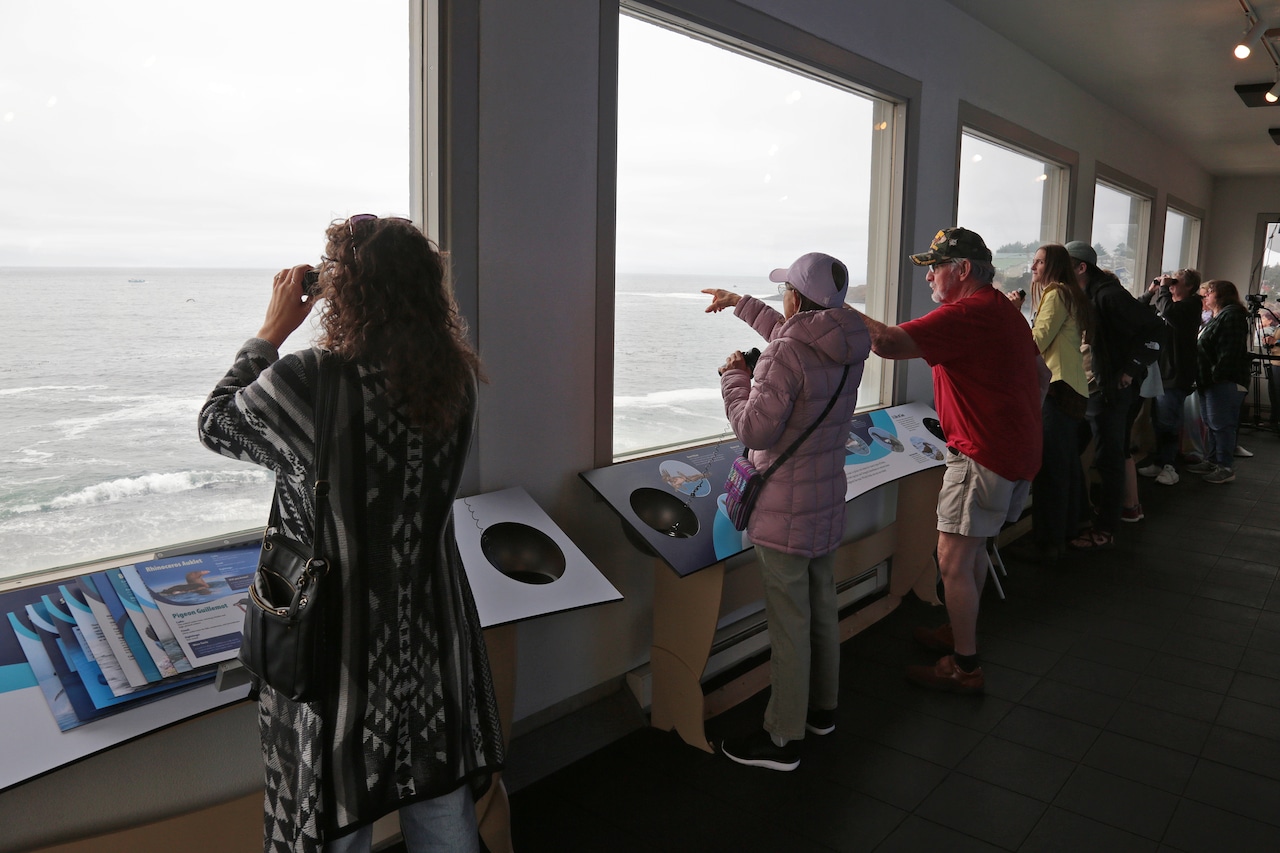 People look for whales inside the Whale Watching Center in Depoe Bay on the central Oregon coast. Jamie Hale/The Oregonian
While there are several ways to witness this natural spectacle in Depoe Bay, from the Whale Watching Center with its educational displays to simply walking along the coastline, your best bet might be on a whale watching tour boat.
Four companies offer whale watching tours in Depoe Bay, but Hale recommends Whale Research EcoExcursions, run by Carrie Newell. Her company uses smaller boats that sit low to the water, offering an intimate experience without excessive rocking that might trigger seasickness.
Don’t expect the theatrical performances you might see in whale documentaries, though. Gray whales aren’t known for their acrobatics. What you’ll typically see is the spout from their blowhole, followed by the arching of their back as they surface. Sometimes they’ll lift their tail before diving deeper.
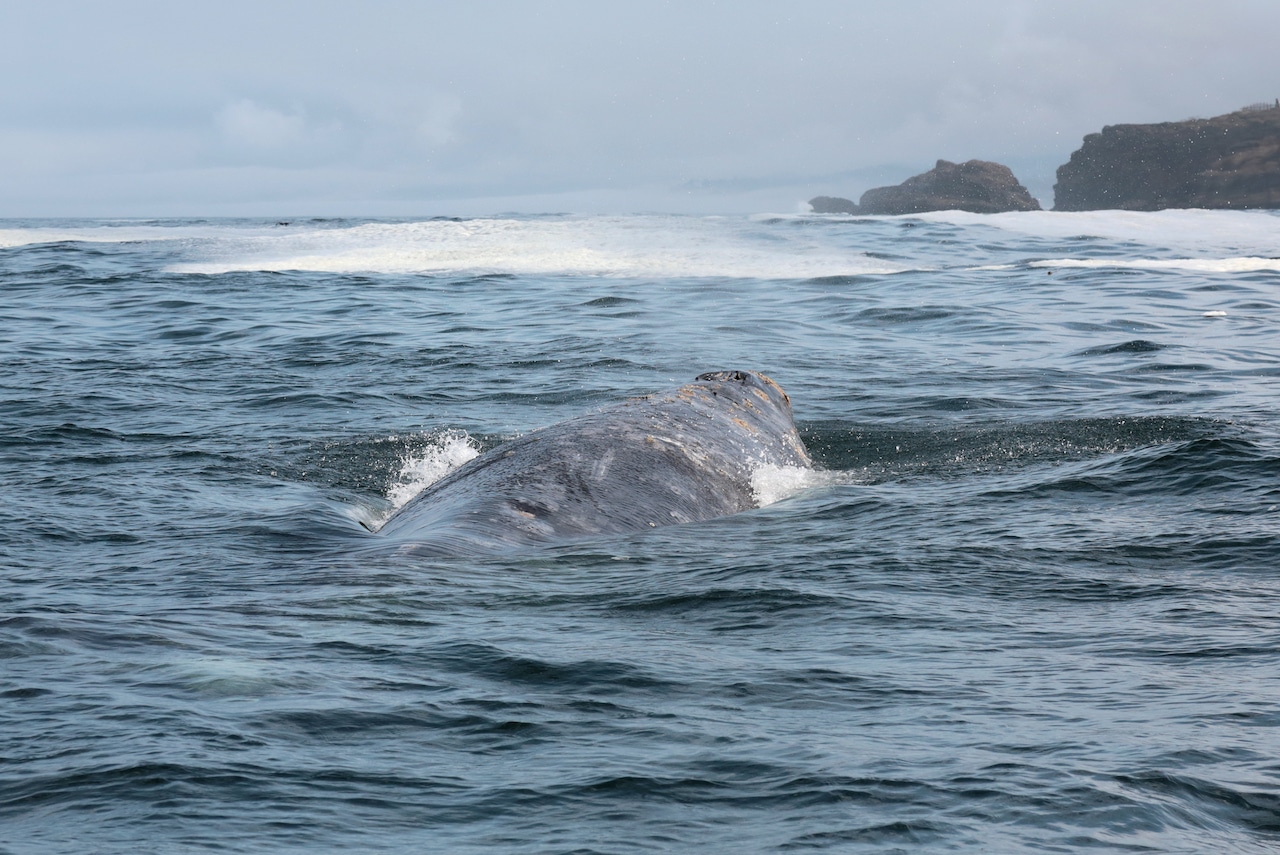 A gray whale surfaces just offshore of Depoe Bay on the central Oregon coast. The animals were seen on a whale watching tour with Whale Research EcoExcursions. Jamie Hale/The Oregonian
For timing your visit, Newell recommends September as prime whale-watching season, though the viewing opportunities extend from summer through early fall. Winter and spring bring the full migration, when you can see whales passing through in greater numbers, though weather can be less reliable.
Whether you’re a dedicated wildlife enthusiast or simply curious about these magnificent creatures, Depoe Bay offers a special opportunity to witness gray whales in their element, thanks to the unique ecosystem created by that rocky volcanic shoreline and the clouds of tiny shrimp that call it home.
If you purchase a product or register for an account through a link on our site, we may receive compensation. By using this site, you consent to our User Agreement and agree that your clicks, interactions, and personal information may be collected, recorded, and/or stored by us and social media and other third-party partners in accordance with our Privacy Policy.