
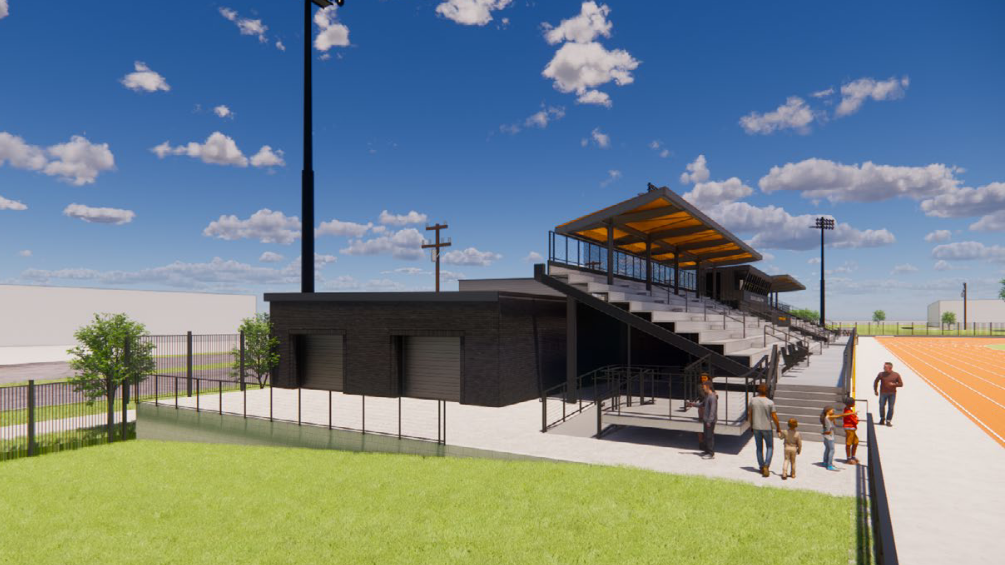
The stadium planned as part of phase one of the VCU Athletic Village project would have 1,000 outdoor bleacher seats. (Images courtesy AARB)
Plans for the initial phase of VCU’s athletics village and a new dorm that would add hundreds of beds to the university’s campus are to be evaluated this week by the state architectural board.
Preliminary reviews of the design plans for the first part of the VCU Athletic Village near The Diamond, as well as a reworked approach to the 14-story dorm planned on West Grace Street, are on the agenda for this Friday’s meeting of the Art and Architectural Review Board (AARB).
The 40-acre athletics village’s first phase would include a stadium with a 400-meter outdoor track and natural turf soccer field, in addition to two practice fields. It has been designed to blend in with the nearby “industrial context” of the site, according to meeting materials.
The project, which is considered phase one of the overall Athletic Village project, would feature a masonry stadium with a steel shade canopy structure above an aluminum grandstand. The building would feature the black-and-gold university colors, as well as steel cross bracing, to establish an industrial aesthetic for the village.
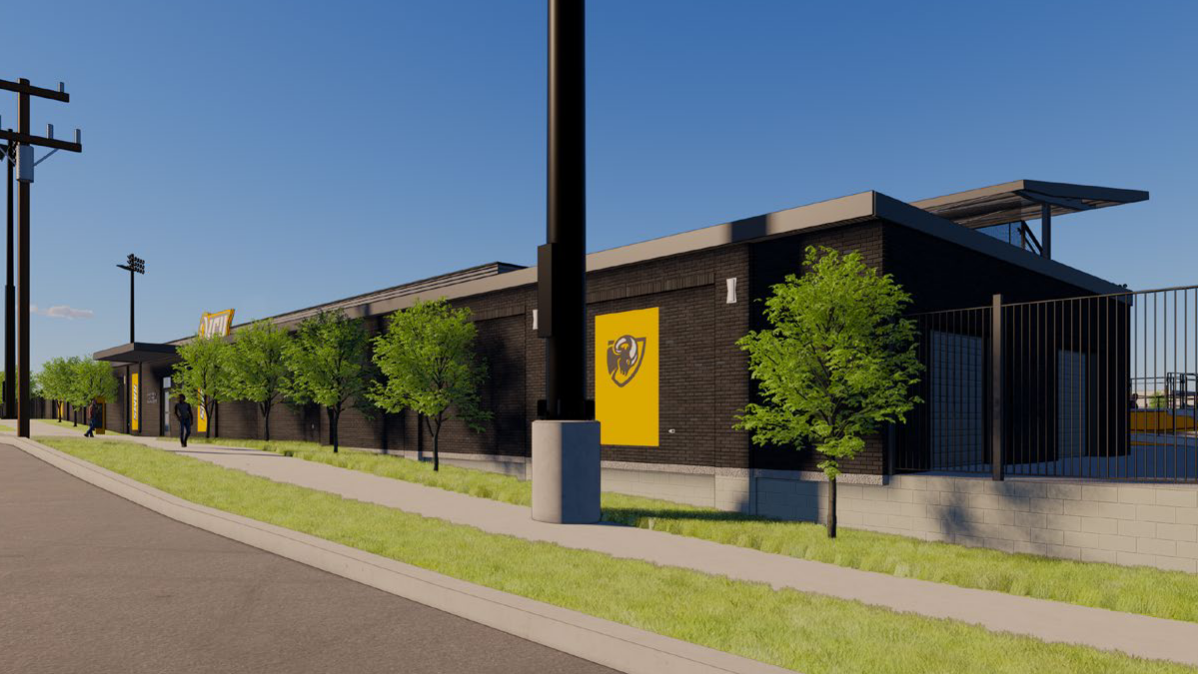
The design of the stadium planned for phase one of the VCU Athletic Village project is intended to blend in with surrounding industrial buildings in the area around Scott’s Addition.
The AARB evaluation follows VCU’s recent move to decrease the scope of the project due to cost considerations. The VCU Board of Visitors in September approved revised project plans for the first phase of the Athletic Village that pare back the size of the track stadium and its seating capacity.
The facility is now planned to have open-bleacher seating for 1,000 people in a stadium of about 9,000 square feet. The project was previously envisioned as having bleacher seating for up to 1,500 people in a 15,600-square-foot stadium, a plan the VCU board had approved in December.
The project’s size was changed due to increases in construction costs, and in making the changes, the project stays within its $38 million budget.
Barton Malow is the general contractor and HKS was tapped to design the project.
Phase one of the athletics village will rise at 2701 Hermitage Road, formerly the site of the now-demolished Greyhound Lines bus maintenance facility. Site work is currently underway on the property.
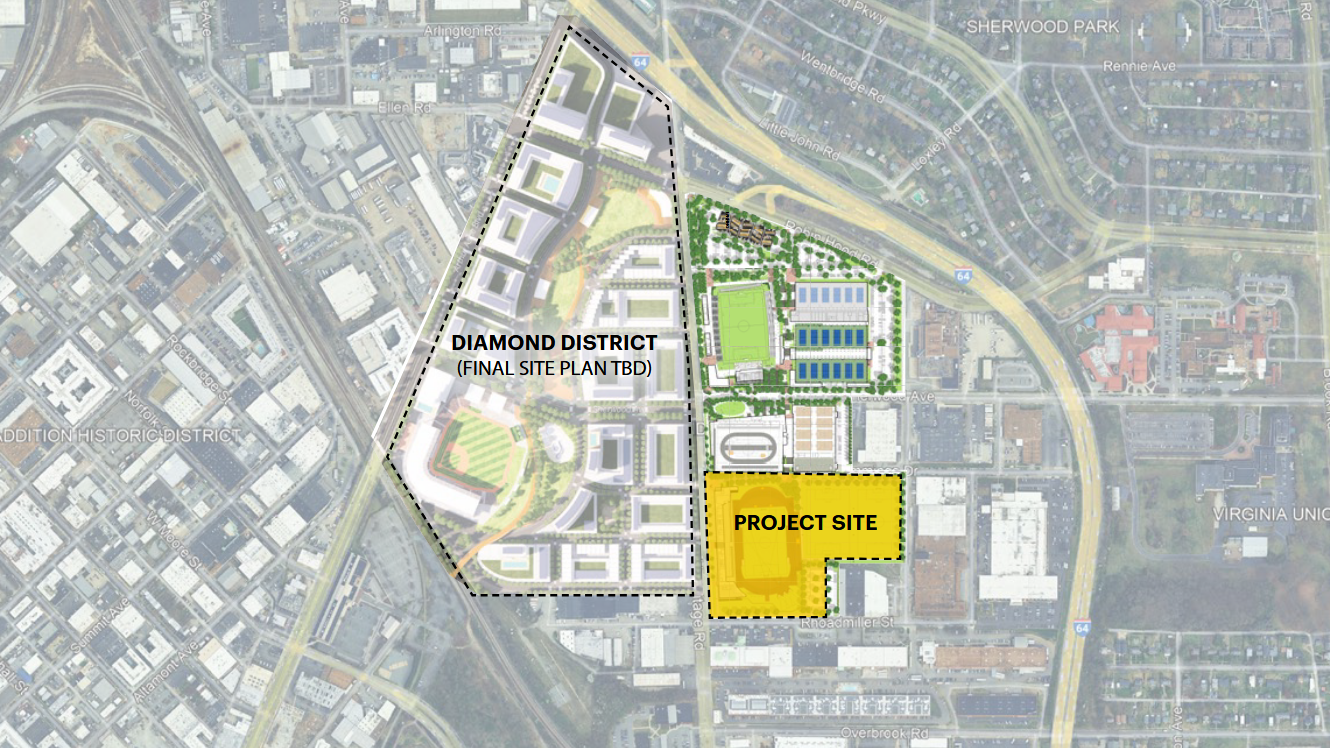
The VCU Athletic Village project is planned for a 40-acre site next to the proposed Diamond District development. The first phase of the project, which is underway on design approval from the state, is shown in yellow.
The first phase of the project is intended to replace the nearby Sports Backers Stadium, which is where VCU holds soccer matches and track-and-field meets. The 25-year-old stadium is slated to be sold to the Richmond Economic Development Authority, with proceeds of the sale going toward the first phase of the Athletic Village.
The 6.6-acre Sports Backers Stadium is expected to change hands for $25 million. VCU was still the owner of the property as of this week, per online land records. VCU has previously said it plans to cover the remaining $13 million needed for the first phase of the athletics village with private fundraising and VCU Athletics funds.
Beginning in 2020, VCU gradually accumulated dozens of acres at 2601-2901 Hermitage Road for the Athletic Village, which is described as a third campus for the university. VCU spent $39 million for the 42 acres it needs for the village.
The overall project is expected to be completed in four phases, and future phases are planned to have indoor and outdoor tennis courts, as well as a soccer stadium and other facilities.
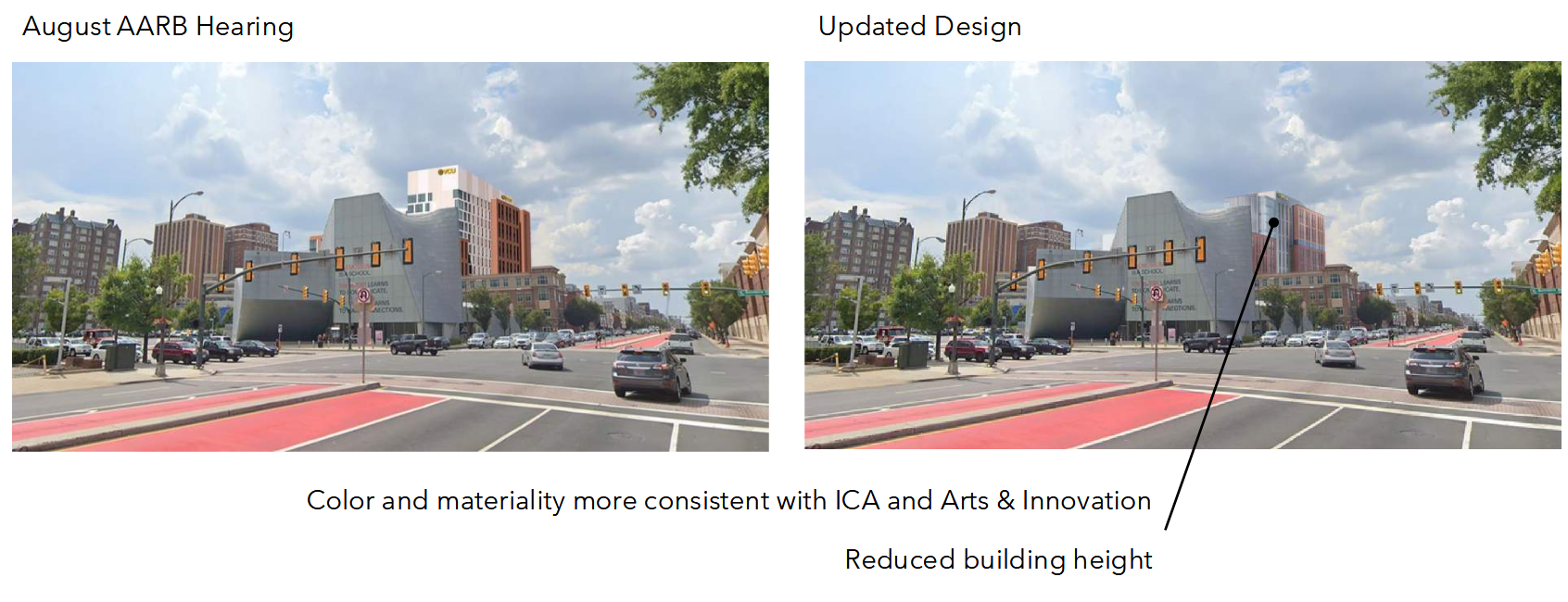
The updated design of the 14-story dorm is intended to make it more consistent with nearby VCU buildings like the Institute for Contemporary Art.
Also on the AARB’s agenda is a newly refiled design plan for the VCU dorm project on Grace Street.
VCU is seeking design approval of a 14-story residence hall that would be built on a 1-acre site currently occupied by the BookHolders building at 720 W. Grace St. and a three-story VCU office building at 700 W. Grace St.
VCU has described the project as planned to have 900 to 1,000 beds. The dorm would feature both suite-style and apartment units. The ground floor of the building would feature retail and dining space, as well as a mail center.
The dorm would be a 349,000-square-foot structure with a crescent-shaped design with an opening that faces south toward Grace Street. The building’s west tower would be 14 floors and an eastern section would be 9 stories.
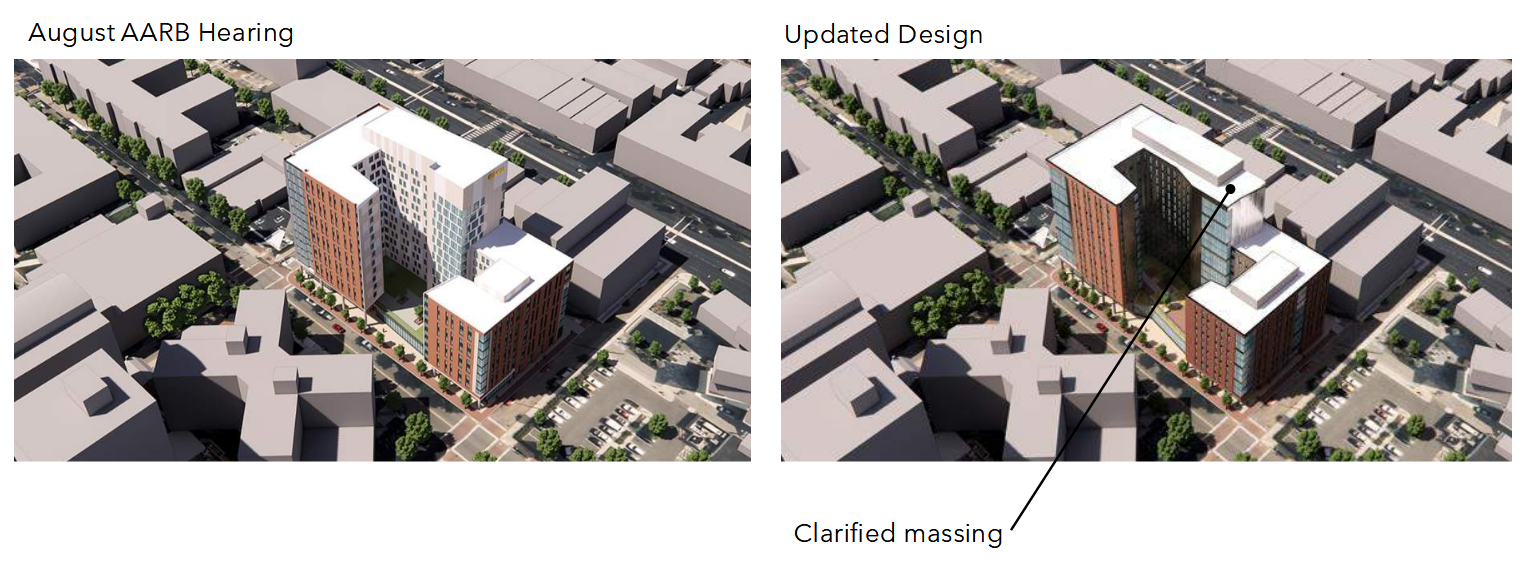
VCU has previously said the 14-story dorm on West Grace would feature up to 1,000 beds. It would be built on the site of BookHolders and an office building.
The stepped approach is intended to help the building mesh with the surroundings, which include similarly sized university dorms toward Monroe Park on one side, and on the other side smaller buildings along Broad Street and the Institute for Contemporary Art. The dorm’s design features masonry, glass and metal panelized rainscreen.
The upcoming review follows an evaluation by the AARB in August, where members of the advisory board said the previous iteration of the dorm felt incongruous with nearby buildings and lacked a cohesive design. The AARB voted against the previous proposal.
The updated design features usage of color and material intended to be more aligned with the ICA, Gladding Residence Center and upcoming CoStar Arts & Innovation Center, as well as simplified arrangement of the building’s windows.
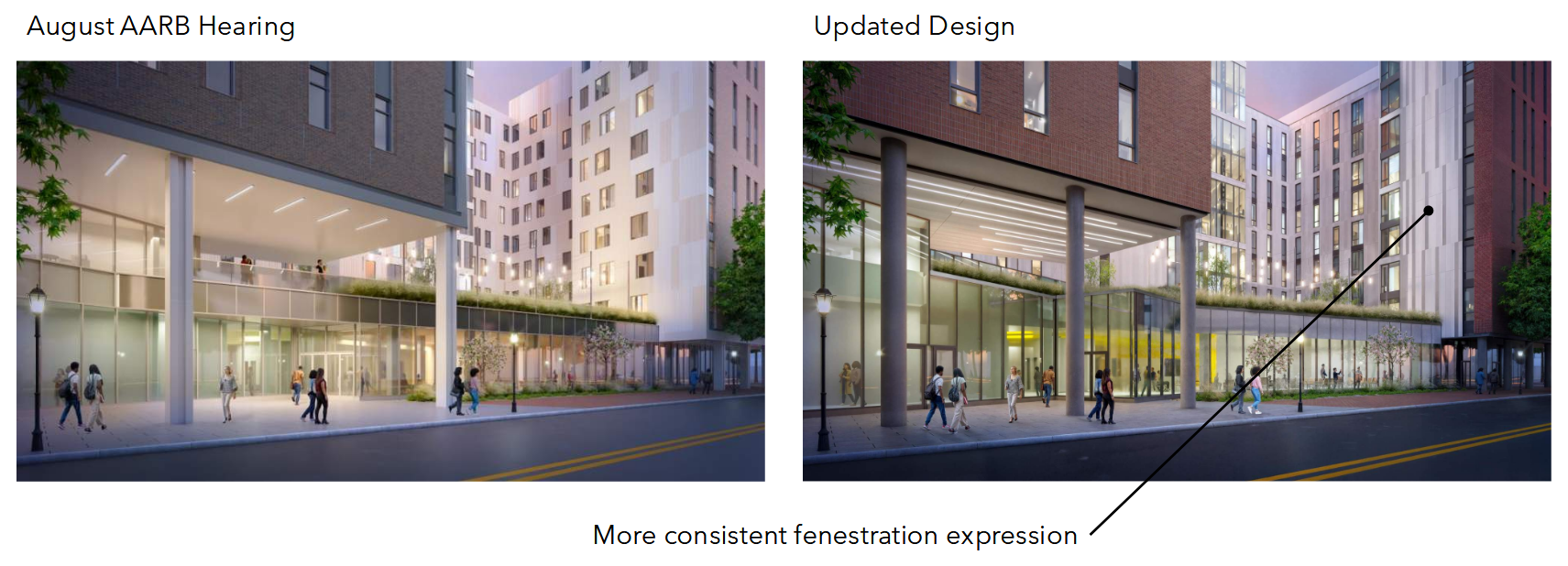
The previous and latest design of the VCU dorm planned as seen on the street level on West Grace. The building would feature a second-floor courtyard as well as retail and dining spaces.
The square footage and number of floors in the new design remain the same as the previous pitch, though the height of the building has been reduced, according to the presentation materials.
The project team includes architecture firm Glavé & Holmes, engineering firm Ayers Saint Gross and landscape architects Waterstreet Studio.
A cost estimate for the dorm hasn’t been released yet, and the project would be funded through debt paid with student housing payments and auxiliary funds.
Both projects are in the preliminary review stage of the AARB process. A second and final review is expected to follow at a later date, when the board will make a recommendation on whether to approve the design plans for each project.
The AARB recommendations are forwarded to the Department of General Services director, who provides final approval of design plans for state government buildings such as VCU’s capital projects.
Print Article