
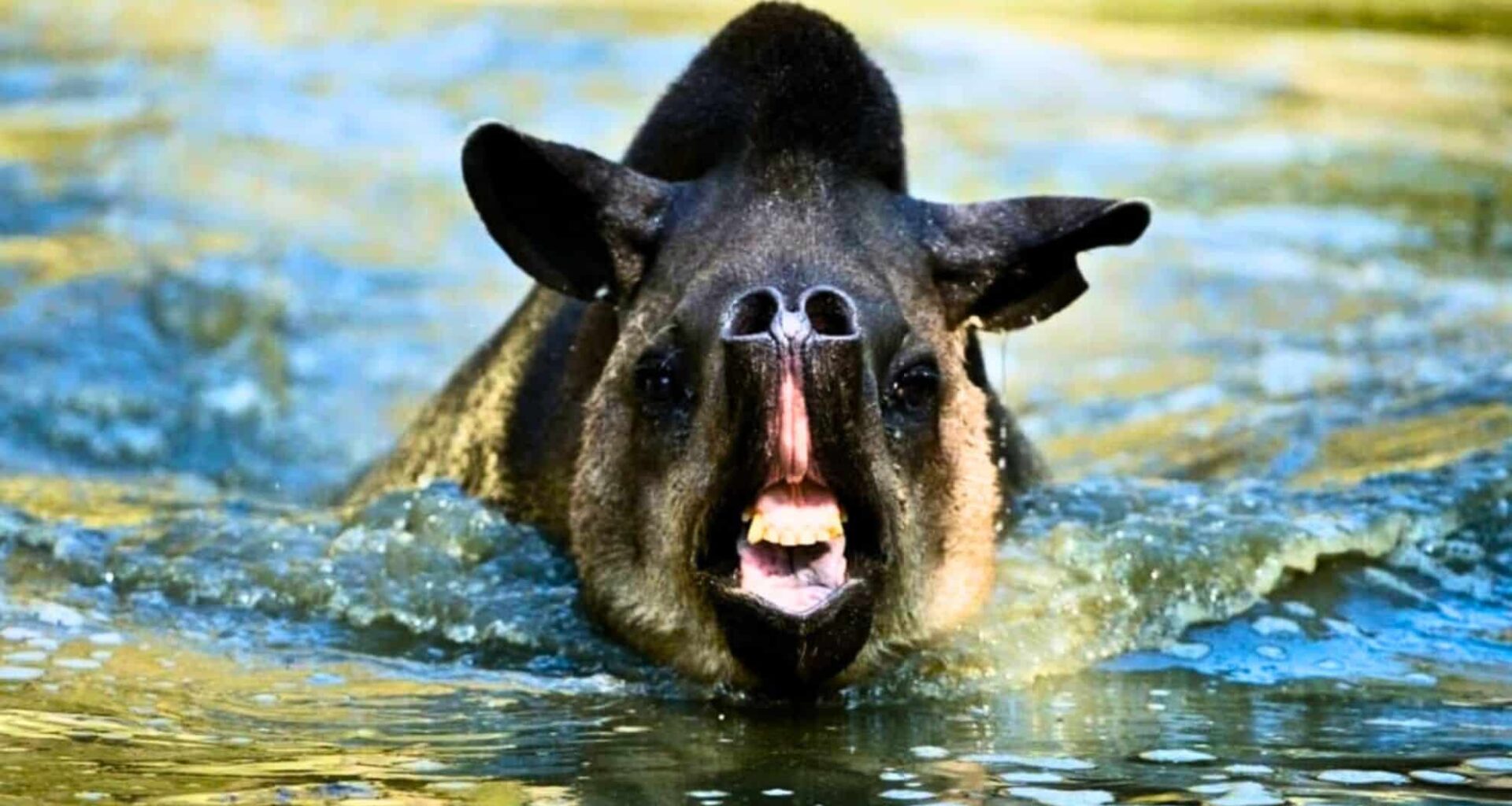
In a dense pocket of Atlantic Forest in southeastern Brazil, camera traps recently captured something no one expected: a family of South American tapirs quietly moving through the undergrowth. The sighting, confirmed in Cunhambebe State Park, marks the first confirmed return of the species to the region in over 110 years.
Their reappearance wasn’t part of a controlled release or rewilding experiment. These animals came back on their own. Conservationists describe the event as nothing short of a “biological milestone,” hinting at a larger story of ecological resilience in one of the world’s most degraded biodiversity hotspots.
Local biologist Marcelo Cupello, from the Rio de Janeiro State Environmental Institute (INEA), has been closely monitoring the park. He confirmed sightings of at least four tapirs, including a mother and her calf. “It’s not just a fluke,” he told G1 News. “The forest is healing — and it’s once again capable of sustaining large mammals.”
Tapirs, often dubbed the “gardeners of the forest” for their seed-spreading abilities, play a vital ecological role. But their natural return after a century of absence raises deeper questions: Where have they been? Why now? And what does this mean for the broader future of Brazil’s Mata Atlântica?
A Comeback Rooted in Silence — and Survival
The South American tapir (Tapirus terrestris) is Latin America’s largest terrestrial mammal and once roamed widely across Brazil’s southeastern rainforests. But by the early 20th century, it had disappeared from much of the Atlantic Forest biome, mainly due to hunting, deforestation and agricultural expansion.
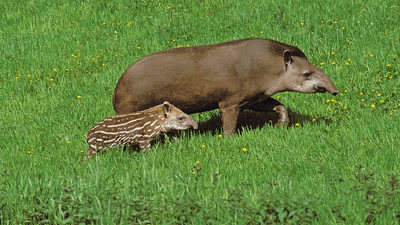 A mother and calf were among the images captured on camera traps in the area. Image Credit: slowmotiongli/Shutterstock
The last confirmed sighting in Rio de Janeiro state dates back to 1914, according to Brazil’s environmental archives. That makes the recent discovery — aided by video footage and physical signs like hoof prints and dung — all the more surprising.
One leading theory suggests that a hidden relic population managed to persist in remote forest patches, possibly migrating undetected over decades. Another posits that the animals are descendants of populations from the Serra do Mar corridor in São Paulo, where tapirs have long maintained a foothold.
“This is what we call functional connectivity,” said Cupello. “The animals are moving, dispersing, and following ecological pathways without human intervention. That’s a very good sign.”
Ecological corridors — stretches of forest that connect fragmented habitats — are known to support animal movements. They’ve been a core part of Brazil’s conservation strategy since the 2006 Atlantic Forest Restoration Pact, which aims to restore 15 million hectares by 2050.
Rewilding Efforts Nearby Offer Clues — and Hope
While the Cunhambebe tapirs appear to have returned of their own accord, they’re not the only ones back in the Atlantic Forest. Just 120 km north, in the Guapiaçu Ecological Reserve (REGUA), researchers have been conducting a carefully monitored reintroduction program since 2017.
Seven tapirs were released there as part of a partnership between local NGOs and state authorities. As of 2024, 20 individuals now live in the area, including seven calves born in the wild. The success of that project may have helped pave the way for a broader return — either directly through migration or indirectly by restoring ecological functions in the forest.
“The two events complement each other perfectly,” says Cupello. “One is driven by human planning, the other by nature’s own timetable. Both tell us that when habitat conditions improve, species can — and will — come back.”
Genetic studies are currently underway to determine the lineage of the Cunhambebe group, which could help tailor future conservation plans. If these animals prove genetically distinct, they may represent an isolated lineage that has persisted against the odds.
More Than a Symbol: Tapirs Shape the Forest Itself
Tapirs are not just returning residents — they’re ecosystem engineers. Their diets consist mainly of fruit, and they’re key players in seed dispersal, particularly across degraded or regenerating forests.
Their digestive process improves seed germination rates. Their movement patterns help maintain plant diversity. Their dung — rich in organic nutrients — fosters soil health. In this way, the tapir contributes to micro-habitat creation and long-term forest resilience.
Studies, including a landmark report published in Biotropica in 2023 , show that areas frequented by tapirs exhibit higher plant diversity and regrowth rates than those without. In the fragmented and degraded landscapes of the Atlantic Forest, such traits aren’t just beneficial — they’re essential.
Conservation Moves Fast to Keep Up With Tapirs’ Return
Despite the excitement, experts caution that the tapir’s status remains fragile. The IUCN Red List still classifies the species as Vulnerable, with a global population estimated at just 4,600 individuals. Habitat loss, vehicle collisions and poaching remain threats.
Authorities in Rio are already responding. There are plans to expand protected zones around Cunhambebe and establish new ecological corridors to promote safe movement. Conservation groups are also rolling out community education initiatives, aiming to make the tapir a local emblem of recovery and pride.
“We want people to see the tapir not just as a rare animal,” says Cupello, “but as a living sign of what’s possible when forests are protected and allowed to thrive.”