
Did you know that Truthout is a nonprofit and independently funded by readers like you? If you value what we do, please support our work with a donation.
Each year, Amazon hosts the world’s largest ecommerce events, pairing discounts with same-day delivery. During its July 2025 Prime Day event, Amazon shipped an estimated 450 million items and drove $24.1 billion in spending across the entire online retail industry. What Amazon fails to report about its Prime Day operations, however, are the guaranteed spikes in carbon emissions that will linger in the atmosphere for centuries.
Prime Day, Amazon’s annual summer sales event, was first announced in 2015 as a celebration of Amazon’s 20th anniversary. Seven years later, the same summer deals were brought to holiday shopping with the introduction of Amazon’s Prime Big Deal Days in early October.
This year’s event will last 48 hours, starting October 7 and ending October 8. If Prime Big Deal Days maintain their typical 70 percent of Prime Day volume, the sales event could produce an estimated $16.9 billion in revenue.
Never miss another story
Get the news you want, delivered to your inbox every day.
Amazon’s sales are not the only thing projected to rise. The environmental advocacy and research group Stand.earth estimates that the compound annual growth rate of Amazon’s emissions will grow between 5.5 percent to 11.5 percent from now through the year 2030. Much of that increase comes from Prime Day events, highlighting the environmental unsustainability of Amazon’s core business model, as well as the company’s ongoing failure to follow through on its own widely publicized sustainability goals.
In its 2024 report Prime Polluter, Stand.earth found that Amazon’s 2023 U.S. dock-to-door operations generated 5.8 million metric tons of carbon dioxide. That is the same amount of carbon pollution generated to power 1.2 million U.S. households.
Related Story

Unions in the US and elsewhere must make huge resource investments to build up the working-class strike muscle.
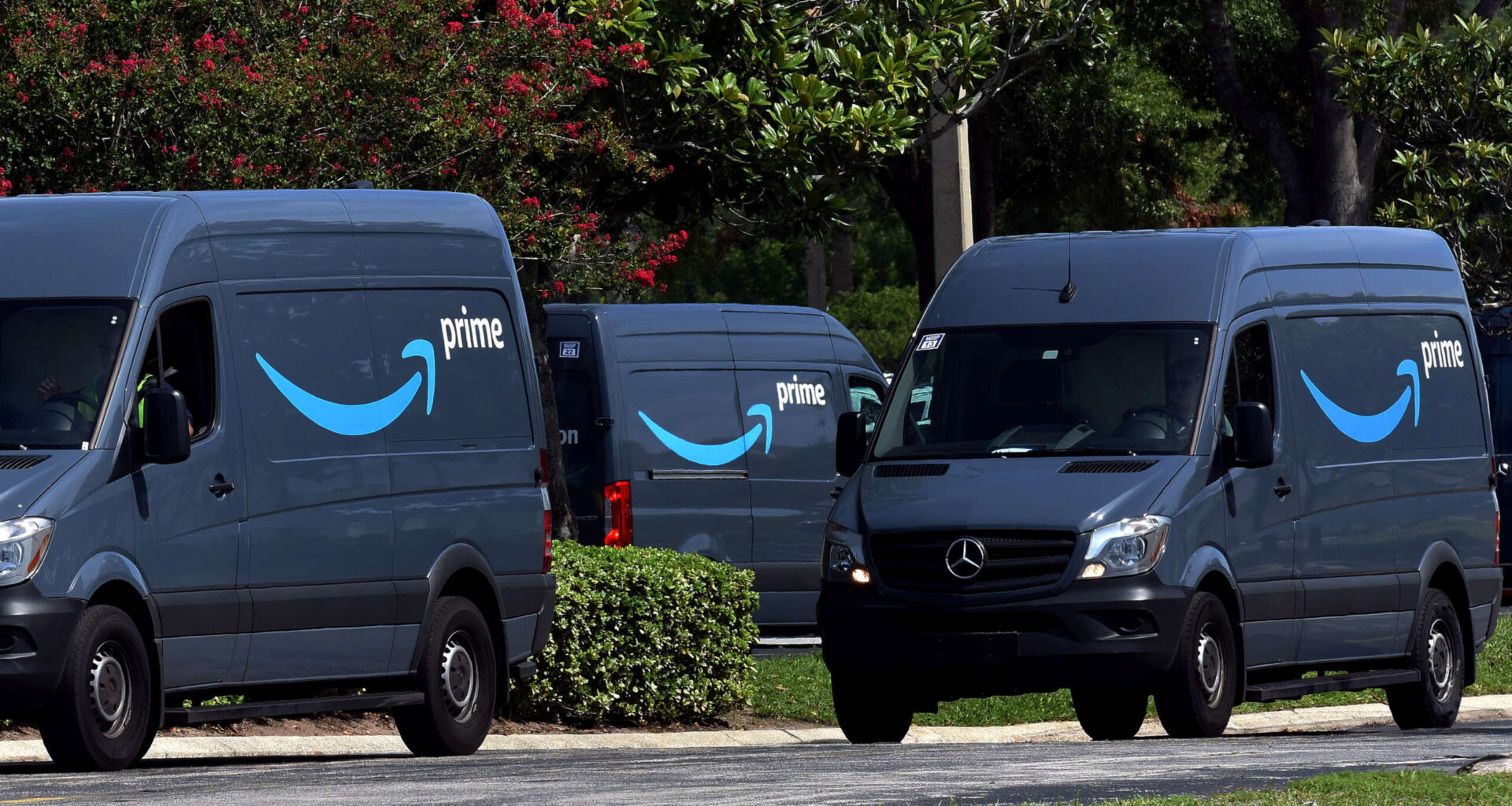
During Prime Day events, Red Stag Fulfillment estimates a deployment of 400,000 to 500,000 last-mile delivery vehicles during peak periods. This surge helps explain the 194.9 percent increase in carbon emissions by the company’s delivery vans between 2019 and 2023.
Since 2020, Amazon has acquired 95 planes for its personal fleet, known as Amazon Air. Excluding contracted airlines, Amazon’s air operations alone accounted for an additional 67 percent increase in emissions.
The public deserves far more transparency about the tons of carbon that Amazon’s various operations release into the atmosphere.
With 38 percent of the U.S. e-commerce market, Amazon is a major player in the global shipping industry and its practices will have lasting effects on the global climate. Yet, since 2019, the company has hidden behind a greenwashed facade.
In 2019, during Prime Day, 100 Amazon warehouse workers in Minnesota walked out to protest unsafe working conditions and high injury rates. In support, 8,000 of the company’s employees signed a letter that also demanded that Amazon adopt a company-wide climate plan. Later that year, Amazon announced its Climate Pledge committing to net-zero carbon emissions by 2040.
One of Amazon’s primary objectives for achieving net-zero is the adoption of 110,000 electric delivery vans globally by 2030. But in its 2024 sustainability report, the company revealed it had only 31,000 electric vehicles, accounting for just 28 percent of its goal.
Even if Amazon continues to add 10,000 electric vehicles to its fleet annually, the company’s current rate of growth will outpace any of its lackluster attempts to decrease its carbon footprint.
Beyond delivery truck emissions, Charlie Cray, senior strategist at Greenpeace USA, says the real danger lies in the “increased emissions generated by the data centers that host the company’s ecommerce platform.” Cray added, “We have no idea how much the company’s energy usage — hence carbon footprint — or water consumption increases on Prime Day because the company is not fully transparent.”
In fact, in 2023 Business Insider reported that Amazon quietly abandoned its Shipment Zero initiative. If Amazon was not living up to its Climate Pledge before, it certainly will not any time soon.
With a revenue of $638 billion in 2024, Amazon is raking in profits while doing little to mitigate the environmental havoc it is wreaking. The convenience Amazon purports to deliver is simply not worth the long-term damage the company is inflicting on our climate and our world.
The public deserves far more transparency about the tons of carbon that Amazon’s various operations release into the atmosphere. Amazon’s AI data centers in particular lack transparency as far as carbon emissions, which “will likely make ‘inside the box’ analysis even more difficult,” said Cray. “That’s the main reason Greenpeace has endorsed the Artificial Intelligence Environmental Impacts Act.”
Introduced in 2024, the Act would require the EPA and other federal agencies to conduct a comprehensive study of AI’s energy demands and pollution impacts, and establish more stringent reporting standards for data center operations.
A crucial first step would be for Amazon to commit to complete transparency in emissions reporting for its delivery vehicles and data centers as well as demand that their suppliers do the same.
Amazon has at times tried to posture as a “climate leader” — especially surrounding its cosponsorship of the Climate Pledge in 2019, which 584 companies now take part in — but its track record offers a woeful counterpoint to those claims. In 2023, for example, the corporation opposed an Oregon bill that would have required new data centers to run entirely on clean energy by 2040, the same year Amazon claims to intend to reach net-zero.
Without a change of course, it is painfully clear that Amazon’s promises of drastic reduction in emissions amount to greenwashing, and it’s high time for consumers who care about the accelerating climate crisis to rethink the true costs of Prime.
Journalism is a tool in the anti-fascist toolbox
As we rise to meet the current wave of authoritarianism, Truthout appeals for your support.
Independent media is a pillar of democracy and a powerful force for justice. Please make a tax-deductible one-time or monthly donation to Truthout if you can.
This article is licensed under Creative Commons (CC BY-NC-ND 4.0), and you are free to share and republish under the terms of the license.