
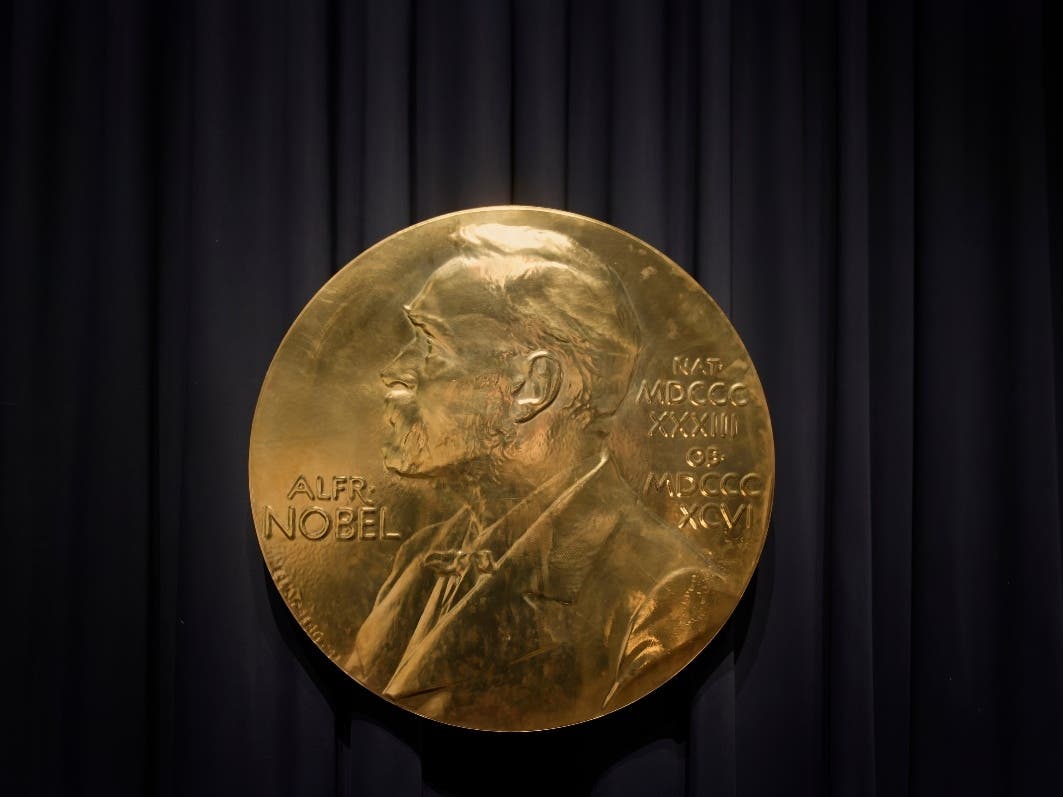
BERKELEY, CA — A retired UC Berkeley professorwas one of three people awarded a Nobel Prize on Wednesday for their contributions in the field of physics.
John Clarke was awarded the prize for his work in quantum tunneling and energy quantization in an electric circuit. These developments have the potential to improve the capabilities of quantum computers, which in turn could help make advances in the fields of drug discovery, cybersecurity, agriculture and energy, according to the Nobel Prize Foundation.
“It is wonderful to be able to celebrate the way that century-old quantum mechanics continually offers new surprises,” Olle Eriksson, Chair of the Nobel Committee for Physics, said on Tuesday. “It is also enormously useful, as quantum mechanics is the foundation of all digital technology.”
Clarke shares the award with UC Santa Barbara faculty members Michael H. Devoret and John M. Martinis, according to the Nobel Prize Foundation.
In the mid-1980s, the trio conducted a series of tests with an electronic circuit built of components that can create a current without electrical resistance, known as superconductors, according to the Nobel Prize Foundation.
What they found by refining and measuring all the properties of their circuit was that they could pass charged particles through the superconductor, but have it behave as if only one particle filled the entire circuit.
“In the experiment the system shows its quantum character by managing to escape the zero-voltage state through tunnelling,” the Nobel Prize Foundation said. “The system’s changed state is detected through the appearance of a voltage.”
This work laid the foundation for superconducting quantum bits, which are at the heart of many of today’s quantum computers, according to university officials.
Clarke, an emeritus professor, is the 27th UC Berkeley faculty member to be awarded a Nobel Prize, according to university officials.
Clarke said winning the award was the “surprise of my life,” according to university officials. Never did he think his work would be worthy of a Nobel Prize, he said.
“What can I say? I’m still stunned,” Clarke said in a phone call with the Nobel Prize Committee. “I’m so happy and so pleased that John Martinis and Michel Devoret have shared the prize with me. I could not imagine accepting the prize without the two of them.”