
The Indiana Fever’s 2025 season was supposed to be one of growth and success. Drafting Aliyah Boston and Caitlin Clark in back-to-back years had put the struggling franchise back on the map, giving the Fever a pair of can’t-miss building blocks for the immediate future, and the team’s recent explosion in popularity further nudged its brass to put a product on the court that matched its hype.
The Fever’s offseason strategy, then, was to load up on veteran talent that complemented those building blocks while operating under the assumption that their young stars would grow into players who could lead them to a championship. The plan was well-executed: Indiana acquired big names in DeWanna Bonner and Natasha Howard, both of whom had championship experience, and rounded out its bench with veterans like Sophie Cunningham, Sydney Colson and Brianna Turner. They even brought back Stephanie White, who led the Fever to the 2015 WNBA Finals in her previous stint as Indiana’s head coach.
As improved as the Fever seemed on paper, though, things didn’t go as smoothly as they planned—and least not initially. Clark was hampered by early-season injuries to her quad and groin, while Bonner played in just nine games before being waived. The talents of Boston and Kelsey Mitchell—both of whom were named All-Stars for the third season in a row—were just enough to keep the Fever treading water, but it was clear early on that this was not the championship-caliber team many had hoped for.

Caitlin Clark played in just 13 games this season, dealing with nagging quad and groin injuries. Getty Images
As the season dragged on, the Fever’s injury issues mounted. By mid-August, Cunningham and Colson had both suffered season-ending injuries, as had hardship replacements Aari McDonald and Chloe Bibby. Meanwhile, Clark hurt her groin again, cutting her highly-anticipated sophomore season short; the up-and-coming star played in just 13 of the Fever’s 44 regular-season games, and by the time she was ruled out for the remainder of the year, most had dismissed the Fever as a failed experiment.
Nevertheless, Indiana soldiered on, cobbling together enough wins for a sixth-place finish. The Fever had gone from being a deep, high-octane team to a scrappy, win-at-all-costs squad in a matter of weeks, and though an optimist might look at their 24-20 regular-season record as impressive given their circumstances, not many gave them much of a chance in the playoffs.
The Fever’s playoff run was one to remember
As it so happened, the 2025 postseason is where the Fever truly showed what they were made of. They upset the No. 3-seed Atlanta Dream in three games, clinching the series on the road with a spirited comeback, and then took the No. 2-seed and eventual champion Las Vegas Aces to a full five games in the semifinals, finally bowing out in overtime long after their reserves had been depleted. For whatever criticisms the Fever drew during the regular season, they proved their mettle when the games mattered most, and their improbable playoff run seemed to be a fitting end to a season characterized by adversity.

The Fever wouldn’t have made it very far in the playoffs without the heroics of Kelsey Mitchell, who averaged 22.3 points per game against the Dream and Aces. NBAE via Getty Images
“Not a lot of people even expected us to be here,” said Mitchell, whose hot shooting and clutch playmaking won over countless fans, in her exit interview. “And I think that within itself is a lot to be proud of … We could have folded. We could have folded and we didn’t. We didn’t tuck our tail. We didn’t complain.”
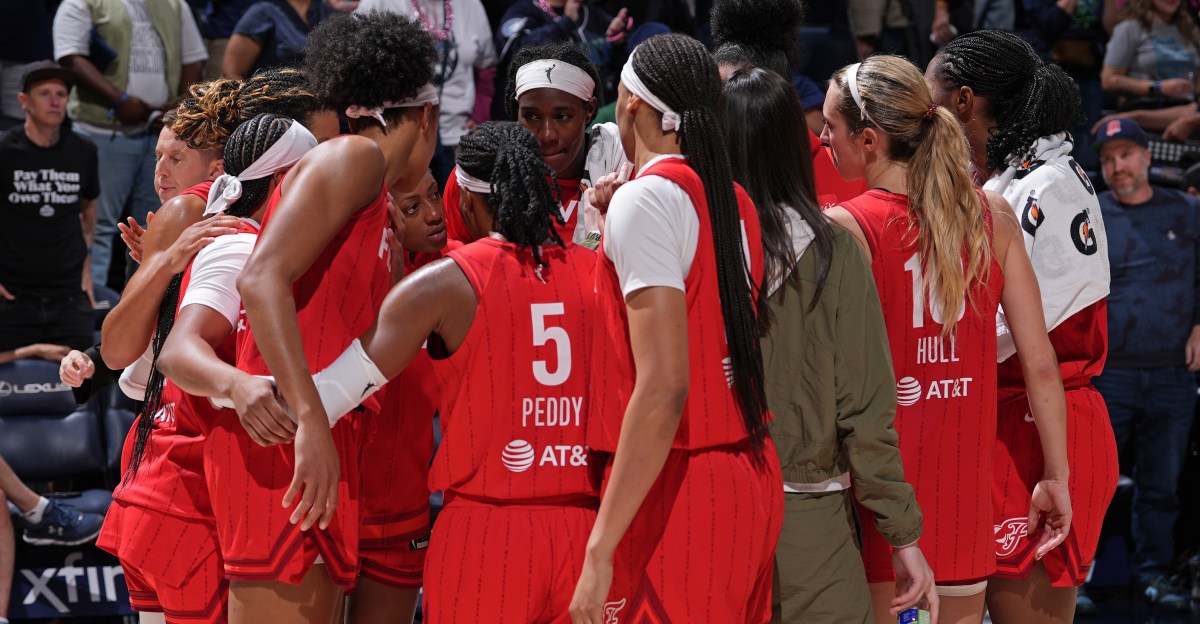
In an odd twist, the Fever had simultaneously been underachievers and overachievers—a team that disappointed during the regular season yet nearly made the WNBA Finals with a depleted roster. They may not have been the powerhouse many expected them to be, but somehow, some way, they still contended for a championship.
Where will the Fever go from here?
So, was the Fever’s 2025 season a success? That depends on how you look at it. Yes, their ultimate goal was a championship, and they almost reached it, but it certainly wasn’t the way they planned, and they’d be unlikely to repeat that success next season if they’re given the same set of circumstances.
Here’s the good news: Indiana is in a great spot entering what could be a tumultuous offseason. With the expiration of the WNBA’s current collective bargaining agreement looming, there’s not much set in stone for 2026, and that includes rosters. The vast majority of WNBA players who were under contract this season will soon be unrestricted free agents, setting up a dangerous game of musical chairs for almost every team in the league: Someone is going to be left with a lot of cap space and not many top-tier players to use it on.

As long as the Fever retain their trio of All-Stars, they’re set to compete again in 2026. NBAE via Getty Images
The Fever probably won’t be one of those teams. Clark and Boston are both signed through 2026, so they’ll be under team control no matter what happens. Mitchell will be a free agent, but it would be a surprise if she doesn’t re-sign with the team that made her the highest-paid player in the WNBA in 2025.
Beyond that, it’s obvious the Fever are building something special. They may have come up short in their pursuit of a championship in 2025, but the way they went about it is sure to have turned some heads. There’s also the ever-important matter of player accommodations: In addition to the recently-renovated Gainbridge Fieldhouse, the Fever will soon boast an entirely new practice facility, which is scheduled to be finished by 2027.
Of course, it’s impossible to predict exactly where the chips will fall this offseason, which is precisely what makes what the Fever accomplished in 2025 so important. They have infrastructure in place both on and off the court, and given even marginally better luck than they had this past season, they should be right back in the thick of things in 2026.