
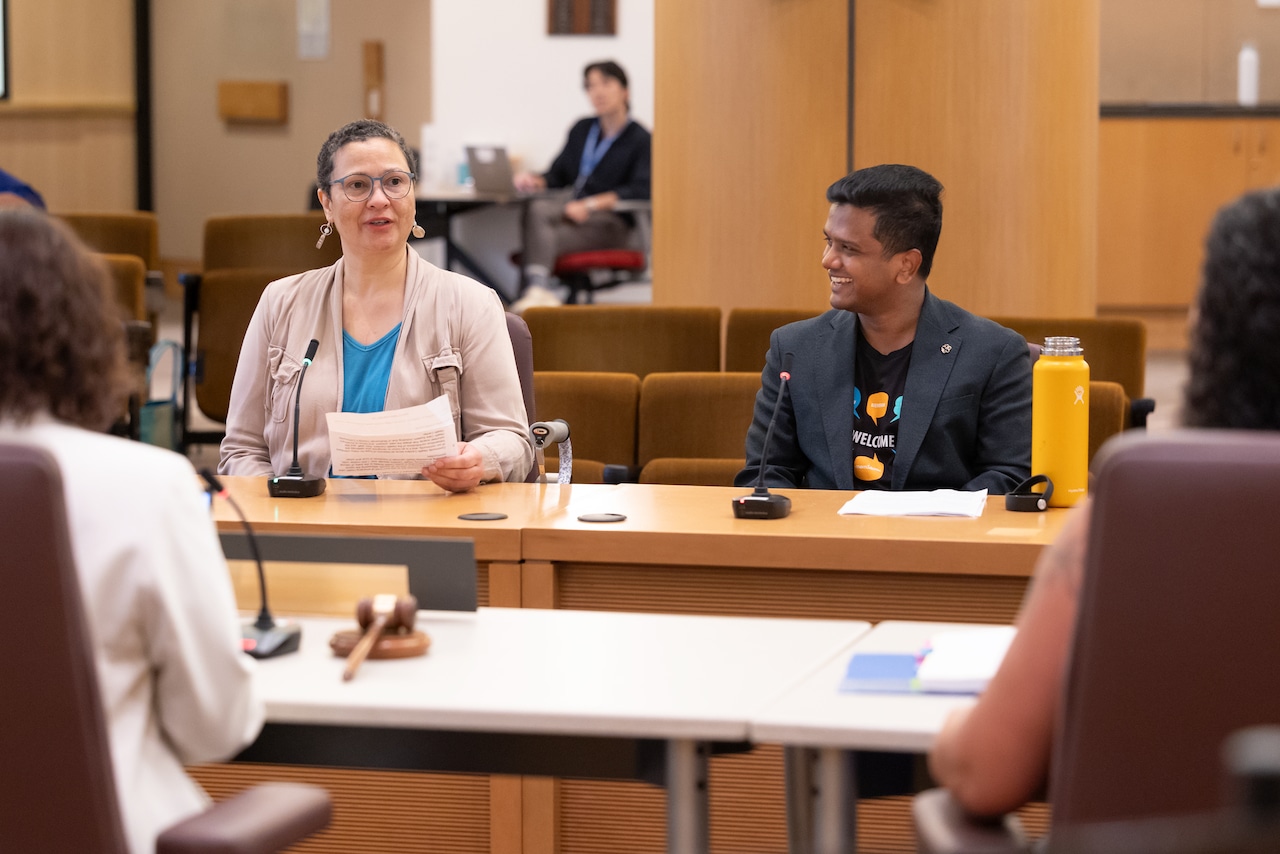
Investigations into two complaints made against the chair of the volunteer board overseeing Oregon’s largest network of federally funded health clinics found that she engaged in “hostile and bullying behavior” toward Multnomah County employees.
Law firm Beery, Elsner & Hammond found that Tamia Deary, who heads the community oversight board for Multnomah County’s system of federally qualified health centers, violated county rules on maintaining a professional and respectful workplace, according to records obtained by The Oregonian/OregonLive.
And under her leadership, the board has been out of compliance with federal requirements, putting over $10 million in grant funding at risk, according to county spokesperson Sarah Dean and emails from the interim health center director to the board.
Deary, who has served on the board since 2019 and became chair in 2024, disputed the findings. She defended her leadership approach and attributed any misunderstandings about her communication to cognitive disabilities that can make her style difficult for others to adjust to.
The little-known Community Health Center Board is charged with guiding policy and approving the $217 million combined budget for the county’s 19 health center locations, which include clinics, school health centers and a pharmacy. The county Health Department and county Board of Commissioners then must approve that budget. Those clinics are eligible for specific federal grants and offer low-cost health care to some of the county’s most vulnerable residents.
The board is made up of volunteers, a majority of whom are required to be patients of the county’s clinics. Under the board’s agreement with the county, its members are required to adhere to the county’s personnel rules and regulations.
Multiple people familiar with the board’s work raised concerns about Deary’s behavior and how she runs the board, both to investigators and in conversations with The Oregonian/OregonLive. Two county employees filed formal complaints against Deary, both of which were substantiated in part by the outside law firm.
The first complaint was filed in November last year by the board liaison, a county employee who coordinates with the health board and county Health Department leadership. The county employee accused Deary of raising her voice, interrupting her and unfairly judging the quality of her work, among other things. The law firm found that Deary regularly interrupted the employee and took issue with the staffer’s “performance without a reasonable basis to do so,” according to an investigative report from July.
“The board chair has repeatedly expressed their dissatisfaction with my commitment and performance by interrupting me when I speak, raising their voice, talking over me (a bullying tactic), and launching direct and veiled accusations about the quality of my work,” the employee wrote in a statement shared with county human resources.
Investigators said Deary admitted to interrupting and talking over the employee, but said it was due to her disability, records show. The law firm wrote that “having a disability or medical issues or other extenuating circumstances does not mean that an individual should be unprofessional or disrespectful.” They noted in the report that several other witnesses, including fellow board members, recounted similar behavior from Deary.
The second grievance was filed on Feb. 3 by an employee who also served as a board liaison. The second employee flagged Deary for similarly disrespectful behavior, records show, telling investigators that communicating with Deary was “belittling and painful.”
The law firm found several instances where Deary acted disrespectfully or inappropriately toward the employee, including telling the employee that taking scheduled family leave “wasn’t going to work for her” and asking her to “stop speaking to me altogether” in front of other employees and health board members, according to an investigative report from July.
Records show Deary told investigators that she didn’t recall the employee mentioning family leave, but that she did make remarks that having a board liaison on an intermittent schedule would not work for her because she felt the board needed full-time support.
Deary told The Oregonian/Oregonlive that she has an auditory processing disability and told investigators that if she made the comment about the employee not speaking to her, it was because she needed “downtime during the break as a result of her disability,” the report shows.
The law firm wrote that having appropriate accommodations for a disability is important, but that it does not excuse unprofessional and disrespectful behavior.
“If this conduct is the result of a disability then it is important for the staff who do work with her to be aware of what her limitations are, what to expect, and how to help avoid these types of situations,” the report said. “It is not a reasonable accommodation to allow continued unprofessional conduct towards staff.”
Deary said in a statement that the county has failed to provide Americans with Disabilities Act accommodations and that county human resources did not find an approach best suited for her needs.
“HR failed to propose universal design approaches that would benefit the entire board,” Deary wrote. “Instead, they prioritized operational convenience over equity, forcing disabled volunteers into endless justification cycles that lead to burnout and exclusion.”
Dean said the county is actively working with Deary on those accommodations. She said county human resources is waiting on more information from Deary to be able to work through the request.
Four people have held the board liaison position since January 2024, according to Dean. The job is currently vacant, she said.
In an email responding to the concerns in both investigations, Deary told former county Employee Relations Manager Jonathan Wexler that her communication style is often “literal and direct,” and that it can “cause my clarifying questions or problem-solving efforts to be misinterpreted as confrontational.”
“This is not the first time my disabilities have been viewed through an ableist lens, but it is my first experience with an HR investigation,” she wrote.
Dean said that the county has little sway over the health board and that it is ultimately up to the board to discipline its members. County human resources and Health Director Rachael Banks have attempted on several occasions to set a meeting with Deary and the board to discuss the investigation’s findings.
The meeting was pulled from the agenda in September, records show, and still has not taken place.
“The county has attempted multiple times to bring these issues forward to the (health board) for a simple resolution,” Dean wrote in a statement. “We are asking the (health board) to invite the county to one of their meetings and allow (human resources) professionals on the agenda to describe the county’s human resources policies. And we’re asking that each (board) member agree in writing that they will follow those policies.”
The personnel investigations are not the only issue plaguing the community health board. The federal government’s Health Resources and Services Administration requires that all community boards overseeing federal health centers adhere to specific rules as to who participates on the board.
Those requirements include having at least nine members and having a majority of those members be patients of the clinics they oversee. Multnomah County’s community board has been out of compliance on both of those benchmarks since at least August, triggering the federal health agency to put a condition on a $10.5 million grant meant to fund the county’s health services, records show.
This first warning gives the board 90 days to come into compliance. If they fail to comply, they will have two more warning periods totaling another 90 days, according to county records. If they remain out of compliance, the county’s health centers could lose their status as “federally qualified,” putting millions in funding at risk.
“I strongly recommend that we achieve compliance before the 90 day timeline,” wrote Interim Health Center Executive Director Anirudh Padmala, who is a county employee, in an email to the board.
The board had an opportunity to vote in new members last month, but opted to table the vote after Deary and other members raised concerns about the process for picking members.
Deary said it has taken longer than expected to appoint new members because of “county administrative delays.”
“We need more administrative support and marketing resources, buy-in from county employees to complete work that we delegate, and better community engagement support,” she wrote.
Dean said the county has and will continue to work with the health board and provide support where appropriate. The county is working to fill any gaps in staffing, like the board liaison position, and to hire temporary staff to support the board.
The board’s nominating committee, which includes Deary and two board members, discussed next steps Friday morning and reviewed potential candidates for the board. That process is ongoing.
If you purchase a product or register for an account through a link on our site, we may receive compensation. By using this site, you consent to our User Agreement and agree that your clicks, interactions, and personal information may be collected, recorded, and/or stored by us and social media and other third-party partners in accordance with our Privacy Policy.