
The Associated Press Top 25 Poll needs a complete overhaul. And as bad as the preseason poll was, it’s never been more obvious than in the middle part of the season.
Though we’re still several weeks away from the release of the first College Football Playoff poll, there’s little doubt that the current AP poll is influencing strength of schedule debates. Not to mention potentially informing the selection committee as it deliberates in the coming weeks.
And as usual, some of the most extreme outliers in the latest iteration of the AP Poll have benefited the SEC. Whether through over-ranking some teams, because of their conference affiliation, or by not ranking other teams that might deserve it. The published rankings are also exposing how many voters are either not watching games, or not updating their views based on week-to-week results.
RELATED: Should This Year Mark End Of Preseason Associated Press Poll?
Particularly with teams like the LSU Tigers, Washington Huskies and the USC Trojans. And these rankings are already being used to advance arguments that aren’t actually supported.
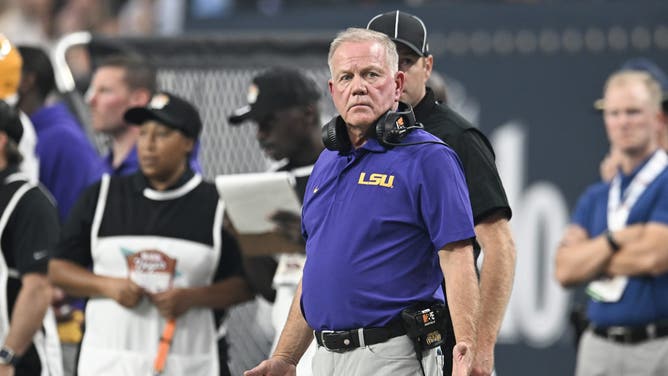
LAS VEGAS, NEVADA – SEPTEMBER 01: Head coach Brian Kelly of the LSU Tigers looks down the field in the second quarter of the Vegas Kickoff Classic against the USC Trojans at Allegiant Stadium on September 01, 2024 in Las Vegas, Nevada. The Trojans defeated the Tigers 27-20. (Photo by Candice Ward/Getty Images)
Associated Press Poll Once Again Biased In One Specific Direction
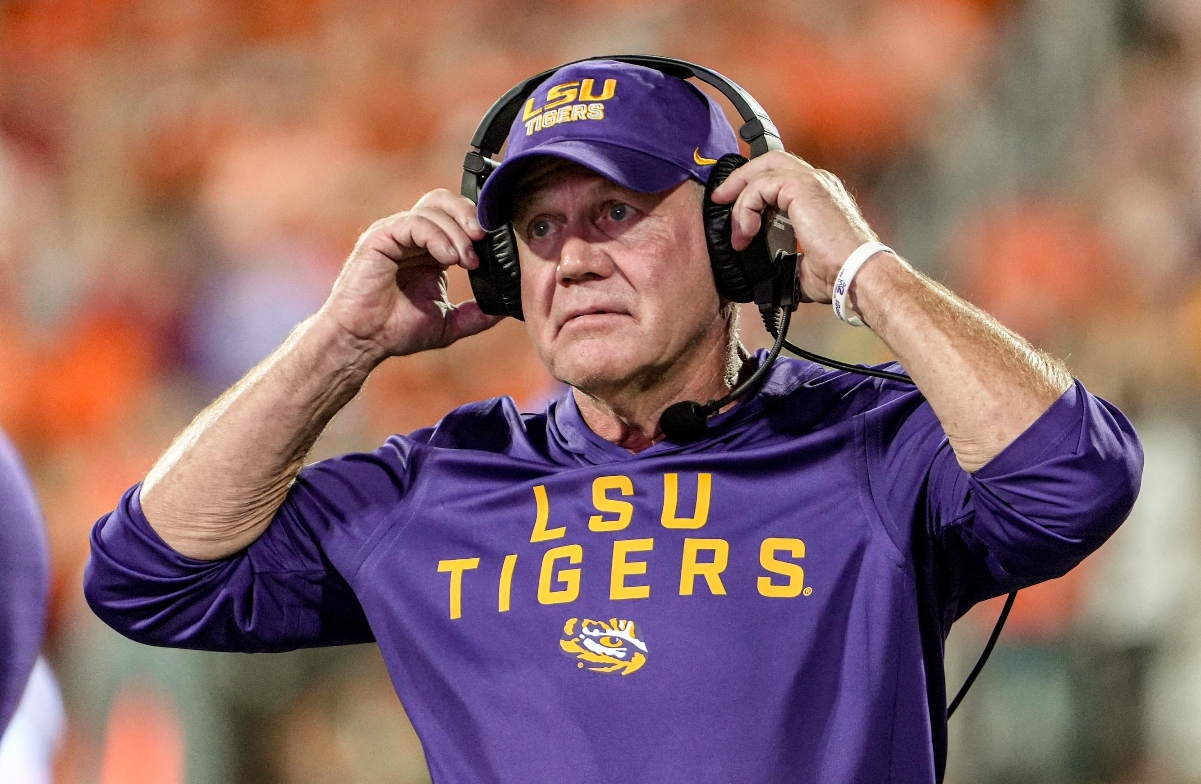
The LSU Tigers enter the week ranked No. 10, just one spot behind their preseason ranking. Sounds reasonable, until you look at how the Tigers got there. They opened the season by beating the Clemson Tigers on the road, which at the time looked like a meaningful win over a top-5 opponent.
But Clemson has fallen off a cliff, starting 3-3 with losses to Georgia Tech and Syracuse. As is so often the case however, poll voters never updated their rankings to adjust LSU down because Clemson isn’t a top-5 team. Their other “big” win came over the Florida Gators. While Florida’s not a bottom-tier team by any means, they’re 2-4, including a loss to USF.
The other difficult game LSU played? They lost. They’re still No. 10, a standard that would never be applied were they not part of the SEC. And we know this to be the case, because we can compare them to other teams.
USC, for example, has one loss. On the road, to a team ranked No. 17 at the time. That team, Illinois, has two losses. Those two losses are to the best two teams in college football, Ohio State and Indiana. USC has a dominant win over Michigan on its resume. But because USC started lower than LSU in the preseason, and doesn’t get the perceived benefit of the SEC’s “quality loss” formula, they sit 10 spots behind the Tigers at No. 20.
What and how you value can change your perception of rankings. But even looking at objective data, based on opponent-adjusted efficiency, the SEC is being given undue credit because of its brand names. ESPN’s Bill Connelly, creator of the SP+ metric, posted that ranking’s list of teams based on their actual performance this season, with preseason expectations removed.
Lo and behold, four of the top-5 teams are in the Big 10. And the best team thus far? The Texas Tech Red Raiders. LSU? They’re No. 22. Georgia? No 21. Alabama? No. 26.
Again, these are opponent adjusted. It already includes the strength of the opponent. Notice too, that the Washington Huskies are #12, 10 spots higher than LSU in on-field performance. Yet they’re unranked in the AP Poll, while the Tigers are #10. What does this mean? It means, as always, that the SEC boosters are using AP Poll rankings to talk up their strength of schedule and the supposed difficulty of the SEC gauntlet.
Does the objective data mean that the SEC is a cakewalk and none of the conference’s teams are deserving of being ranked highly? Of course not. It does, however, show that SEC teams are added to the AP Poll when they don’t necessarily deserve it.
But the talking points are out; the SEC has the hardest remaining schedule because of AP ranked teams. Except, once again, looking at data-driven rankings, remaining strength of schedule is remarkably similar between conferences.
Six of the 11 hardest remaining schedules are in the Big Ten, per ESPN’s FPI metric. The other five are in the SEC. Nine of the top 18 toughest remaining schedules are in the Big Ten. 10 of the top 18 are in the SEC. It’s very evenly matched. Yet it won’t be presented that way, because of biased human voters that don’t watch the games.
As one quick example, an AP voter had Michigan No. 17 and USC unranked in this week’s poll. Even though USC just beat Michigan, handily, at the Coliseum on Saturday. Why? Because they likely didn’t watch the game and forgot to update it before Sunday morning’s deadline. With an expanded playoff, this matters more than ever. And it’s in the hands of people who aren’t even paying attention.