
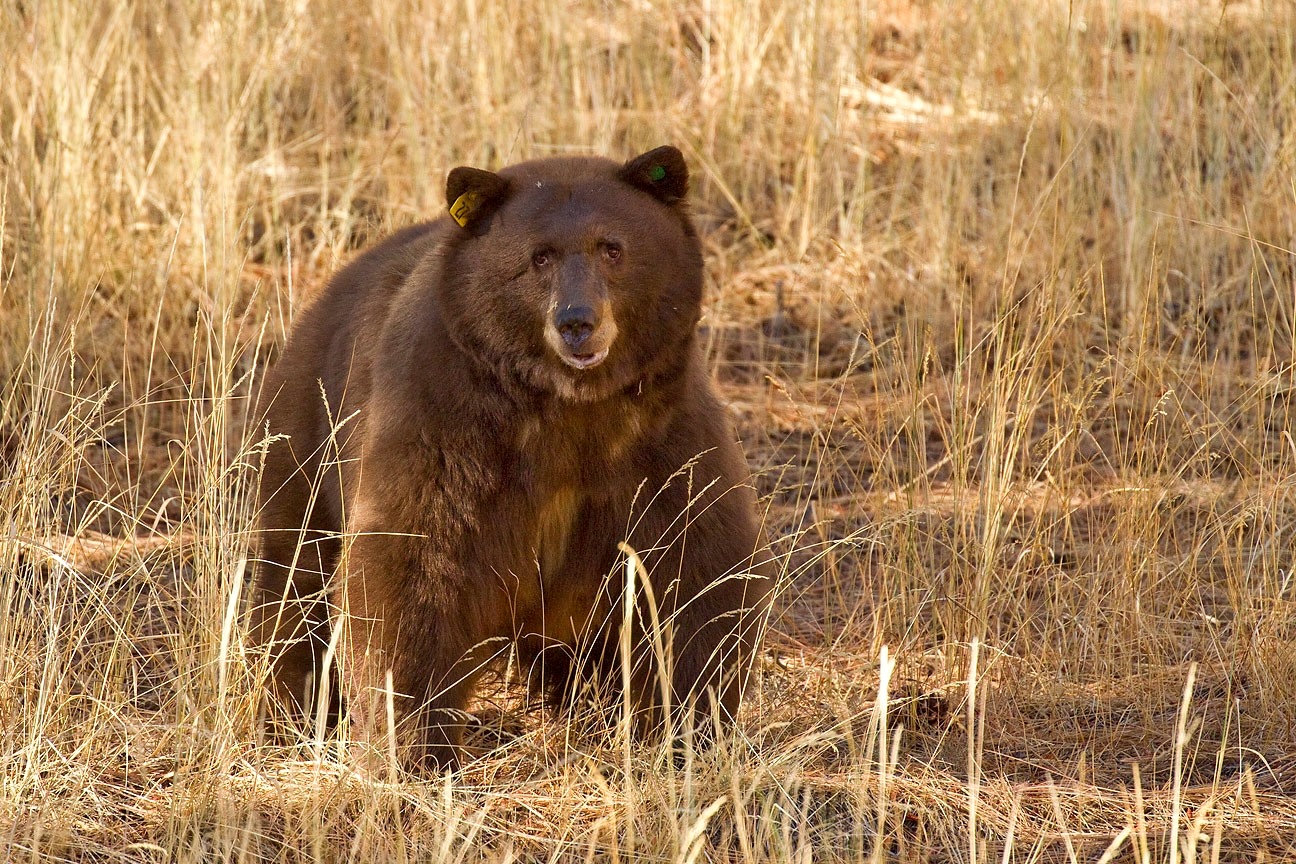
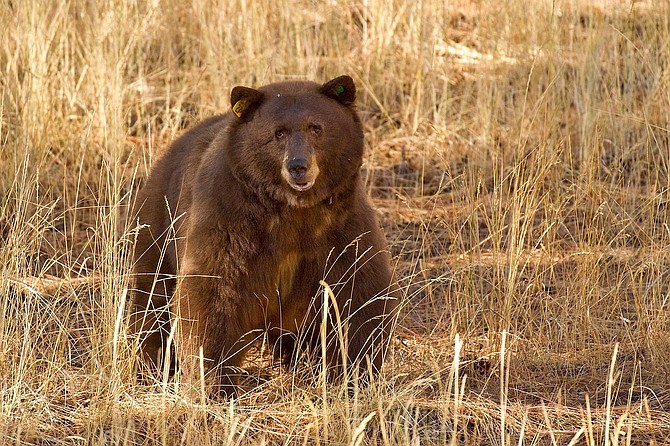
A black bear in a dry meadow in the Sierra Nevada.
Derek Reich/Special to the Nevada Appeal
A “high bear activity” sign was installed Wednesday at Mountain Street Trailhead in west Carson City after reports surfaced of a mama bear and two cubs getting into an unsecured trashcan in the area, according to the Nevada Department of Wildlife.
“At this time, there are no plans to capture the bears because they are just showing normal bear behavior,” said Ashley Zeme, spokesperson for NDOW, who also noted acorns on the ground in the area.
Consequently, state wildlife officials have been instructing a nearby homeowner’s association on how to secure attractants, Zeme said.
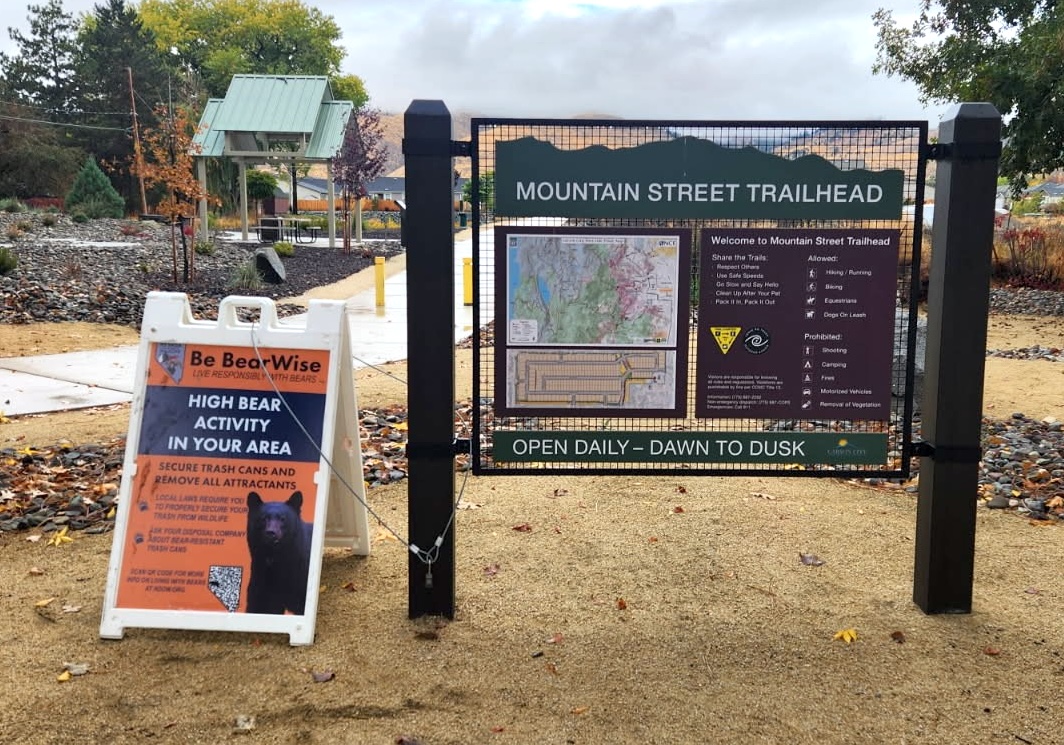
The Nevada Department of Wildlife provided this photo of a bear activity sign installed Oct. 15 at the Mountain Street Trailhead. (Courtesy photo)
“The (state) biologist did speak with the community manager for the HOA and advised them to replace the current garbage container with a bear-resistant one,” Zeme said. “This was our main concern, since unsecured garbage can lead to ongoing bear activity. The community manager was very responsive and said she would begin looking into it.
“We’ve since been notified by Carson animal services, which enforces the Carson City garbage ordinance requiring residents to secure their trash from wildlife, that she is already going through the process of getting approval to install a bear-resistant container.”
Located by the Andersen Ranch residential development and having opened circa 2023, the park area at the trailhead is owned by the city but maintained by an HOA through an agreement, said Carson City Parks, Recreation and Open Space Director Jen Budge.
Budge said the site plan, including trash receptacles, was previously reviewed by the department and the Parks and Recreation Commission. Budge noted bear-proof trash receptacles can be expensive and can take several months to ship. However, she said she’s happy to work with the HOA on interim solutions like increasing trash removal, using alternative lids such as dome lids and educating neighbors on “proactive practices such as storing trash receptacles inside.”
“Our park rangers are a tremendous resource and can provide education materials to distribute to the neighborhood and post at the trailhead, in conjunction with NDOW,” Budge said. “An in-person neighborhood ranger education program may also be considered.”
Zeme said bear activity in the fall is not uncommon.
“This time of year, we typically see an increase in bear activity due to hyperphagia, a natural phase when their appetites go into overdrive as they work to build fat stores for the winter. During this period, bears can eat up to 20,000 calories a day,” Zeme said. “We have seen an uptick in calls over the last few weeks from people reporting bear activity in their neighborhoods. That’s very normal for fall, and overall, the number of calls is consistent with what we usually see this time of year.”
NDOW tips for keeping bears wild as they search for food
Secure garbage. More than 90 percent of all bear calls are garbage-related, making it crucial to prevent bears from accessing human foods. In Washoe County, Douglas County and Carson City, local ordinances require residents to secure garbage to keep bears and other wildlife safe. Violations can result in fines. In these areas, securing your trash isn’t just a recommendation, it’s the law. Bear-resistant containers are the best way to secure your garbage. You can find contact for local waste management and other options here: ndow.org/blog/living-with-bears.
Use electric fencing. Electric fencing is the best way to secure outdoor attractants like gardens, orchards, beehives and chicken coops. We’ve had multiple reports of bears killing chickens in the past few weeks. The cost of an electric fence is far less than the loss of livestock or thousands of dollars in property damage.
Manage fruit trees. It’s been a great fruit year, and orchards or backyard fruit trees can draw bears deeper into our communities. Pick fruit as soon as it’s ripe and clean up any that falls to the ground. If you can’t, the Reno Gleaning Project can collect it for you. Electric fencing also works well to protect fruit trees.
Follow the Six BearWise At-Home Basics for more tips on reducing attractants: bearwise.org/six-bearwise-basics.