
The Michigan DNR is warning drivers in the Upper Peninsula to slow down and watch for moose
Sixty moose have been killed in vehicle collisions over the past four years, with six deaths so far in 2025
Drivers are urged to follow moose-crossing signs and use high beams for visibility
The Michigan Department of Natural Resources is urging drivers in the Upper Peninsula to slow down during the fall in summer months when moose are active.
In the past four years, 60 moose have been killed in vehicle collisions, with the most crashes occurring in June, September and October, according to the DNR.
The most recent crash was on June 17, when a female moose was killed by a vehicle on US 141 in northern Iron County.
While no known human fatalities have been linked to moose-vehicle collisions in Michigan, Tyler Petroelje, the DNR’s northern Michigan wildlife research specialist, warns that the risk is high when a vehicle traveling 55 to 65 mph collides with a 1,000-pound moose.
“Moose pose a unique crash hazard in the Upper Peninsula that isn’t seen in lower Michigan,” Alicia Sledge, director of the state’s Office of Highway Safety Planning, said in a press statement. “Residents and tourists driving in the Upper Peninsula should exercise caution when traveling in moose country.”
So far in 2025, six moose have died in vehicle collisions.
The highest number of moose killed in similar incidents in a single year was 20 in 2022.
Wildlife officials say one factor behind the rise in collisions may be that the western Upper Peninsula’s core moose herd has gradually moved south over the past 10 to 15 years in search of suitable habitat.
Most moose-vehicle collisions have happened on a few short sections of state or federal highways within the region spanning southern Baraga County, eastern Iron County, and southwestern Marquette County.
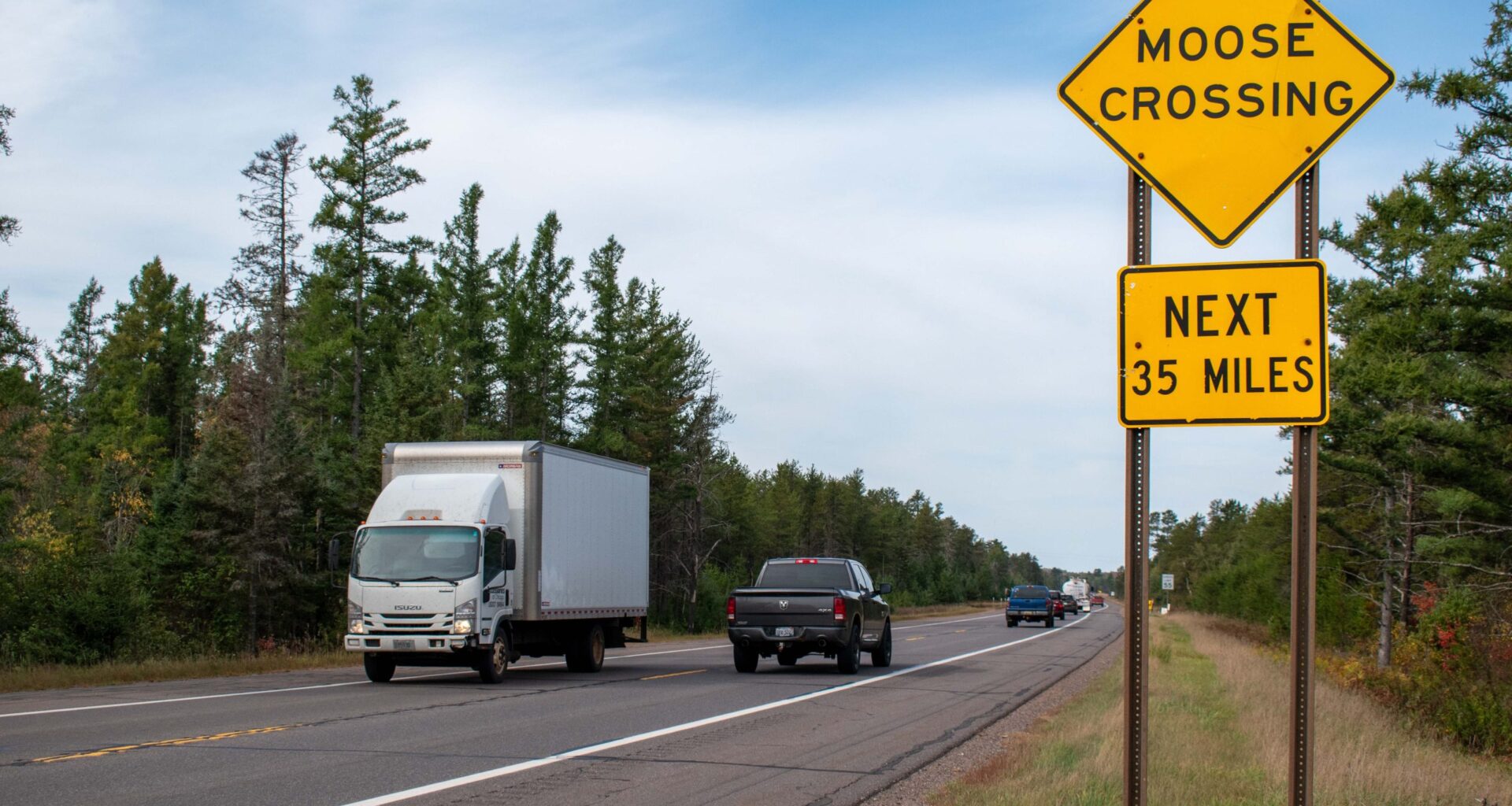
Signs remind drivers: Slow for moose
Over the years, the DNR has partnered with the Michigan Department of Transportation to install or replace moose-crossing signs on Upper Peninsula highways.
Earlier signs featured a moose image but were often stolen, so the current signs now read simply “Moose Crossing.” About six of these signs are currently posted along US Highway 41, M-95 and US 141, where moose collisions most often occur.
The Michigan Office of Highway Safety Planning urges drivers to stay vigilant, follow animal-crossing signs, reduce speed in these areas and use high-beam or additional lights to improve visibility.
Moose rut, or mating season, occurs in September and October, when male moose are highly active in pursuing female moose.
September sees the highest number of moose-vehicle fatalities, making up 21% of all collisions since 1984, followed by June at 19% and October at 12%.
What to do after a crash
If you collide with a moose or another large animal, turn on your emergency flashers, remain buckled and move your vehicle to the shoulder. If the vehicle cannot be moved and is blocking traffic, exit carefully and stand well off the road.
Related:
Drivers should also contact the DNR’s 24/7 Report All Poaching (RAP) hotline at 800-292-7800 promptly so conservation officers can attempt to salvage the moose meat.
The DNR works with local meat processors to grind salvaged moose meat into burgers for donation to help feed those in need. Timing is critical after a moose-vehicle collision, as meat must usually be recovered within a few hours.
“When it’s warm, you’re racing the clock to salvage the meat,” said Sgt. Calvin Smith, a conservation officer for the DNR. “Moose are large and take longer to field dress. You can’t just lift one into a truck by yourself.”
Related
Republish This Story
