
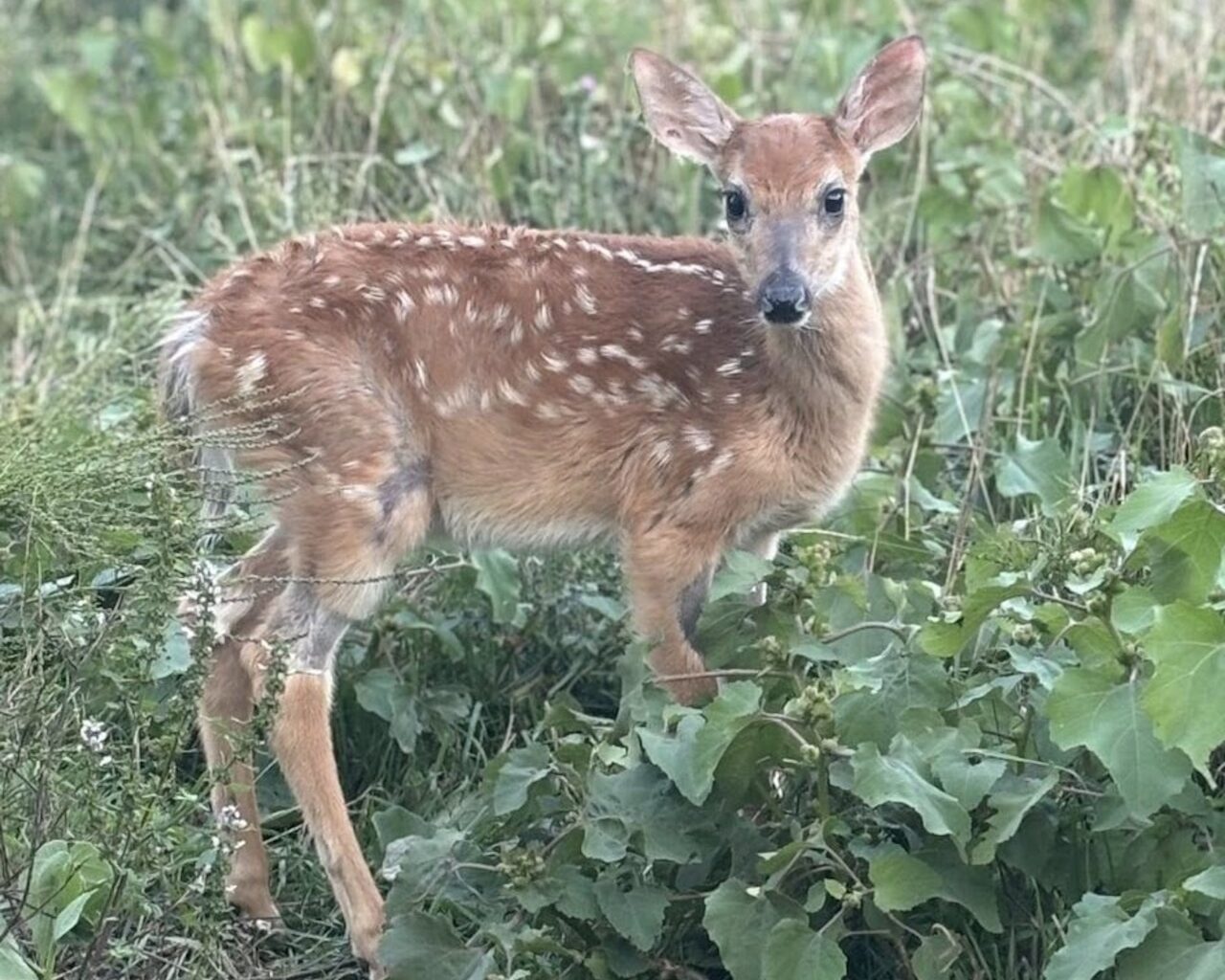
The Michigan Department of Natural Resources has walked back an order to euthanize Peanut, a visually impaired fawn living at a wildlife center in the state.
DNR officials announced the decision late Thursday, Oct. 16, saying they will grant the wildlife center a permit for Peanut that allows native animals to be kept for educational purposes.
“We are grateful for everybody who spoke up and who was her voice, and the representatives who penned the letter and came together, and our state really came together on this, and we couldn’t be happier,” said Detroit Animal Welfare Group (DAWG) Director Kelley Labonty.
Labonty confirmed the wildlife center where Peanut is homed is the 230-acre Howell Nature Center, located at 1005 Triangle Lake Road just south of Howell.
The DNR’s announcement came a day after a bipartisan group of lawmakers urged Gov. Gretchen Whitmer to intervene and halt the state-ordered euthanasia of Peanut. Whitmer’s office hasn’t responded to a request for comment.
The lawmakers said the DNR ordering the Howell Nature Center to euthanize Peanut stemmed from a “bureaucratic technicality” about a missed deadline for the education permit application that is not clearly stated in any regulation.
DNR officials say their October deadline to release rehabilitated fawns is meant to give the animals enough time to find food sources before the winter. Exceptions are rare but granted in cases of permanently injured or otherwise non-releaseable animals, like Peanut.
Peanut, named for her small size, was brought to DAWG’s 25-acre wildlife rehabilitation center in Macomb County earlier this year without much of a chance of living.
Because Peanut doesn’t have “100% vision” and some other residual medical issues, she was deemed unable to be released back into the wild, even after her successful rehabilitation, Labonty said.
Those issues don’t prevent Peanut generally behaving like a normal fawn, Labonty said, adding that most people wouldn’t know of Peanut’s issues without medical training.
After her rehabilitation, DAWG transferred Peanut to the Howell Nature Center with the intent to get the fawn permitted to live out her days there as an education ambassador.
The Howell Nature Center applied for the educational permit and informed Labonty on Oct. 10 that the DNR denied the request and ordered Peanut euthanized. Labonty said DNR informed Howell Nature Center that they missed a Sept. 15 deadline to apply for the permit.
According to DNR spokesperson John Pepin, fawns aided by animal rehabbers in the spring must be released into the wild by Oct. 1 with few exceptions.
“Fawns and other white-tailed deer are native species of wild animals that belong in the wild. They aren’t meant to be pets,” Pepin said. “If they remain in rehab facilities beyond early October and are later released, they won’t be able to survive in the wild over the wintertime.”
Fawns kept past the October deadline are typically euthanized as a humane outcome, Pepin said.
Pepin said it wasn’t until Thursday that DNR received a formal permit request from Howell Nature Center for Peanut. Additionally, it wasn’t until Thursday, Pepin said, that DNR received a veterinary report verifying that Peanut is unable to be released back into the wild due to impairment or injury.
Labonty said Howell Nature Center submitted their permit request before Thursday and didn’t submit the vet report because the permit was immediately denied.
She said DNR officials were aware prior to Thursday that the wildlife center had a vet assessment stating Peanut was not releasable. Pepin denied that claim.
When asked if Whitmer intervened in the case, Pepin said DNR officials reviewed the matter late Thursday afternoon and decided to grant the permit request after receiving the vet report and formal request.
“The plight of this wild fawn has generated tremendous bipartisan support from legislators and people across Michigan and beyond,” Pepin said. “It is encouraging to see so much goodwill directed toward Michigan’s wild animals. This is likely to help ensure support for wildlife conservation and sound wildlife management heading into the future.”
But DAWG and DNR are still involved in a legal battle that, according to Labonty, could see her wildlife center’s rehabilitation permit revoked and their animals euthanized.
That case involves a non-releasable coyote named Kota who has lived at DAWG’s facilities since 2018 under a United States Department of Agriculture license for education and exhibiting animals.
Kota was dropped off at DAWG in a carrier with a broken leg and a collar. She wasn’t fearful of humans and instead wanted to play – signs she was raised in captivity and shouldn’t be released back into the wild, Labonty said.
DNR has argued that, among other things, Kota is illegally kept under the USDA license. This is the third time the DNR has brought the case against DAWG, Labonty said.
“They just keep taking you to court until you can’t afford to fight them anymore,” Labonty said. “It’s ongoing harassment for seven years, and it’s absolutely insane. The tax dollars are close to $1 million being spent on this. I’ve spent $140,000 out of my 401K fighting them to save the animals, and it’s just absolutely absurd that this is what our government does.”
DNR declined to comment on the case against DAWG until it has concluded. A hearing in that case is set for January before an administrative law judge.
In the letter to Whitmer from the group of House Republicans and Democrats, lawmakers called on the governor to stop DNR’s prosecution of DAWG and issue the necessary permits to allow them to continue their work.
That letter also calls for granting reprieve for non-releasable animals in licensed educational or sanctuary homes, directing DNR to allow educational placements without arbitrary deadlines and establishing a fair and transparent process for evaluating unique cases and appeals from rescue organizations.
If you purchase a product or register for an account through a link on our site, we may receive compensation. By using this site, you consent to our User Agreement and agree that your clicks, interactions, and personal information may be collected, recorded, and/or stored by us and social media and other third-party partners in accordance with our Privacy Policy.