
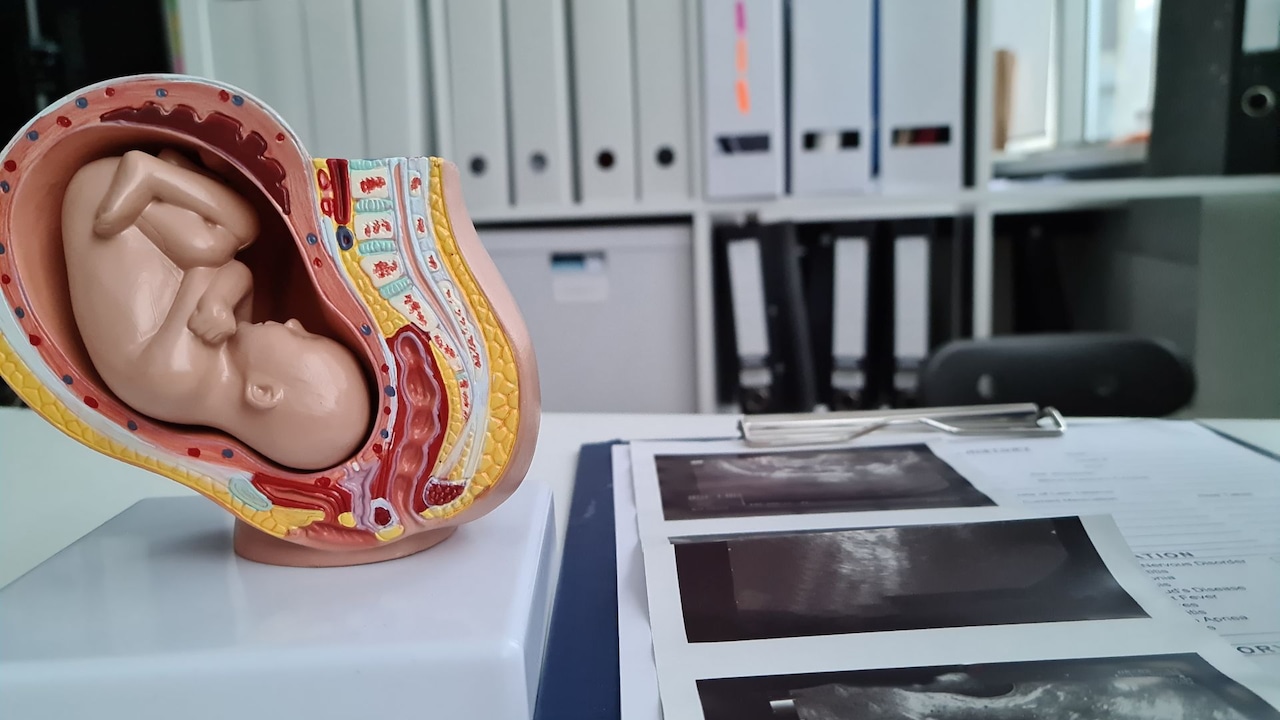
New Jersey is considered an abortion safe haven, but believe it or not, it still turns some people away.
That’s because despite being one of nine states with no gestational limit on abortion, New Jersey has no providers that can offer abortion care past 28 weeks, according to two abortion providers set on changing that. Tired of referring vulnerable patients out of state, Dr. Kristyn Brandi and Nurse Practitioner Catherine Obando are teaming up to open what they claim is the state’s first all-trimester abortion clinic.
Luminosas Wellness Collective is hoping to open in Hudson County by the summer of 2026. Like other health care providers, it will have to be licensed by the New Jersey Department of Health in order to provide services. The nonprofit clinic will be mostly grant-funded and supported by donations. A grassroots fundraising campaign has already raised nearly $20,000 from individual donors. When it opens, Luminosas will be one of only a handful of all-trimester providers in the country.
“It’s up to us to create something. It’s up to us to build the systems that we want to work in, that we want to provide this exceptional care in,” said Obando, the first nurse practitioner in New Jersey trained and credentialed to independently perform abortions after the physician-only mandate was repealed in 2021.
“New Jerseyans shouldn’t have to leave their state to get the care that they need.”
The data on how many people seek later abortions is incomplete. According to the Center for Disease Control’s annual Abortion Surveillance Report, only 1% of abortions occur at or after 21 weeks, but that figure excludes nine states and Washington D.C.
While later abortions are uncommon compared to earlier abortions, there are still thousands of people who need this care every year, according to Bonyen Lee-Gilmore, chief of external affairs for Patient Forward, an advocacy organization focused on eliminating barriers for people seeking abortion later in pregnancy.
Right now, the closest providers of later abortion on the East Coast are in Washington, D.C. and Maryland. A clinic in Colorado that had been providing the service for more than 50 years shut down in the spring. The move was celebrated by anti-abortion advocates, who saw it as a step forward in protecting mothers and unborn children. However, reproductive rights advocates expressed concern about the impact of losing an already narrow resource.
So, why doesn’t this care already exist in a state that has enshrined the right to abortion, including for out-of-state residents traveling to the state? Abortion providers say one major reason is because there’s not enough training, something Luminosas hopes to change.
“Making sure we can train any provider who wants to provide this care is part of our model, so that way there’s a lot more of us,” said Brandi, who had to leave the state for her own training in later abortion care.
Abortions happen later in pregnancy for a variety of reasons, said Brandi.
“The reason why it’s important for people to access later abortion is the same reason people need access to abortion in general. It’s just that some people ended up coming a week or two later. It’s the same people, it’s the same circumstances, they just showed up at a different time.”
Researchers say some of the main factors include:
New information, which could be recognizing the pregnancy later, learning about a maternal or fetal health issue, or a major life event like the loss of a partner or job. Barriers that delay access to care, including laws that ban abortion and logistical obstacles like travel, arranging child care, and saving money for the procedure.
Marginalized communities experience abortions later in pregnancy at higher rates, according to Lee-Gilmore.
“People of color, people of low incomes, and young people happen to be disproportionately impacted by later abortion, which then further marginalizes them because later abortion becomes more expensive. And then they have to travel and they have to take time off work, so the burden compounds on the most marginalized,” said Lee-Gilmore.
Some researchers believe that increased barriers to abortion in the post-Dobbs world have pushed more people to seek abortion later in pregnancy.
Prior to the overturning of Roe v. Wade, the landmark case that protected the right to abortion, about 1 in 10 abortion patients traveled out of state for care. But after the Dobbs decision, the number has doubled to about 1 in 5 abortion patients traveling to other states to obtain abortion care, according to according the Guttmacher Institute.
As of Sept. 2, 12 states banned abortion entirely, and 10 states had limits based on the gestational age of the fetus, according to KFF, formerly known as the Kaiser Family Foundation, an independent nonprofit focused on health policy.
Having an all-trimester abortion clinic in New Jersey would not only transform access for the Northeast region, but it would also relieve the burden on other providers, advocates say.
“There’s a huge burden right now on all-trimester clinics. So, one more opening up in the country is a huge expansion of care,” said Lee-Gilmore.
In addition to providing all-trimester abortion care, Luminosas will provide HIV support, comprehensive OB-GYN services, and gender-affirming treatments. The founders said it was important for them to provide gender-affirming care, given that several New Jersey health systems recently announced changes for gender-affirming care.
The outcome of the upcoming gubernatorial election, however, could throw a wrench in the clinic’s plans.
“We are really concerned that the Republican candidate could potentially pass, and has suggested that he will pass, an abortion ban in our state,” said Brandi.
Republican Jack Ciattarelli — the bearer of Trump’s endorsement — said during a recent debate in the governor’s race that he supports a woman’s right to choose, but with limits.
“What I don’t support is celebrating abortion the way current administration does. What I don’t support is making New Jersey the abortion capital of the country, inviting other people, people from other states to come to New Jersey and have their abortions performed. I don’t support that, let alone use taxpayer dollars to do that. I also support something that my opponent does not, parental notification,” said Ciattarelli.
Ciattarelli’s campaign strategist, Chris Russell, said in a statement sent to NJ Advance Media that while Ciattarelli supports a woman’s right to choose, “after 20 weeks he believes it should be limited to exceptions like rape, incest, or if the health of the mother is at risk.”
“Mikie Sherrill’s support of elective, late term abortions for healthy babies and healthy pregnancies up until the moment of birth is extreme and out-of-touch. Make no mistake, if Sherrill becomes governor, late term abortion clinics like this will become the norm in New Jersey,” said Russell.
Even if Ciattarelli did want to ban or limit abortion in the state, he couldn’t do it alone. Gov. Phil Murphy signed a law in 2022 codifying the right to abortion. Any attempt to change or repeal the law would have to go before the Legislature.
By comparison, Sherrill has previously said she supports enshrining the right to an abortion in the state constitution, as well as requiring insurers to cover the procedure.
“What’s extreme is Jack’s deadly plan to ban abortion and rip away lifesaving care. Instead of standing up to Trump’s attacks on reproductive care, Jack is pushing a dangerous ban that will make women in New Jersey less safe,” a spokesperson for the Sherrill campaign in a statement sent to NJ Advance Media.
“As a mom of four, Mikie understands all pregnancies are different and some are complicated. That’s why no politician should make medical decisions for women and their doctors. We’ve seen the impact of such an extreme agenda: women are left bleeding out in waiting rooms and unable to get care as politicians like Jack stand in the way. Mikie will not let that become the norm in New Jersey,” the spokesperson said.
Regardless of who moves into the governor’s mansion in January, Brandi said she won’t give up on Luminosas without a fight.
“It’s really scary, especially as potential small business owners, but we know that this is critical care for our patients in our communities and we’ve been here for a long time. We love New Jersey and we want to serve our community. So, we’re going to do whatever we can to try to fight any type of ban that would impact people’s care.”
Related coverage:
If you purchase a product or register for an account through a link on our site, we may receive compensation. By using this site, you consent to our User Agreement and agree that your clicks, interactions, and personal information may be collected, recorded, and/or stored by us and social media and other third-party partners in accordance with our Privacy Policy.