
The Virgin Islands Energy Office (VIEO) is moving ahead with new renewable energy projects despite a major setback: the Environmental Protection Agency’s (EPA) recent rescission of a $62.5 million “Solar for All” grant, which had been earmarked for a massive territorial solar expansion.

The EPA’s decision effectively halted plans to deploy 21 megawatts of solar generation and 55 megawatt-hours of battery storage across the Virgin Islands. The termination letter issued to VIEO included an immediate “Stop Work” order, forcing all related activities to cease.
Despite the setback, Energy Office Director Kyle Fleming said his agency remains committed to strengthening the territory’s energy resilience. “VIEO will yet be able to materially enhance electrical resilience in the territory,” Fleming said, pointing to other federally funded efforts such as the Community Electrical Innovations (CEI) program.
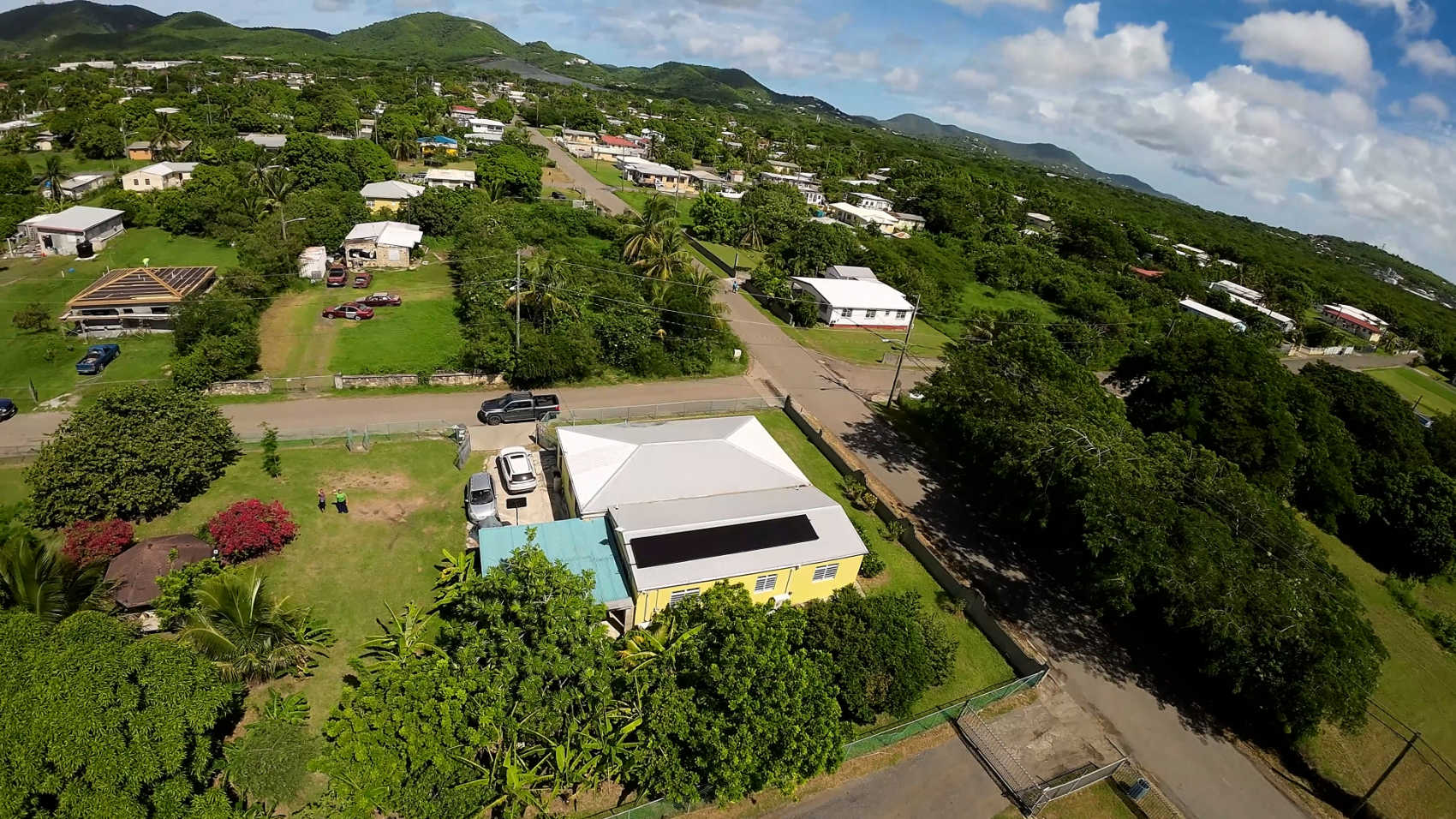
Even as large-scale funding was withdrawn, VIEO celebrated a milestone in residential renewable energy this year. The agency completed 12 home solar and battery installations through its Solar Plus Financing (SPF) Pilot Program, funded by the U.S. Department of Energy.
The SPF initiative offers 1 percent interest, zero-down loans in partnership with the Virgin Islands Economic Development Authority (VIEDA), allowing residents to finance rooftop solar systems and battery storage. On average, homeowners received about $28,000 to install 5.5 kW of solar panels with 14 kWh of storage.
Participants have already reported significant benefits. St. Thomas resident David Miles said the transition has not only lowered his WAPA bills but made outages virtually invisible. “My experience is that I am so grateful that I have these solar panels,” he said. “Because you don’t even know that the power is out. You can just feel a light flicker, and then I hear a generator start across the street and then I know the power is out.”
VIEO originally designed the SPF program as the first of several efforts to expand access to renewable energy and narrow the territory’s socioeconomic energy gap.
One of the agency’s remaining major initiatives is the Community Electrical Innovations (CEI) grant, a $10 million program administered through the Virgin Islands Housing Finance Authority (VIHFA). The program aims to strengthen the energy resilience of facilities that serve children, the elderly, and other vulnerable groups.
Following the July application deadline, 29 facilities were provisionally approved to receive solar and battery systems. The first phase will focus on Head Start centers and daycare facilities serving over 500 children territory-wide. Nine institutions on St. Thomas and St. Croix have already begun soliciting bids for design-build solar systems, with public tenders expected to open in November.
VIEO is also advancing efforts to improve territorial solar design and access. In early October, the agency selected DNV Energy as a consultant under RFP BD-25-270-2701-581, to assist with the development of community microgrids and rooftop solar financing models. The partnership will help design programs that ensure affordable access to renewable energy while positioning the Virgin Islands for future federal funding.
Additionally, the office finalized evaluations for RFP BD-25-270-2701-599, selecting Carib Sun Energy to build a microgrid system at WTJX’s Mountaintop broadcast tower on St. Thomas.
The project, funded by the Department of the Interior’s Energizing Insular Communities Grant, will feature a 70 kW solar array, 500 kWh battery system, and a microgrid controller integrated with the site’s existing diesel generator. Once completed—within roughly nine months of its official start—the system is expected to save the broadcaster $6,000 a month in electricity costs while ensuring uninterrupted transmission from one of the territory’s most critical communication points.
Despite the EPA grant withdrawal, Fleming said the Energy Office’s mission remains unchanged: to pursue affordable, resilient, and sustainable power for residents and essential community services.
“The VIEO continues to advance a diversified portfolio of solar and battery initiatives, leveraging alternative funding, strengthening public-private partnerships, and moving priority projects from planning to deployment,” Fleming stated.
With several projects underway and new federal partnerships emerging, VIEO says its focus will remain on “near-term, high-impact installations that deliver reliability, affordability, and resilience” to the Virgin Islands’ energy landscape.