
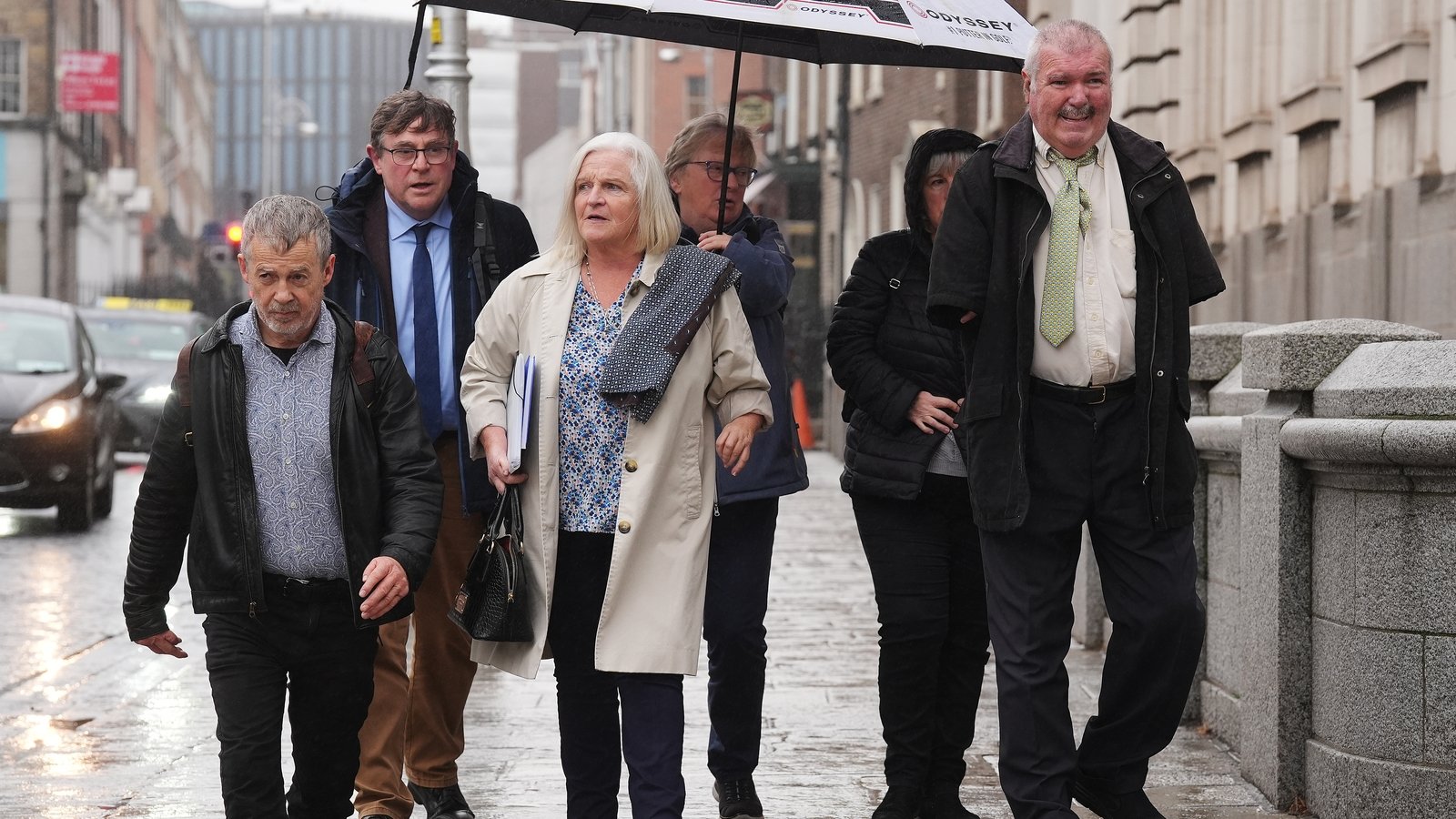
The Government has met Thalidomide survivors in Dublin and outlined a series of measures to help them, including the provision of medical cards.
The drug was prescribed to pregnant mothers in the 1950s and 1960s as an anti-morning sickness drug, but was later pulled because of links to birth defects and lifelong disabilities.
The German manufacturer apologised in 2012 to those born without limbs as a result of its use.
Members of the Irish Thalidomide Association (ITA) met Taoiseach Micheál Martin and Tánaiste Simon Harris at Government Buildings.
They said they hoped the encounter would result in “a shift in the dial” for the resolution process.
In a statement issued after the meeting, the Government said that Mr Martin and Mr Harris told the group “that the pathway for people who have not yet had their injuries affirmed as caused by the Thalidomide drug is being completed”.
It confirmed that Minister for Health Jennifer Carroll MacNeill “has agreed to provide discretionary medical cards to unacknowledged Thalidomide survivors” and “this will apply to individuals who are currently seeking acknowledgement, or those who intend to seek acknowledgement, as survivors of Thalidomide through the State process.”
Mr Martin and Mr Harris “also confirmed an enhanced package of services to all Thalidomide survivors and agreed to meet with members of the board next month” as the resolution process continues its work.
Last year, then-taoiseach Simon Harris announced an enhanced health package for survivors, including simplified access to local health and social care professionals, access to clinical and holistic therapies, independent living supports to include housing adaptions, car adaptations and home supports, annual health assessments and free travel passes.
A resolution process, led by retired judge Paul Gilligan, was also set up.
Thalidomide campaigners claim that this process, which is confidential, has stalled and sought a meeting with Mr Martin and Mr Harris.
“We have sought this meeting for many, many months to try and address the total impasse and the lack of proper engagement, and some very broken promises,” said Finola Cassidy of the Irish Thalidomide Association (ITA) ahead of the meeting.
“We’re hoping that today will be actually a shift in the dial and we can actually move on here. So hopefully we will have some very good indications of meaningful progress coming out of this.”
She added: “After 60 years, it is far beyond time for the State to take full responsibility for its role and deliver justice for survivors.”
There are 40 survivors of thalidomide in Ireland.
Among those who attended Government Buildings was Donal Browne, the brother of Jacqui Browne, a campaigner and sailor who died in June.
Additional reporting PA