
NEED TO KNOW
The northern lights could appear on Thursday, Oct. 30, just before Halloween as a stream of solar wind interacts with Earth’s magnetic fieldIf the weather permits, up to seven U.S. states have the best chances of catching a glimpse of aurora activityBe sure to check NOAA’s Aurora Viewline forecast and aurora tracking apps to see if activity is strong in your area
Just when you thought Halloween couldn’t be more bewitching, the sky is casting its own spell this week.
Before the trick-or-treaters hit the streets on All Hallows’ Eve, the northern lights could make a surprise cameo across parts of the U.S. on the evening of Thursday, Oct. 30, adding a little something extra to spooky season.
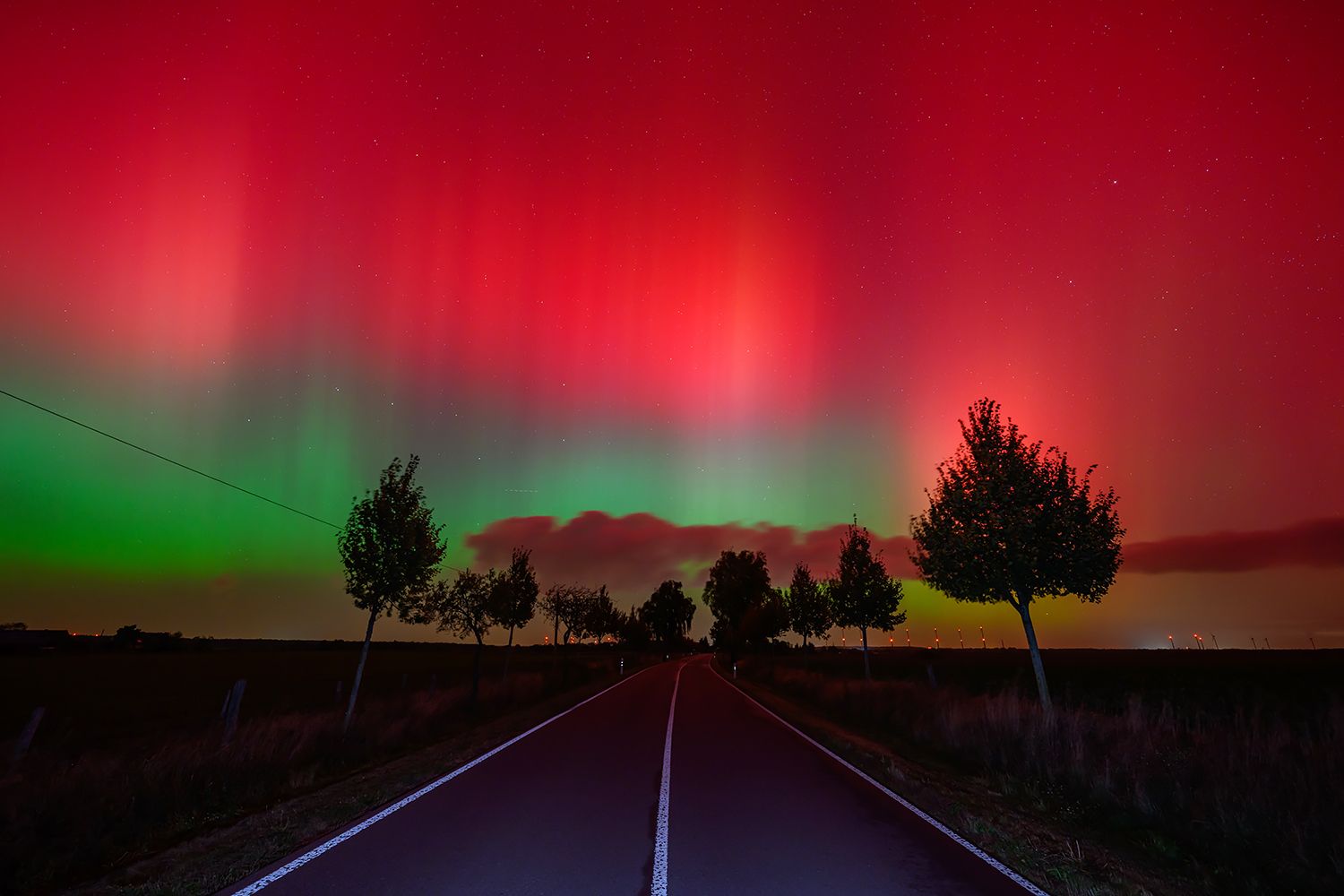
The aurora borealis (northern lights) is a result of geomagnetic storms, which occur when charged particles from the sun collide with gases in the Earth’s atmosphere, creating brilliant waves of light in the sky. Still, their visibility depends on several factors, including intensity and location.
According to NOAA’s Space Weather Prediction Center, a stream of solar wind is interacting with Earth’s magnetic field, setting the stage for possible aurora sightings from Alaska down to states near the Canadian border.
Remember, the aurora borealis can be elusive and unpredictable, so if you’re planning to stay out late this Halloween Eve, keep your eyes peeled!
In the meantime, read on for how, when and where to catch a glimpse of the northern lights tonight.
When will the northern lights be visible?
Aurora Borealis.
Artem Tsehelnyk/Suspilne Ukraine/JSC “UA:PBC”/Global Images Ukraine via Getty
The northern lights could be visible on Thursday night, according to the NOAA Space Weather Prediction Center.
A burst of solar wind colliding with Earth’s magnetic field could spark auroral activity after sunset and into the late-night hours.
While the best viewing window depends on local darkness and clear skies, the later it gets, the higher your chances.
Where will the northern lights be visible?
If you live in any of the locations below, it might just be your lucky day!
U.S. states including Alaska, Montana, North Dakota, Minnesota, Wisconsin, Washington and Idaho could witness the otherworldly glow of the auroras this evening. Still, the further north you go, the better your chances.
How to watch the northern lights?
Northern lights.
Lando Hass/picture alliance via Getty
Aurora-chasing is all about patience.
To maximize your chances, head to a dark spot away from city lights. Rural areas with open views to the north are ideal for viewing.
Also, be sure to check local weather forecasts, because even the slightest cloud could easily obscure the northern lights. Keep an eye on NOAA’s Aurora Viewline maps, which update regularly.
Remember to stay put, as the auroras may appear suddenly and last only a few minutes.
How to take photos of the northern lights?
If you’re lucky enough to spot it, you’ll want proof.
To photograph the northern lights, keep your setup as steady as possible, since the auroras are best captured with long exposures. But if you have a smartphone handy, that works, too!
All you have to do is head to your device’s settings and tap the “Night Mode” option or “Pro Mode” with similar exposure times.