
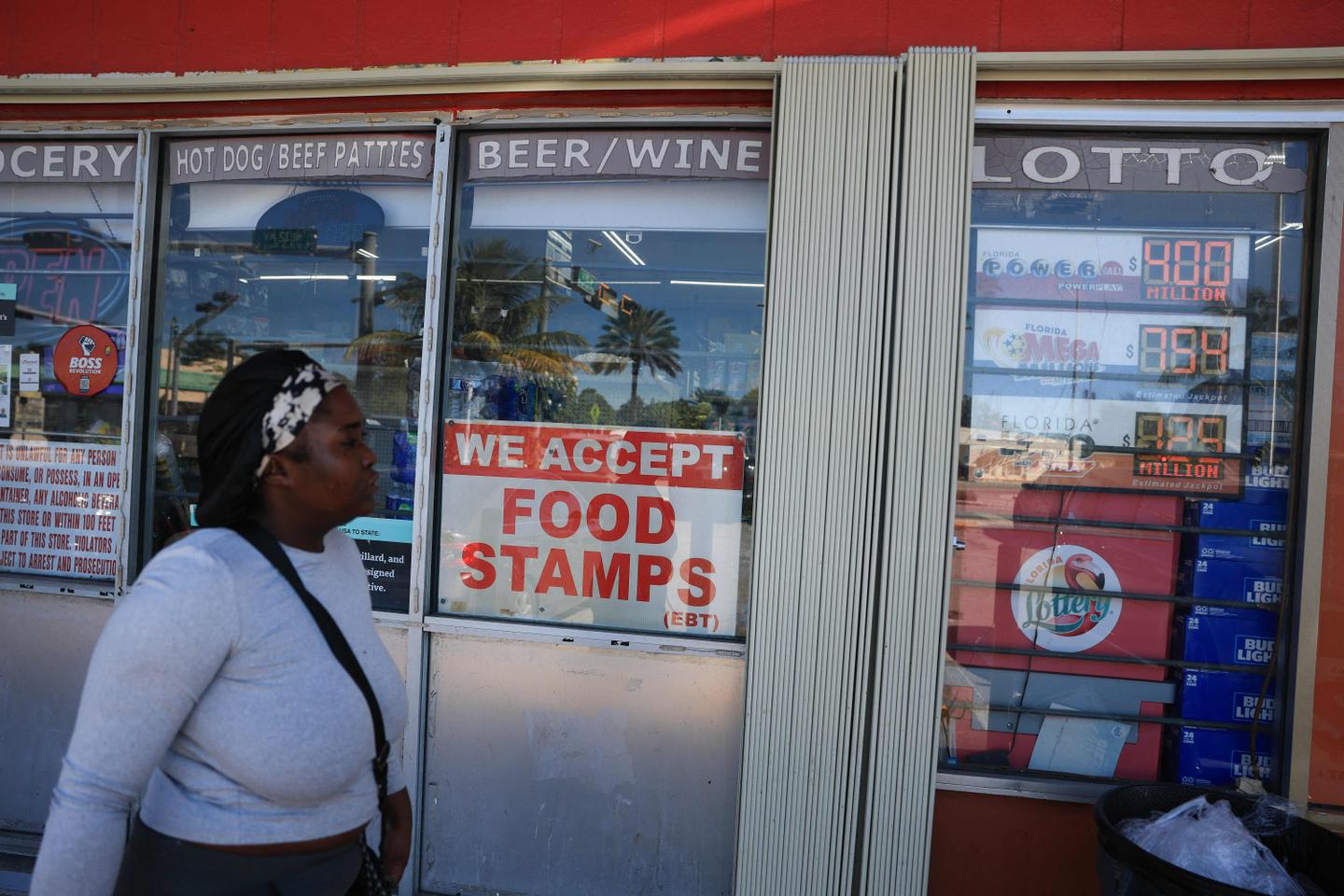
 A ‘We Accept Food Stamps’ sign hangs in the window of a grocery store on October 31, 2025 in Miami, Florida. JOE RAEDLE / AFP
The ongoing budget deadlock in the United States is threatening food security of around 42 million Americans who receive food stamps at the start of each month to help get by. The US Department of Agriculture had said that no money could be paid out on Saturday, November 1, due to the shutdown.
But on Friday, October 31, a federal judge helped ease some of the uncertainty at the last minute by ordering the government to use emergency funds to ensure the continuity of the Supplemental Nutrition Assistance Program (SNAP), which has helped low-income Americans for more than 60 years.
Later on Friday, US President Donald Trump appeared to issue a lifeline, saying he does not want these Americans to “go hungry.”
In a lengthy Truth Social post, Trump said “Government lawyers do not think we have the legal authority to pay” the Supplemental Nutrition Assistance Program benefits once funding expires on November 1 during the ongoing government shutdown, but added that he has instructed them to “clarify how we can legally fund SNAP as soon as possible.”
Read more Subscribers only US government shutdown begins to undermine the country’s economy How does SNAP work?
While food stamps date back to the 1930s during the Great Depression, the SNAP program was created in 1964 and expanded nationwide in 1974, according to Niles from the University of Vermont. Today, around one in eight Americans receives SNAP benefits each month based on income, according to the Department of Agriculture. This costs the federal budget nearly $100 billion.
Beneficiaries have a payment card, similar to a debit card, which they can use in supermarkets, grocery stores, and some farmers’ markets. The cards are usually reloaded automatically on the first day of the month. To qualify for SNAP, along with being low-income, recipients must meet certain requirements — which can vary from working at least 30 hours a week to being medically deemed unable to work due to disability.
“It is an important program for many Americans,” Niles said, adding that recipients receive an average of around $6 per person day.
Every day items like fruit, vegetables, canned goods, chips, and pasta are covered by SNAP, while alcohol and pre-prepared meals are not.
Partner service
Learn French with Gymglish
Thanks to a daily lesson, an original story and a personalized correction, in 15 minutes per day.
Try for free
Help us improve Le Monde in English
Dear reader,
We’d love to hear your thoughts on Le Monde in English! Take this quick survey to help us improve it for you.
Take the survey
New
Le Monde’s app
Get the most out of your experience: download the app to enjoy Le Monde in English anywhere, anytime
Download
From January 2026, around ten states also plan to exclude the purchase of soft drinks using SNAP vouchers.
Impact of SNAP pause
Nationwide, around 9% of grocery purchases are paid for using SNAP, according to Niles, with a quarter of all purchases using the vouchers made at the retail giant Walmart.
“We’re talking about billions and billions of dollars that aren’t going to be in the economy,” if SNAP payments are frozen in the future, she added. If SNAP payments are halted, Niles said she expects people will try to compensate by dipping into their savings, skipping meals, or deferring other expenses like repaying loans or attending medical appointments.
Households will receive retroactive benefits once the suspension is lifted and federal funding is made available again, according to a US Department of Agriculture document shared with AFP.
Read more Subscribers only Trump turns the government shutdown into a political weapon
In the event of non-payment, states have invited recipients to make use of food banks – which could be swiftly overwhelmed by the demand.
According to the latest available data, 13.5% of American households did not have guaranteed access to sufficient quantity and quality of food in 2023, the highest level since 2014. In September of this year, the Department of Agriculture announced it would stop gathering the data for this report.