
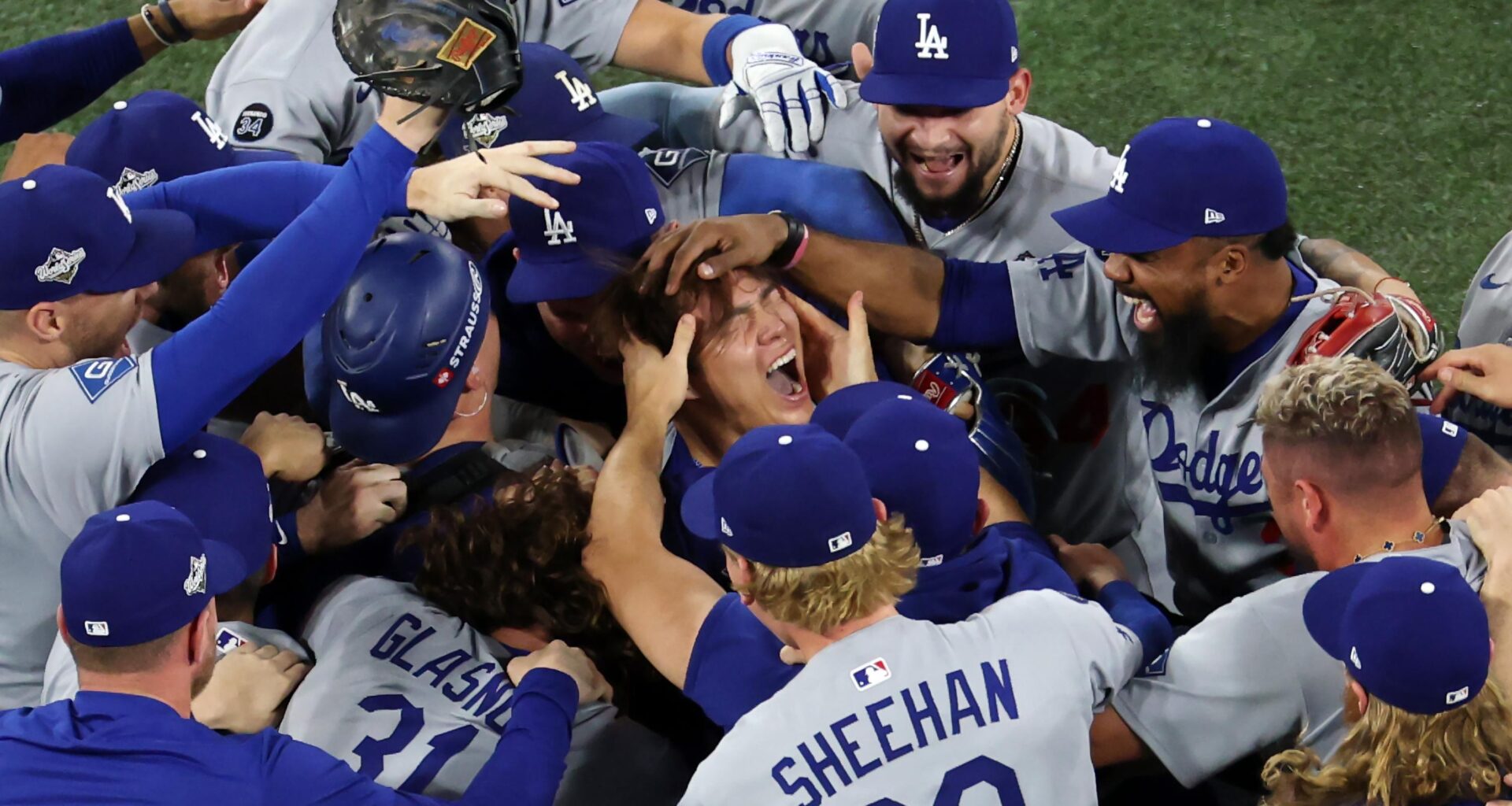
If you had to pick one word to describe how most of the baseball world collectively felt about the Los Angeles Dodgers from their offseason signings straight through to the final pitch of their second consecutive World Series title, it would have to be: Inevitable.
They never remotely became the regular-season juggernaut they were supposed to be. It almost felt like they reluctantly won the NL West with the fifth-best record in baseball, just kind of going through the motions for large swaths of the regular season.
If “Wake Me Up When September Ends” wasn’t their clubhouse anthem, it probably should have been.
Even as they swept their way through the NLCS, it was hard not to notice the complete lack of offense outside of Ohtani’s historic performance in Game 4.
Yet, heading into a World Series that ended up getting decided the day after Halloween, they always had a bit of a Michael Myers vibe going, casually stalking their prey, unkillable and bound to make a surprise comeback if they ever did sustain a seemingly fatal blow.
Be honest: When Max Muncy hit that moonshot in the eighth inning to cut the deficit to 4-3, you felt a jolt of that villainous inevitability.
And Miguel Rojas providing the game-tying blast in the ninth inning? When he only started Games 6 and 7 because the No. 9 hitter from the first five games (Andy Pages) simply had to go?
And when it looked like Ernie Clement was going to win the series for Toronto by extending his all-time postseason record with what would have been his 31st hit of the postseason, how fitting that it was Pages—just subbed into center field for his defense one batter prior—making the unreal catch while colliding with Kiké Hernández along the warning track in left-center.
Though it was several improbable role players keeping them alive, ol’ Michael Myers and his $585M payroll simply could not be killed. And it was Will Smith who provided the final blow.
Credit to the Toronto Blue Jays, though. They put up a fight that would’ve made Jamie Lee Curtis’ Laurie Strode proud.
From their humble beginnings as a team picked to finish dead last in the AL East, with preseason World Series odds of +6000, they became a remarkable foil to the mighty Dodgers.
They were physically battered and bruised. George Springer and Bo Bichette winced through seemingly every swing and every step along the basepaths, yet delivered a combined total of five hits in Game 7, including Bichette’s haymaker of a three-run homer.
By the final chapter of this seven-game saga, they were even seemingly too geriatric to survive. Max Scherzer became the oldest starting pitcher in Game 7 of a World Series by a margin of nearly two years—and pitched quite well, allowing just one run in 4.1 innings of work. (Previous record belonged to Tim Hudson in 2014, per MLB.com’s Jason Catania.)
They almost pulled it off.
But the Dodgers put together what may well have been the most “all hands on deck” game in World Series history.
The four aces each took a turn shutting down the Brewers—who are signed to contracts at a combined face value of $1.3435 billion—each pitched in this Game 7 for the ages. Shohei Ohtani, Tyler Glasnow, Blake Snell and, incredibly, Yoshinobu Yamamoto on zero days rest combined to record 26 of the 33 outs.
Yamamoto became the first pitcher to record three wins in a World Series since Randy Johnson in 2001 and the first to ever record three road wins in a single World Series, per Justin Russo.
And let’s not forget that Yamamoto was also warming up to pitch the 19th inning in that Game 3 if Freddie Freeman hadn’t ended it in the 18th.
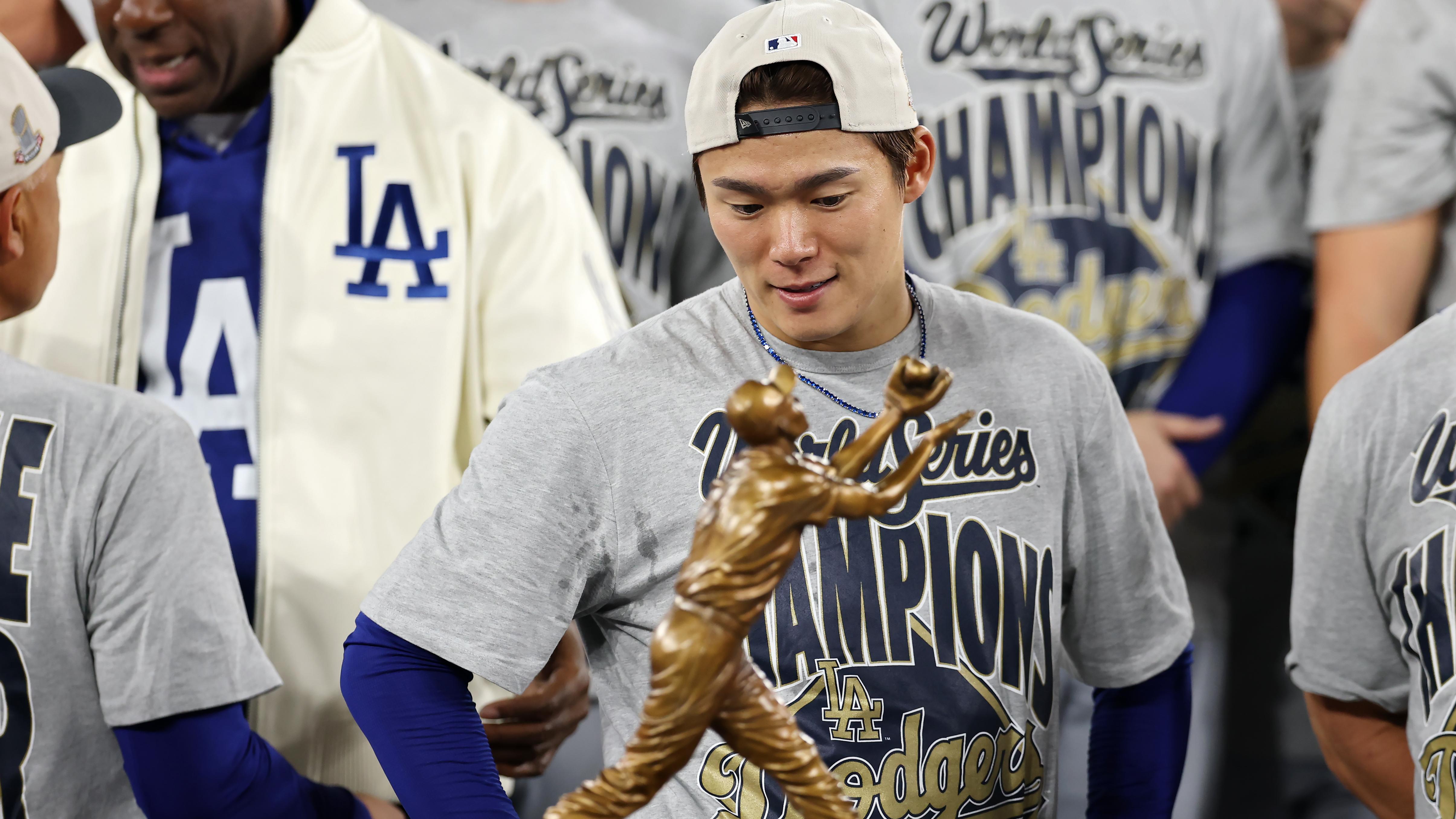
It was a Herculean pitching effort that presumably even got a 10-gallon hat tip from Madison Bumgarner, and it was enough for Yamamoto to edge out Ohtani for World Series MVP.
Needless to say, those arms were worth every penny as they helped deliver an all-timer of a World Series.
Emilee Chinn/Getty Images
We shall see what this second consecutive title for the free-spending Dodgers means for Major League Baseball 13 months from now, when the current CBA expires and salary cap discussions loom very large and very contentious. Let’s not pretend that the Toronto Blue Jays and their nearly $300M payroll were exactly a David to this Goliath, but the ramifications of LA “buying” another ring may well lead to a lockout.
For now, though, were you not wildly entertained?
And already at least a little eager to find out if anyone can keep the Dodgers from a three-peat in 2026?
Even before Game 7, this was already one of the greatest World Series in recent memory.
Almost certainly, it was the most literal World Series we’ve ever had. Not only did a season that began in Japan end in Toronto, but there were key players in this series from Japan, Canada, Mexico, Venezuela, Dominican Republic, Cuba and Puerto Rico. Even South Korea’s Hyeseong Kim finally got into a World Series game as a late defensive replacement in Game 7.
On top of that, so many of the game’s biggest stars shone brightly. Yamamoto won MVP, but it could have been Shohei Ohtani, Vladimir Guerrero Jr., George Springer or even Bo Bichette on his way to a mighty lucrative free agency.
And just as many new stars were born, with Trey Yesavage, Addison Barger, Ernie Clement becoming Toronto legends, plus Will Klein out of nowhere for the Dodgers.
Throw in the sheer absurdity of Game 3 going to 18 innings in the most improbable bullpen duel ever and this World Series had everything.
That this fascinating series ended as dramatically as it did was something straight out of a Hollywood script. Heck, Pages’ catch even had a little “Angels in the Outfield” juice to it, if you take some artistic liberties on which LA team benefited from it.
You may well consider it a Hollywood script in which the bad guys won, but what an unpredictable ride it was to a long-predictable conclusion.