
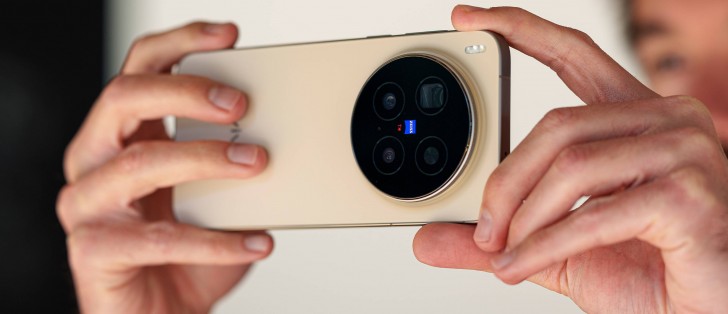
A 6.78-inch OLED display, that’s easy to love
The X300 Pro’s display is in most ways the same as that on the X200 Pro and that’s no bad thing. At 6.78 inches in diagonal, the panel has a 1,260×2,800px resolution and a 452ppi pixel density in a 20:9 aspect ratio. It’s an LTPO OLED display with a 120Hz maximum refresh rate, 2160Hz PWM and DC dimming, Dolby Vision support, and almost excessively high brightness capability.
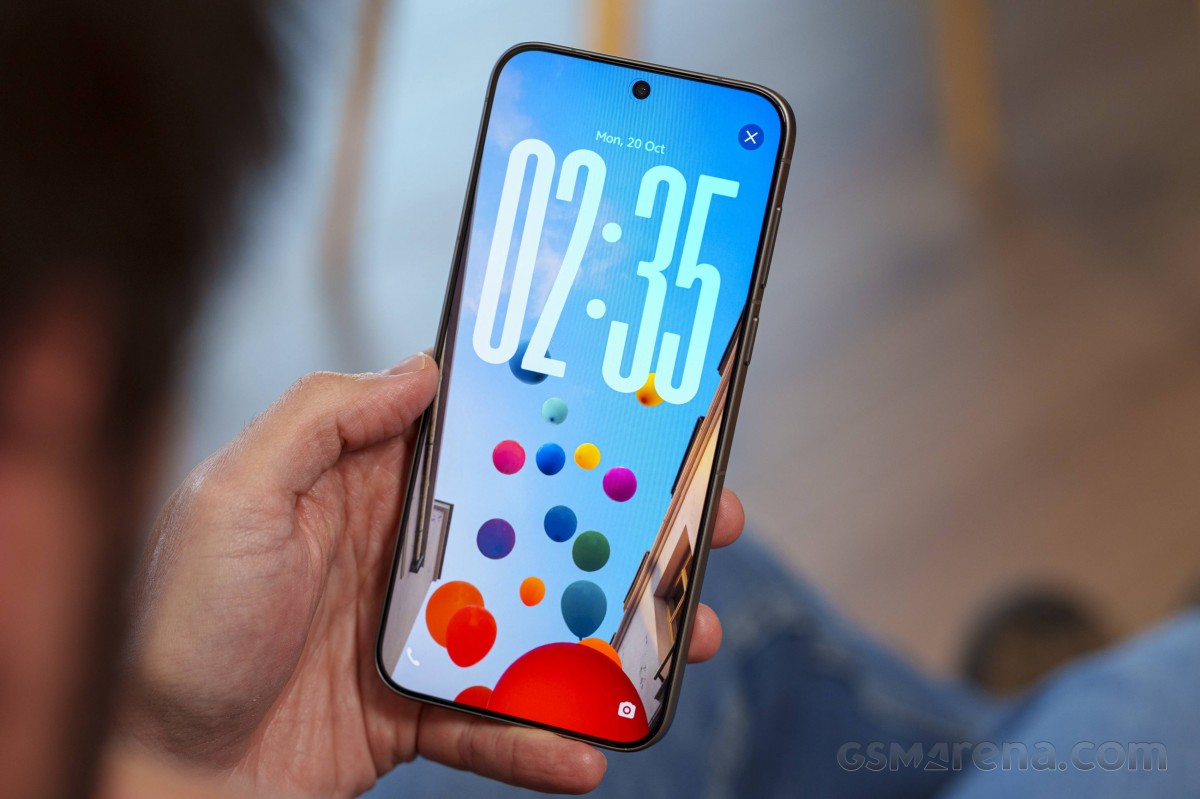
vivo promises 4,500nits of peak local brightness and 2000nits of full-screen brightness in ambient conditions that call for it. In our testing, we measured over 2,100nits for a 75% swatch of white with the adaptive brightness enabled (properly impressive), and a little over 2,600nits for a 10% white window (not too shabby either). The manually attainable result was a little under 600nits in some applications, but some 200nits higher in the phone’s Albums gallery app (both for 75% swatches). Minimum brightness was just under 2 nits in our measurements.
Refresh rate
The X300 Pro gets a downgrade in its refresh rate capabilities, academically speaking – the old one was specced to be able to go as low as 0.1Hz (refreshes once every 10 seconds), the new one has a more standard 1Hz minimum. The maximum is still 120Hz and the phone will adjust refresh rate based on your interaction with it and the content being displayed – brightness doesn’t appear to be a factor as even at the minimum setting the phone dials down to 1Hz.
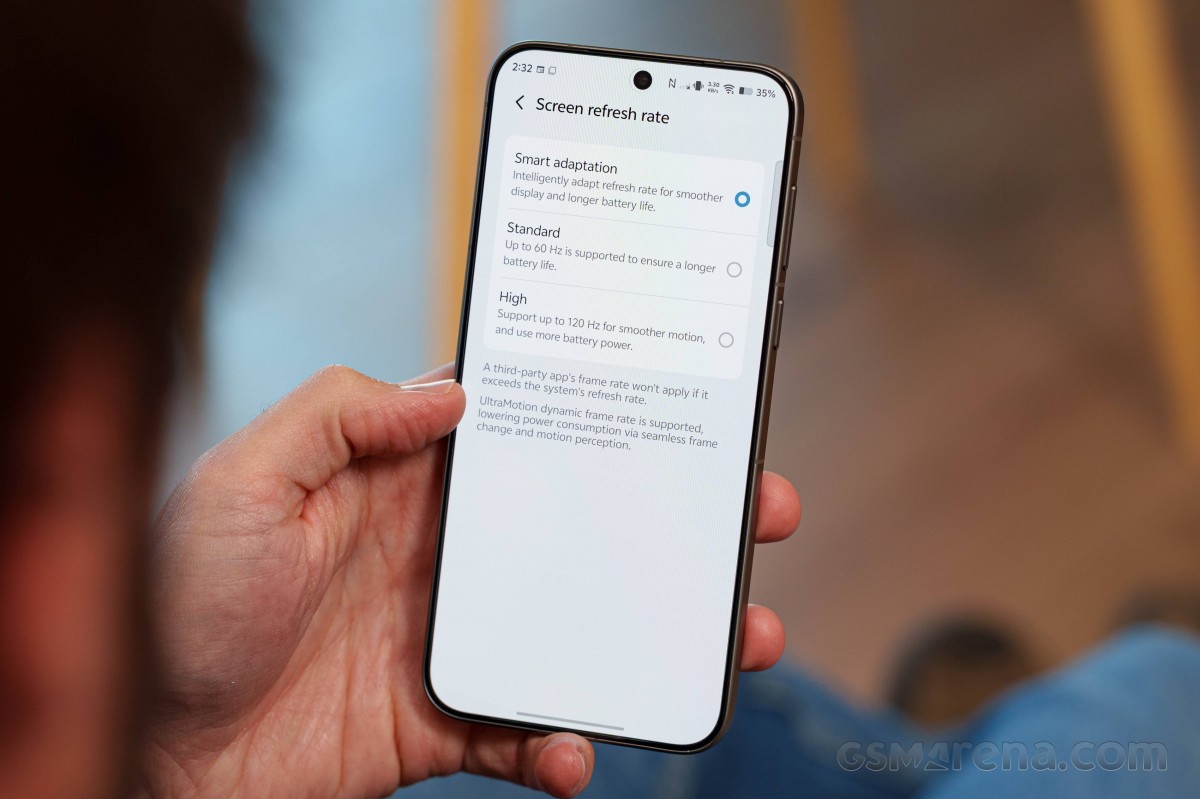
The phone probably knows what it does better than what it reports, because we were able to play all sorts of odd framerate videos smoothly (24fps/48fps) even though the Android refresh rate utility reported alternating 30Hz/90Hz/some-other-hertz values. We also got 120Hz in some 3D games and in some arcade titles, but it was more of a hit or miss affair (though, realistically, that’s still usually the case with high framerate gaming on Android). The max refresh rate in Google Chrome, however, was only 90Hz.
Streaming and HDR
The X300 Pro supports all major HDR standards, including Dolby Vision. The Netflix app reports capability for HDR10, HDR10+, and Dolby Vision, and is happy to play HDR content in FullHD, thanks to the Widevine L1 clearance the phone has. YouTube also serves HDR streams.
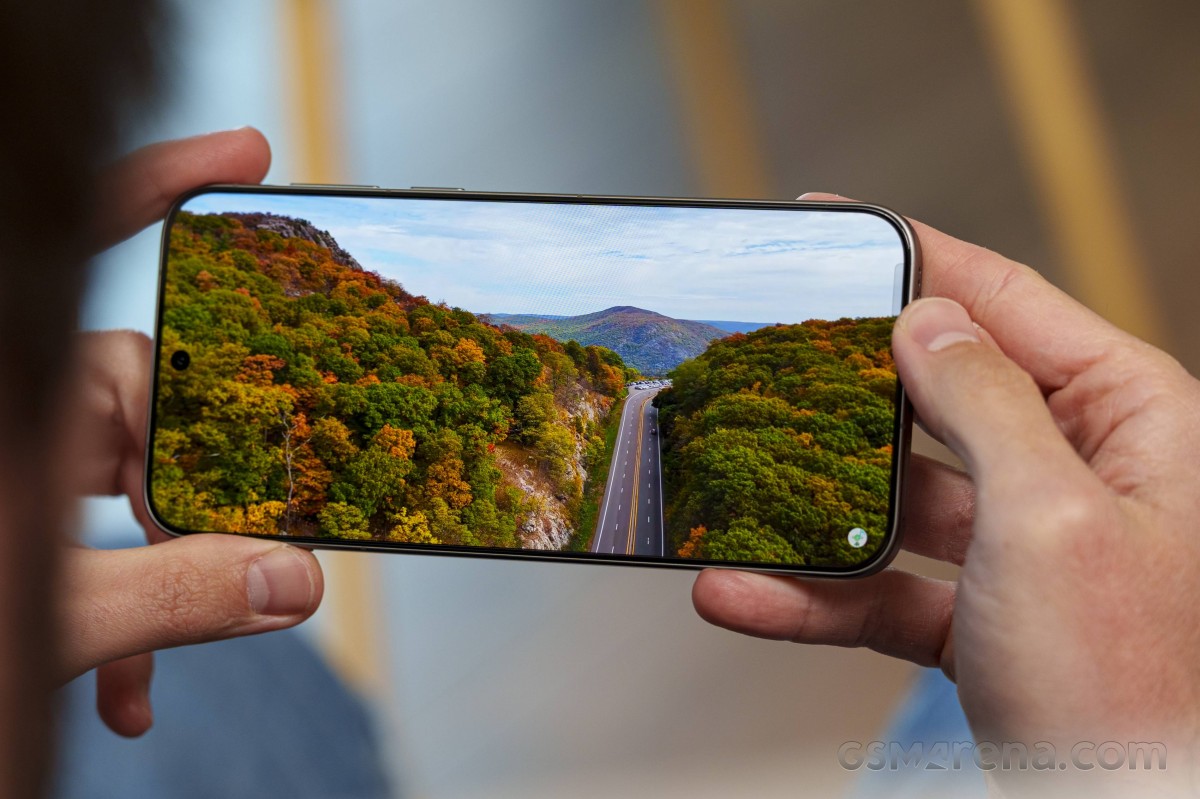
Android’s Ultra HDR photo standard is supported – you get compatible HDR photos displayed with enhanced tone mapping and a brightness boost for highlights. It works in the in-house Albums gallery, but also in Google Photos, and in Chrome – for images from other compliant phones, too.
The X300 Pro’s battery capacity is a bit of a contentious topic. In China and many other markets, the phone comes with a 6,510mAh battery, but in the EU its capacity is just 5,440mAh, and that’s the version we’ve tested.
Whether it’s an actually different battery physically (unlikely, from what we gather), or it’s a software and/or hardware change in its controller, we can only speculate, but the net result is a smaller capacity than the older model. Apparently, Oppo was more motivated than vivo was to do the necessary steps to offer a truly large battery – the Find X9 Pro’s capacity is 7,500mAh, EU included.
With that in mind, we’re not surprised that the phone’s numbers in our Active Use Test aren’t quite impressive. It’s not really bad, strictly speaking, it’s just a bit of a downgrade compared to last year’s model, and below what we know is its full potential. Web browsing and gaming endurance has dropped by some 18-ish percent and there’s a marginal decrease in video playback. There’s also an even more substantial (if not necessarily as important) drop in the voice call time.
The overall Active Use Score works out to 12:45h – not something we can rave about. It’s a decrease by about 16% compared to last year’s model, but more importantly, it’s way behind this year’s competition.
Our new Active Use Score is an estimate of how long the battery will last if you use the device with a mix of all four test activities. You can adjust the calculation based on your usage pattern using the sliders below. You can read about our current battery life testing procedure here. For a comprehensive list of all tested devices so far, head this way.
The X300 Pro’s charging capability is listed at 90W when using proprietary FlashCharge peripherals or 55W when using standard USB Power Delivery (with PPS). Our review unit didn’t have a charger bundled, but we did happen to have a 90W FlashCharge adapter, so we tested with that one, and we also tried a good aftermarket USB PD unit. Believe it or not, the results turned out practically identical.
Sure, the vivo adapter recorded a peak power value of 73W, while the USB Power Delivery one maxed at 45W, but 15 minutes into it, the phone had reached 55-ish percent with either one and the 1% to 100% time was 29 minutes with either one. Those are pretty fast results in 2025, but we’ll have to keep in mind that the capacity is on the smaller side of the spectrum.
In addition to that, while it’s common practice for phones to report 100% and then keep charging for a while, our experience with the vivo proved it to be among the worse offenders in this respect. As it reported 100%, with either of the two adapters/standards, it was drawing around 28W of power – that’s some phones’ peak rating.
From then on, it was a gradual decline ending 13 minutes later at 9W, at which point the phone switched to trickle charging (a bit of a high-powered trickle, but let’s not get even deeper into a rabbit hole that’s already taking up too much of our time – and yours too). During those 13 minutes, the phone racked up some significant charge, more than what we’re used to under such circumstances. All this is to say that vivo’s not too transparent with its battery charging practices, and we do not approve.
The X300 Pro supports wireless charging and it’s now rated at 40W (up from the 30W on the X200 Pro) with vivo’s proprietary 50W charging pads. Reverse wireless charging is also supported (as is reverse wired charging, for that matter).
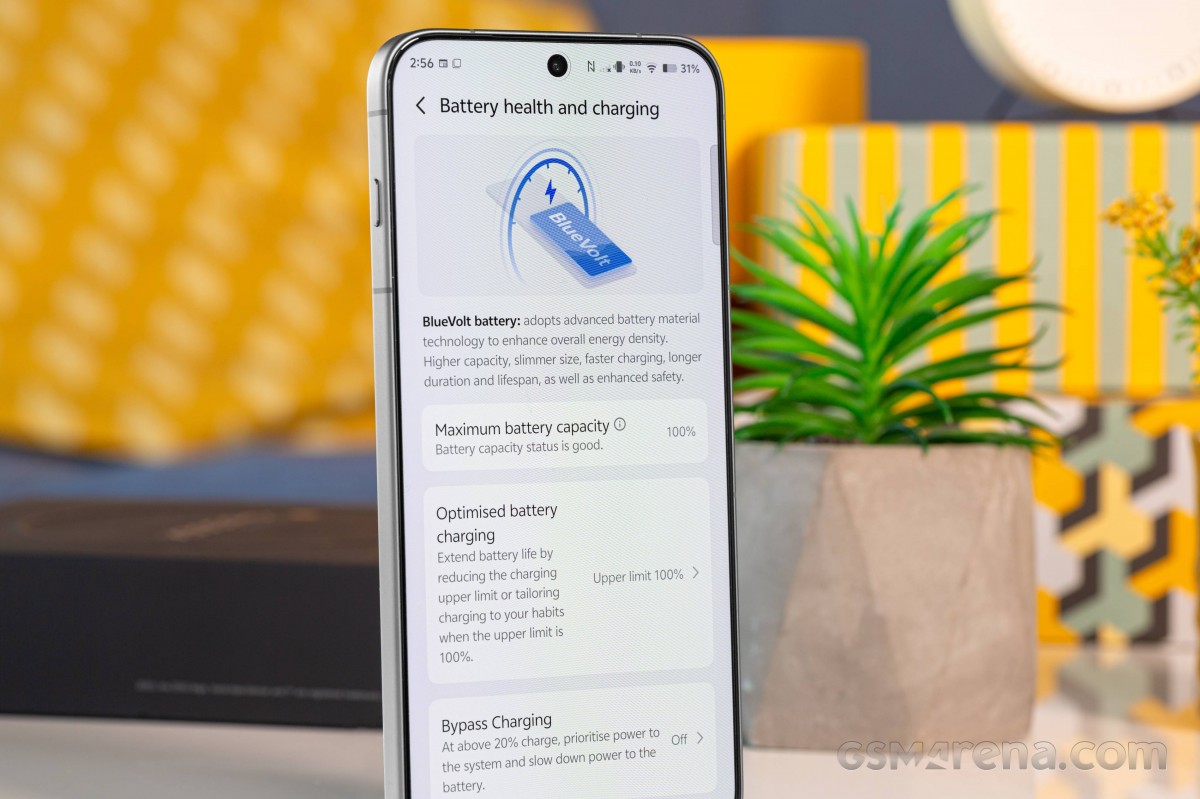
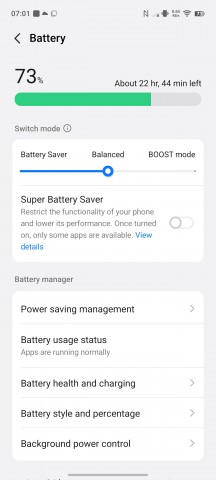
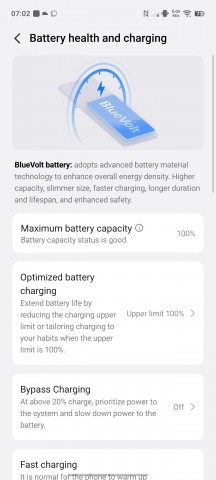
The latest OriginOS 6 packs a handful of battery health features for you to explore. You can set an upper limit to the charging – as low as 70%, as if vivo nerfing the capacity wasn’t enough, you can have the phone optimize the process based on your nighttime habits, you can disable the fast charging, and you can do bypass charging (minimizing power sent to the battery to limit heat generation in instances where that would be detrimental – like competition-level gaming or some such).
Battery features
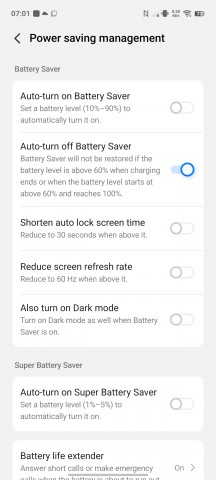
A bunch of battery saver functions are also available, like automatically dialing down screen lock time and refresh rate and turning on Dark mode. A battery like extender is also there for you for the most dire of circumstances, saving enough power for an emergency voice call (up to 4 minutes).
The vivo X300 Pro has a stereo speaker setup with one unit on the bottom, and another one up top that fires forward and doubles as an earpiece. In vertical orientation, the top speaker gets the left channel, while in landscape, channels are assigned according to the handset’s actual orientation. Each speaker only plays its own track.


Bottom speaker • Top speaker • Earpiece
In our testing, the X300 Pro scored a ‘Very Good’ rating for loudness – on par with the previous generation and with a very similar numerical result too. Just like last year, though, it’s not the nicest of sound quality you can have in the class – it’s a bit bathroomy and lacking in low-end rumble. Essentially all competitors sound better, including the Find X9 Pro, which isn’t setting any standards itself. The Galaxy and the iPhone sound significantly bigger and more composed.
Use the Playback controls to listen to the phone sample recordings (best use headphones). We measure the average loudness of the speakers in LUFS. A lower absolute value means a louder sound. A look at the frequency response chart will tell you how far off the ideal “0db” flat line is the reproduction of the bass, treble, and mid frequencies. You can add more phones to compare how they differ. The scores and ratings are not comparable with our older loudspeaker test. Learn more about how we test here.