
Oregon is suing the Trump administration over $17.9 million in grant funding the state uses for emergency preparations and domestic security.

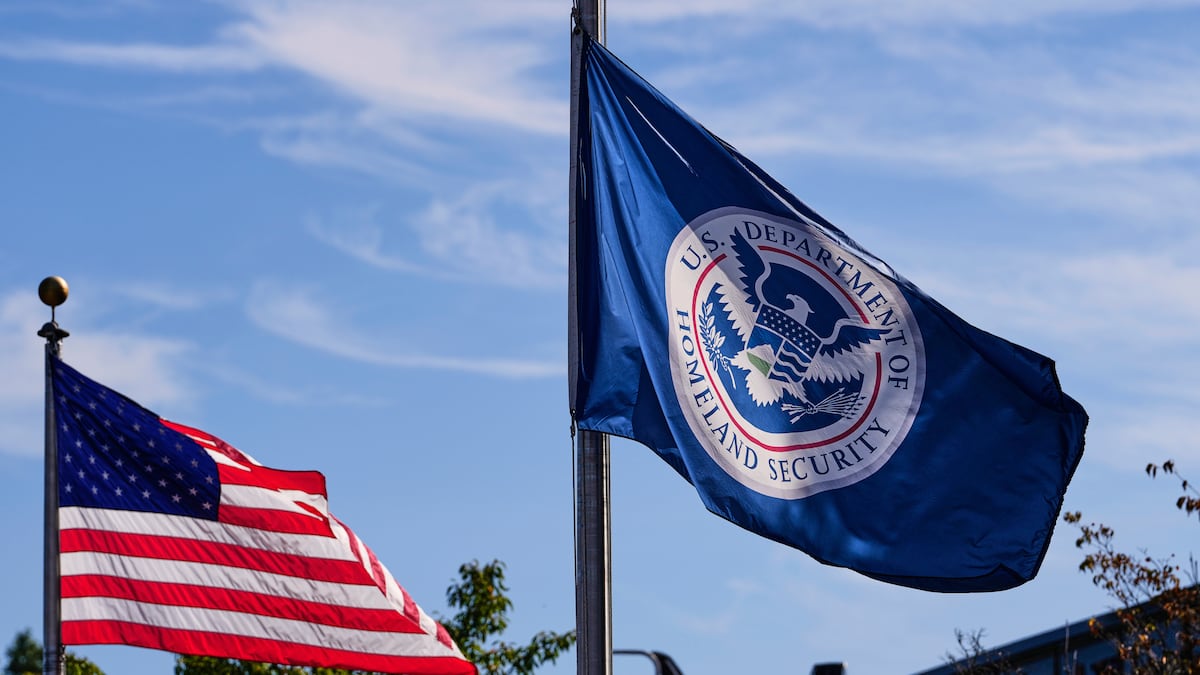
The Department of Homeland Security and American flags fly outside the U.S. Immigration and Customs Enforcement regional field office, Tuesday, Sept. 16, 2025, in Burlington, Mass.
Charles Krupa / AP
The Department of Homeland Security’s grant funding, including emergency management grants and homeland security grants, has been in flux since President Donald Trump took office. Grants have been withheld, delayed for many months or made with stipulations that state officials say they cannot agree to without violating their own state laws.
Oregon and 11 other states have now filed a lawsuit alleging the administration “included illegal and impossible-to-meet grant terms” in two federal grant programs, known as the Emergency Management Performance Grant and the Homeland Security Grant Program, which the states allege “depart from past practice and serve only as obstacles in obtaining and using the funding as previously promised.”
The Department of Homeland Security did not return a request for comment, which included emailed questions about the states’ allegations and the purpose of the terms added to the grant.
The state’s complaint, filed in the U.S. District Court for Oregon, says the Department of Homeland Security placed an improper hold on grant funding by requiring states first submit a population count as of September 2025. The department also required each state to include “the methodology it used to determine its population and certify that its reported population does not include individuals that have been removed from the State pursuant to the immigration laws of the United States.”
The coalition of attorneys general considers this stipulation to be impossible to comply with because states do not have up-to-the-month population counts, as they rely on the U.S. Census Bureau for population estimates. They also claim it is illegal because federal agencies don’t have the authority to make such a requirement, and those agencies are also required by law to use Census Bureau estimates for funding allocations.
They also say the administration has put such tight deadlines on the funding that it runs the risk of rendering the grants “largely unusable.” According to the complaint, Oregon’s share of the emergency management funding in the disputed 2025 grants was more than $4 million, and its share of the homeland security grants was over $13 million.
“Oregonians shouldn’t have to worry about whether the money to keep them safe in times of crisis is actually going to show up,” Attorney General Dan Rayfield said in a statement. “These grants put people, gear and resources where they’re needed in an emergency — for firefighters, first responders and law enforcement.”

Oregon Attorney General Dan Rayfield speaks during a town hall held at the Federal Building in Portland, Ore., March 17, 2025.
Kristyna Wentz-Graff / OPB
Wednesday’s lawsuit is the fourth time Oregon has joined a coalition of states suing over DHS funding. The state previously sued over the White House Office of Management and Budget’s federal funding freeze and the Federal Emergency Management Agency’s termination of disaster mitigation grants. In May, Oregon sued over homeland security grants. That lawsuit challenged the administration’s inclusion of terms that made homeland security grant funding contingent on participation in federal immigration enforcement, which would have violated Oregon’s and other states’ sanctuary laws. In that case, a federal judge ruled in the states’ favor, rejecting the terms the administration added to the funding.