
Oregon health officials are pushing back against federal claims that the state improperly spent $5.4 million on health care for undocumented immigrants during the COVID-19 pandemic emergency.
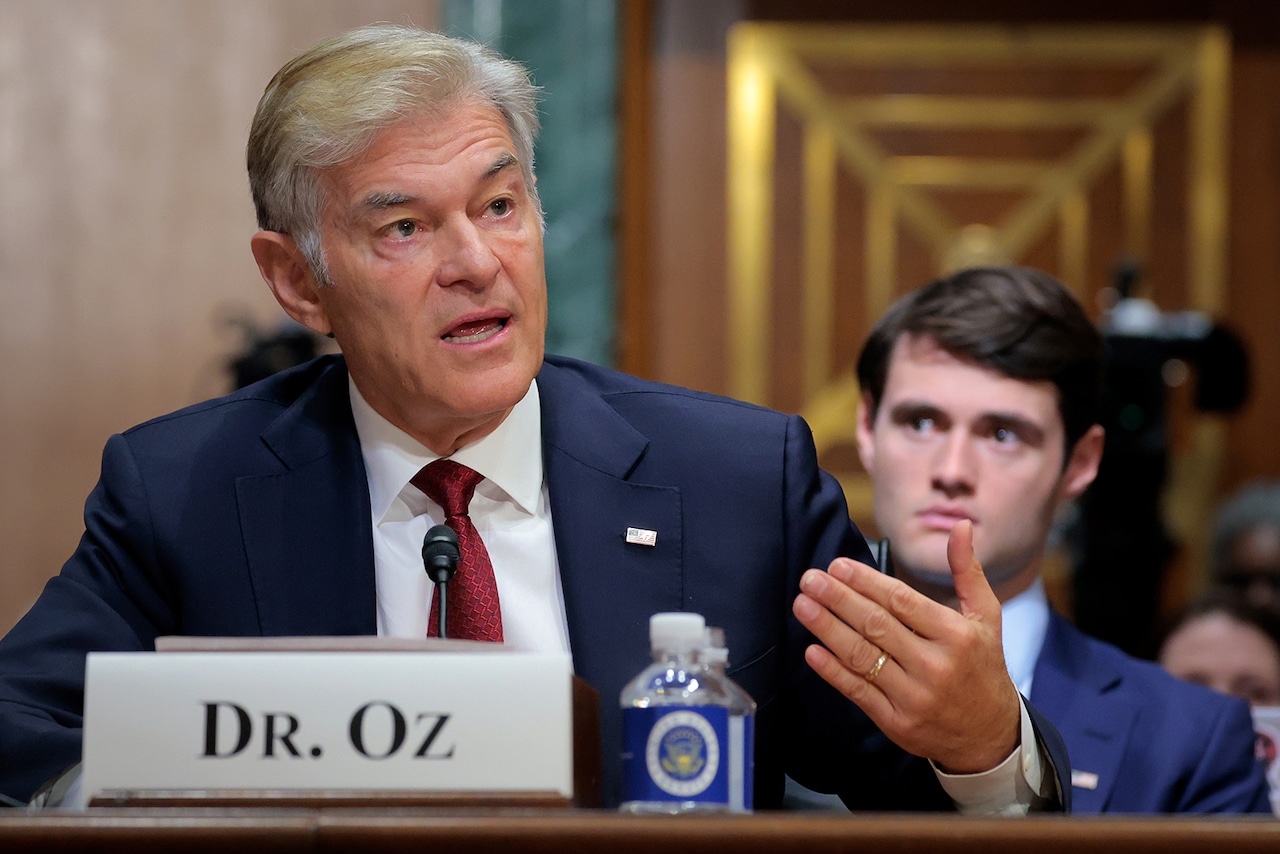
The pushback came this week after Centers for Medicare and Medicaid Services Administrator Mehmet Oz asserted in a social media post on Friday that Oregon, four other states and the District of Columbia had inappropriately used more than $1 billion of federal taxpayer dollars to fund Medicaid services for people who lack legal status.
Oz wrote that Oregon had misappropriated $5.4 million for the purpose, which he said came to light during a “preliminary review” launched earlier this year. The other states being audited, he said, are California, Washington, Illinois and Colorado. All five states and the District of Columbia are led by Democrats. Oz didn’t specify the precise period when the allegedly improper spending took place.
But Oregon health officials insist Oz’s social media assertions are incorrect. Amy Bacher, spokesperson for the Oregon Health Authority called Oz’s statement “categorically false” and said it misrepresented how emergency Medicaid works and the kind of routine audits CMS conducts.
Oz’s claims are part of a months-long attack on Democrat-led states that experts say is politically motivated and part of a broader push to advance federal immigration enforcement goals. And though federal audits are routine, the Trump administration has framed the reviews as unusual, with Oz saying Medicaid “cannot be a backdoor pathway to subsidize open borders.”
Other states named by Oz have made similar statements disputing the federal administrator’s assertions.
Federal Medicaid dollars can’t be used to provide regular health coverage to undocumented immigrants; refugees; lawful permanent residents (“green card” holders) who have been in the country for less than 5 years; young people enrolled in Deferred Action for Childhood Arrivals (DACA), or people with student or work visas.
Medicaid, which covers low-income and disabled people, is only available to U.S. citizens, long-time lawful permanent residents and certain other qualified non-citizens.
However, states are allowed to use Medicaid dollars for emergency medical care regardless of a patient’s citizenship or immigration status. They also can build Medicaid programs for people who don’t qualify under federal rules, including undocumented residents, as long as they use their own state tax dollars to pay for them — a fact Oz acknowledged in his post.
The Oregon Health Authority does both. Since July 2023, it has extended coverage of the Oregon Health Plan — the state’s version of Medicaid — to people of all ages, including children, who meet income and other eligibility criteria, regardless of their immigration status.
Those immigrants who don’t qualify for Medicaid under federal rules are part of a program called Healthier Oregon paid for with state, not federal dollars, Oregon officials said.
The state also said it continues to use federal funds to cover emergency medical care, including labor and delivery services, which are covered by federal Medicaid and legally available to all patients regardless of immigration status.
Oregon officials say the funds in dispute were spent on emergency Medicaid services and on day-to-day Medicaid operations, including technology systems and support staff, “in accordance with cost allocation methodologies approved by CMS.”
“They keep people from being turned away at the ER, cover maternity care, and help hospitals in high-need areas stay solvent,” OHA officials said.
In February, President Donald Trump instructed federal agencies to make sure that people lacking legal immigration status are not receiving federally funded benefits. By late May, the Centers for Medicare & Medicaid Services said it would ramp up its oversight of state Medicaid programs and warned it could withhold federal funding from states it believes are improperly using the program to cover people without proper documentation.
The federal health agency informed the Oregon Health Authority in June that it planned to review the state’s Medicaid spending reports with a fine-tooth comb to verify that federal funds were not paying for coverage for individuals lacking legal immigration status. As part of that process, CMS ordered the state to turn over personally sensitive data on every adult who used emergency Medicaid services between April and June.
Oregon health officials initially held off on handing over the information, citing concerns about how federal agencies might use the data and potential privacy risks for Oregon’s immigrant communities.
Those concerns were realized in July, when Trump officials ordered CMS to start sharing Medicaid enrollee information with the Department of Homeland Security. Several states sued, arguing that the administration intended to use health data to support deportation efforts. A federal judge has since ordered the federal health agency to stop sharing Medicaid enrollee data with immigration enforcement authorities.
In August, CMS sent Oregon a list of 28,282 Medicaid enrollees whose immigration or citizenship status couldn’t be confirmed through federal databases. But state health officials estimate that fewer than 5% of those people will actually need to submit any new paperwork.
In September, Oregon health officials ultimately complied with the June federal data request to avoid losing federal Medicaid funding. The state provided Medicaid identification numbers, dates of birth and Medicaid eligibility details tied to citizenship status of an unspecified number of patients.
The state currently spends roughly $15 billion on Medicaid annually, with $11 billion of that coming from the federal government.
State health officials said the current review of Oregon’s Medicaid spending during the COVID-19 pandemic is still ongoing and federal officials have yet to confirm a final tally of the spending being reviewed.
State officials said they are working with the federal agency to prove the federal funds under review were used appropriately.
“We stand by how we used those funds,” state health officials said in an emailed statement. “We believe we will be able to defend the state’s administration and use of funds through our continued response process with the Centers for Medicare & Medicaid Services and that a formal correction to CMS’ claim is now and will still be warranted upon conclusion of this process.”
Oregon is among a handful of states that has long advocated for increasing access to health care for all immigrants.
In 2017, the state extended the Oregon Health Plan to all children residing in Oregon, regardless of their legal status. And in 2023, it further expanded it to all adults, again regardless of immigration status, bringing both children and adults under the umbrella of the state-paid Healthier Oregon program.
The program currently enrolls about 105,000 people, including more than 14,000 children, and offers the same physical, behavioral and dental care as it does to people with federally-funded Medicaid. Those enrolled in Healthier Oregon speak at least 69 unique languages and identify with more than 40 race or ethnic groups. Some 80% are Hispanic. The state declined to say how many of the enrollees lack legal status.
Healthier Oregon’s budget is estimated at about $1.5 billion for 2025–2027, with $1.3 billion, or 87% of the money, coming from the state’s general fund and paying for comprehensive health care. The remaining portion is covered by federal funds that pay specifically for emergency services.
Meanwhile, state agencies are already bracing for major policy changes enacted earlier this year in the Republican-backed One Big Beautiful Bill Act, which will require most states to check Medicaid eligibility more frequently and impose work requirements on many Medicaid adults starting in 2027. The new law also restricts eligibility for many lawfully present immigrants, including refugees, asylees, survivors of trafficking and others.
If you purchase a product or register for an account through a link on our site, we may receive compensation. By using this site, you consent to our User Agreement and agree that your clicks, interactions, and personal information may be collected, recorded, and/or stored by us and social media and other third-party partners in accordance with our Privacy Policy.