
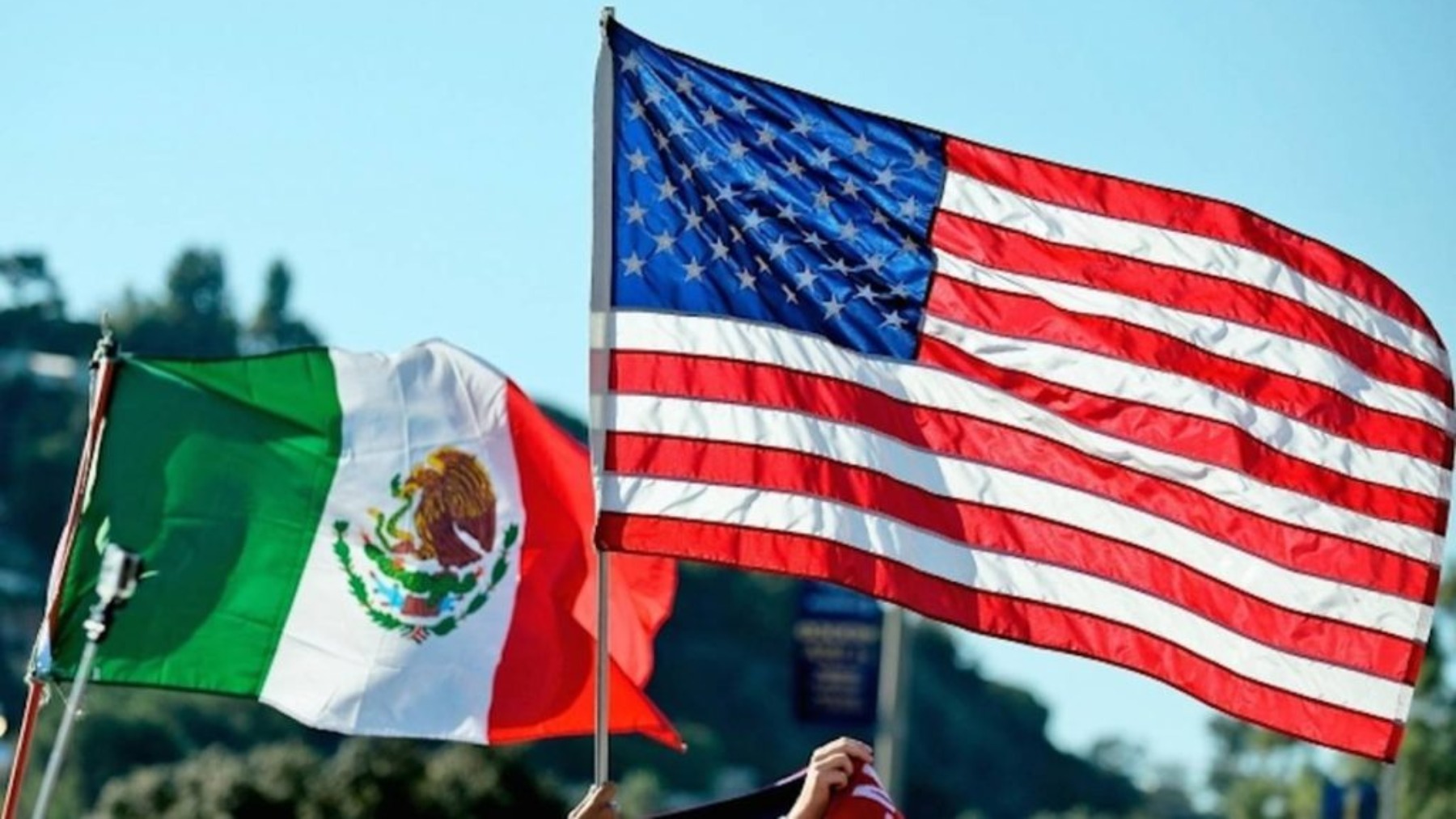
Recently, the U.S. government has announced the cancellation of 13 flight routes connecting Mexico cities with U.S. cities, and these routes were operated by Mexican airlines. The decision was announced by the U.S. Secretary of Transportation, Sean Duffy, and is part of a response from the Donald Trump administration, which believes that Mexico has not complied with certain agreements.
To understand what’s happening, we need to begin with the Air Transport Agreement signed between Mexico and the United States in 2015. This agreement was created so that both countries’ airlines could operate flights in a fair, equitable way, and with no exaggerated restrictions. This means the agreement aimed that both Mexico and the U.S. had similar opportunities when it comes to flights between both countries. So, let’s see in more detail what the issue is about.
The U.S. government against Mexico
The U.S. government states that Mexico hasn’t followed that agreement in the last couple of years. According to the U.S., Mexico changed or removed takeoff and landing time permissions (known as slots) at the Mexico City International Airport (AICM). These slots are very important because they determine exactly what time a plane can take off and land. If an airline loses its slots, it can also lose its capacity of operating entire routes.
What’s more, the U.S. accuses Mexico of forcing U.S. air cargo companies to move their operations from the Mexico City International Airport to the Felipe Ángeles International Airport (AIFA). Regarding what the U.S. says, this change caused economic losses for the affected companies, and the stated reason for the move — that it was necessary due to construction to reduce congestion — has not actually happened, since the construction has not been carried out.
Cancelled routes and affected airlines
For these reasons, the U.S. government decided to cancel 13 routes operated by Mexican airlines. This measure affects departing from two airports in Mexico: the Mexico City International Airport (AICM) and the Felipe Ángeles International Airport (AIFA).
The affected airlines are: Aeromexico, Volaris, and, especially, Viva Aerobus; which is the company experiencing more cancellations. Let’s see the consequences affecting each company:
Aeroméxico is affected on routes from AIFA to cities like Houston and McAllen in Texas.
Volaris loses routes from AICM to Newark in New Jersey.
Viva Aerobus loses several routes from AIFA to U.S. cities such as Austin, Dallas, Houston, Denver, New York City, Chicago, Los Angeles, Miami, and Orlando.
Additional proposal
Apart from cancellations, the U.S. government also proposed an additional measure: banning Mexican passenger airlines from carrying air cargo between Mexican and U.S. airports. This decision has not been finished yet, but it was mentioned as a possibility.
The U.S. government
The message from the U.S. government was clear. Sean Duffy pointed out that, according to the current government, the previous administration had allowed the other country to break the agreement without facing any consequences. However, that has now changed.
The announcement mentions that this decision is also a warning to other countries so that they don’t take advantage of U.S. aviation policies.
Consequences for travelers and airlines
Basically, this decision will mainly affect travelers, airlines, and direct connections between Mexico and the U.S. The cancelled routes could mean less available flight options and changes in traveling plans for many people. So, if you are planning on taking any of these flights, you’d better get informed.
What do you think about all of this conflict? Is it an exaggerated measure or is it fair? We will see how this situation goes, but let’s hope it’s solved very soon. Noboody wants to have any issues regarding their flights, right?