
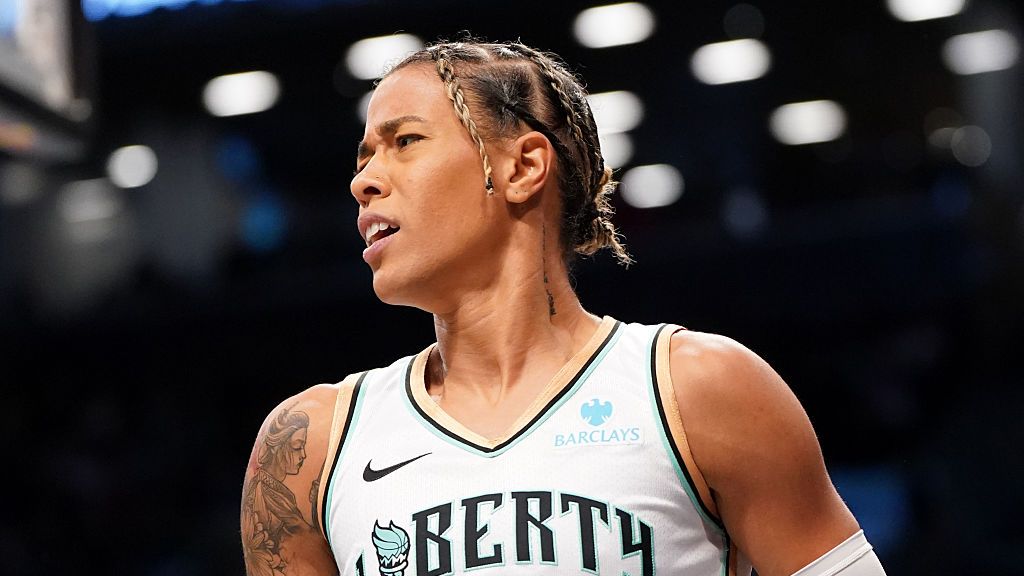
Once she connected with a new side of her racial identity, she began to explore her sexual identity. “I was faking being straight for years—it was so annoying. I hated it,” she said. She’d had a childhood sweetheart from sixth grade all the way until college, and had always had an appreciation for good-looking men, but her heart wasn’t in it. “I can appreciate men, but all the other stuff that comes with y’all—I can’t,” she laughed. “And I tried. I really tried.” While she had always found women attractive, it took her until her early 20s to consider actually dating them. “I don’t think I was ready to navigate that space until I felt very secure in myself,” she said. That finally happened when she got to the WNBA, where she was surrounded by powerful, outspoken women who were totally unapologetic about who they were. Yet for a few years, she still publicly said she was bi, not gay. “There’s still this pressure to sell to the male demographic and have sex appeal,” she said. By age 24, though, she was done pretending. Once she came out as gay, everything got better—including her skills on the court. “I was like the Hulk who just got superpowers,” she said. “When you hide or suppress a part of yourself, you’re not fully you. You limit yourself in so many ways. If I can’t be confident in who I am as a person, how can I be confident in who I am as a player?”
Cloud also thanked her family for giving her a strong emotional and moral foundation. “In this league, you have families who take advantage of players and use them as a cash cow,” she said. “My family has never taken anything from me. I truly have the best parents in the world, and even my siblings who voted for Trump—I’m like, ‘Y’all irritate my ass,’ but I know that if I ever needed to be defended, they would.” Cloud also recounted how her conservative-leaning family has never made her feel judged. “I never even told my dad I was gay. I literally just brought my girlfriend home, and he was like, ‘It’s nice to meet you,’” she says.