
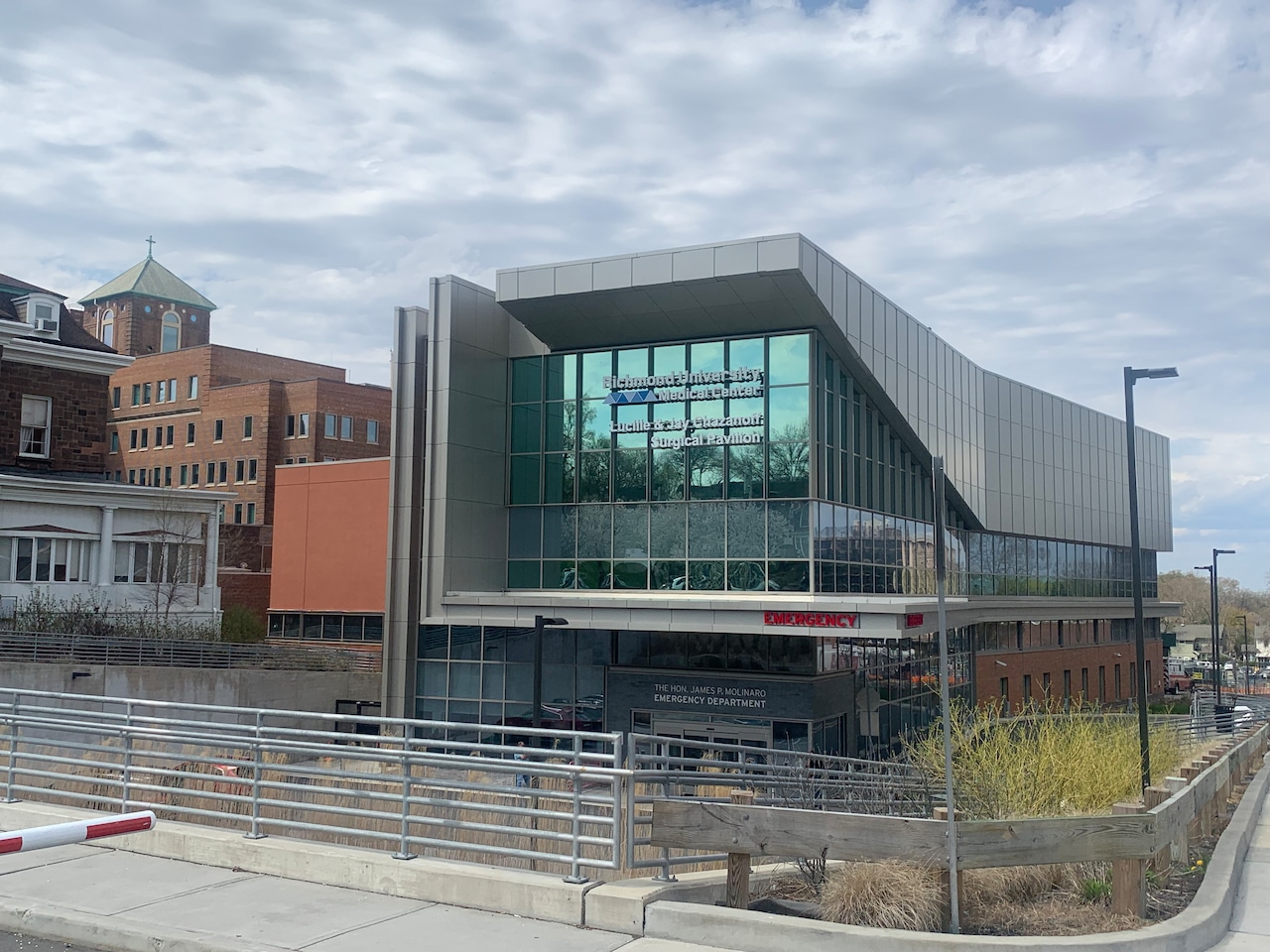
STATEN ISLAND, N.Y. — The ongoing metamorphosis at Richmond University Hospital is guided not only by management and architects — but by all levels of medical personnel with an up-close view of patient experience and outcomes — the hospital’s CEO and president, Dr. Daniel Messina, recently told the Advance/SILive.com.
And though it was once solely a North Shore-centered hospital, RUMC continues its transformation into a robust provider of outpatient care at nearly 30 facilities. These include ambulatory sites and group physician practices across Staten Island and in Brooklyn, with another in Manhattan, bringing care to patients where they need it, Messina said during a recent conversation focusing on the hospital’s three phases of transformation.
And within its West Brighton walls, RUMC continues to experience a ”rebirth’’ of sorts, he said, on the heels of more than $200 million in capital projects completed, and several currently in progress.
And as other independent hospitals merge or become acquired by larger health networks, RUMC instead aims inward, he said, focusing on better serving the community it has focused on for the past 100 years.
“We are very committed to giving people every reason to want to stay on Staten Island and not feel like, ‘Oh, if I get sick, I have to go into Manhattan,’” Messina said.
Completed improvements include an expanded $15 million Medical Intensive Care Unit, offering advanced care for the most critically ill patients, which was completed in 2022.
“It’s not your mom’s, not your father’s RUMC, so to say,’’ Messina said. ”That transformational renaissance is basically a rebirth of the RUMC that Staten Island has come to know.”
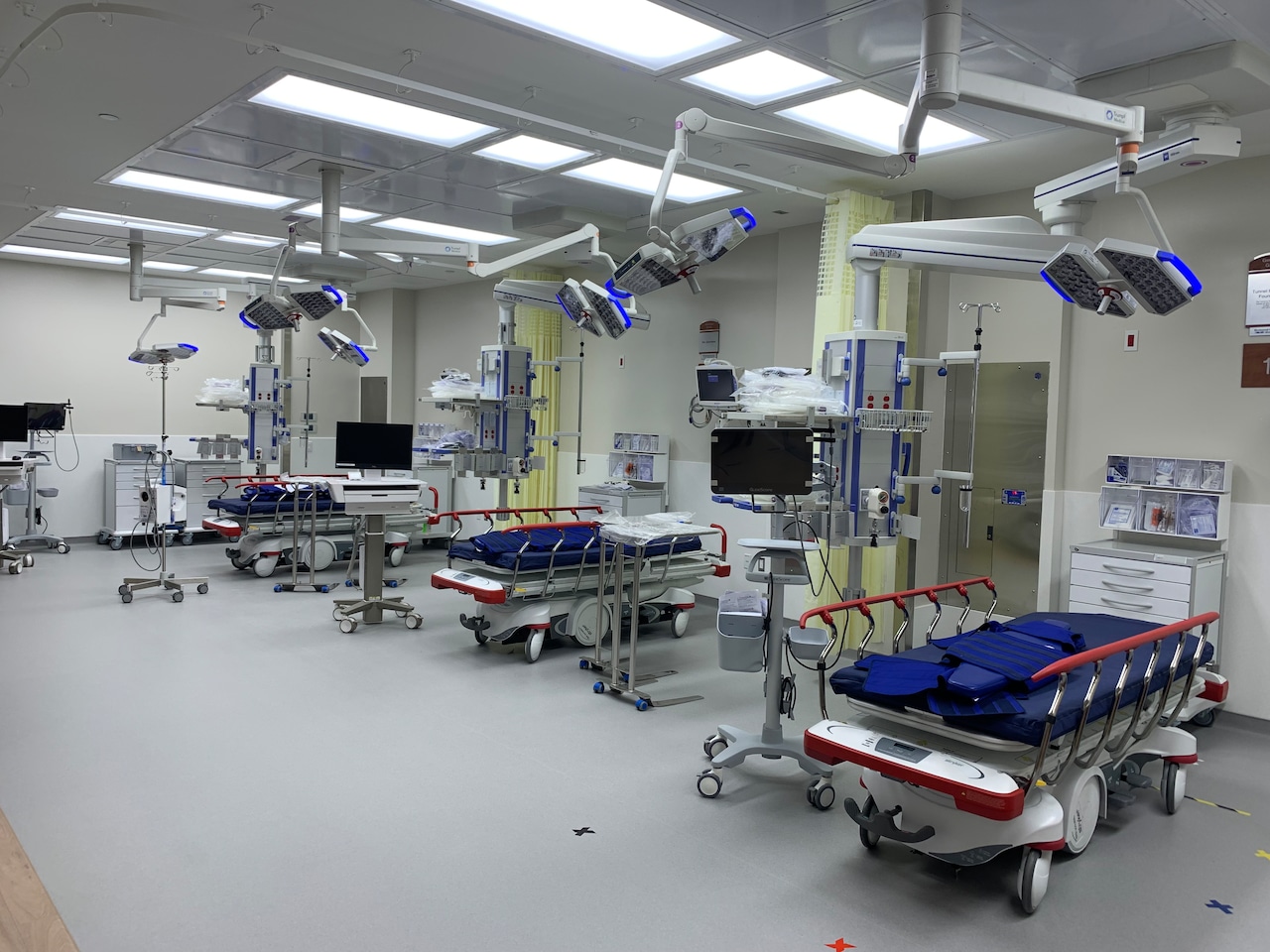 Trauma bays are shown at Richmond University Medical Center’s recently renovated Emergency Department. (Courtesy of Richmond University Medical Center)
The transformation is taking place in every corner of the hospital, from a brand-new 35,000-square-foot, $101 million Emergency Department opened in 2023 — expanding capacity and improving flow for one of Staten Island’s busiest trauma centers — to a modernized mother-baby maternity unit with private suites, significantly improving patient experience.
And in 2024, a new state of the art 40,000-square-foot, $42 million Lucille and Jay Chazanoff Surgical Pavilion opened its doors to the public, featuring modern operating rooms, private bays for surgical prep and recovery, and state-of-the-art robotic surgery technology.
In the ER, wait times have been shortened, and now rarely exceed 10 minutes, Messina said. A quick glance at his RUMC phone app during a mid-week interview showed a wait time of six minutes, based on patients’ processing times. A second later, it updated to five.
“I think that’s been the important part of our projects, that they are very patient-focused and staff-focused to attempt to, you know, improve patient safety, improve throughput, reduce work intensity on the staff,’’ Messina said.
The new design gets those who need critical care to integrated diagnostic testing, such as high-speed CAT scans, and ultimately operating rooms via direct elevator, if needed, for time-critical care as quickly as possible, he said.
“Anytime you have somebody in the ED that’s there for a trauma, the less that you have to move them around or risk moving them, the better,’’ he said. ”You know, you want to stabilize them, immobilize them. So this CAT scan is right there. And you’re not traveling by gurney to the other side of the hospital and going up and down an elevator.”
Seeking input
What’s unique as the transition continues, Messina said, is that management continues to seek input from medical staff.
“If you look at some of the blueprints and the drawings … you’ll see a sign-off on these drawings from, in some cases, 20-, 30-plus signatures, whether it be nurses, technicians, physicians, etc.,’’ he said. “You will not find a more advanced, more patient-focused Emergency Trauma Department in the country. I think it’s super ahead of its time.”
The goal is to continue to evolve, as Phase Two of the hospital’s transition is currently underway, he said, with the Joan and Alan Bernikow Heart and Vascular Institute slated to open in summer 2026. The institute will consolidate cardiology and neurovascular services under one roof.
The $11.5 million project features an expanded Catheterization Suite and advanced biplane imaging — a real-time, high-resolution technology that helps detect blockages, aneurysms, and vascular disease with unmatched precision.
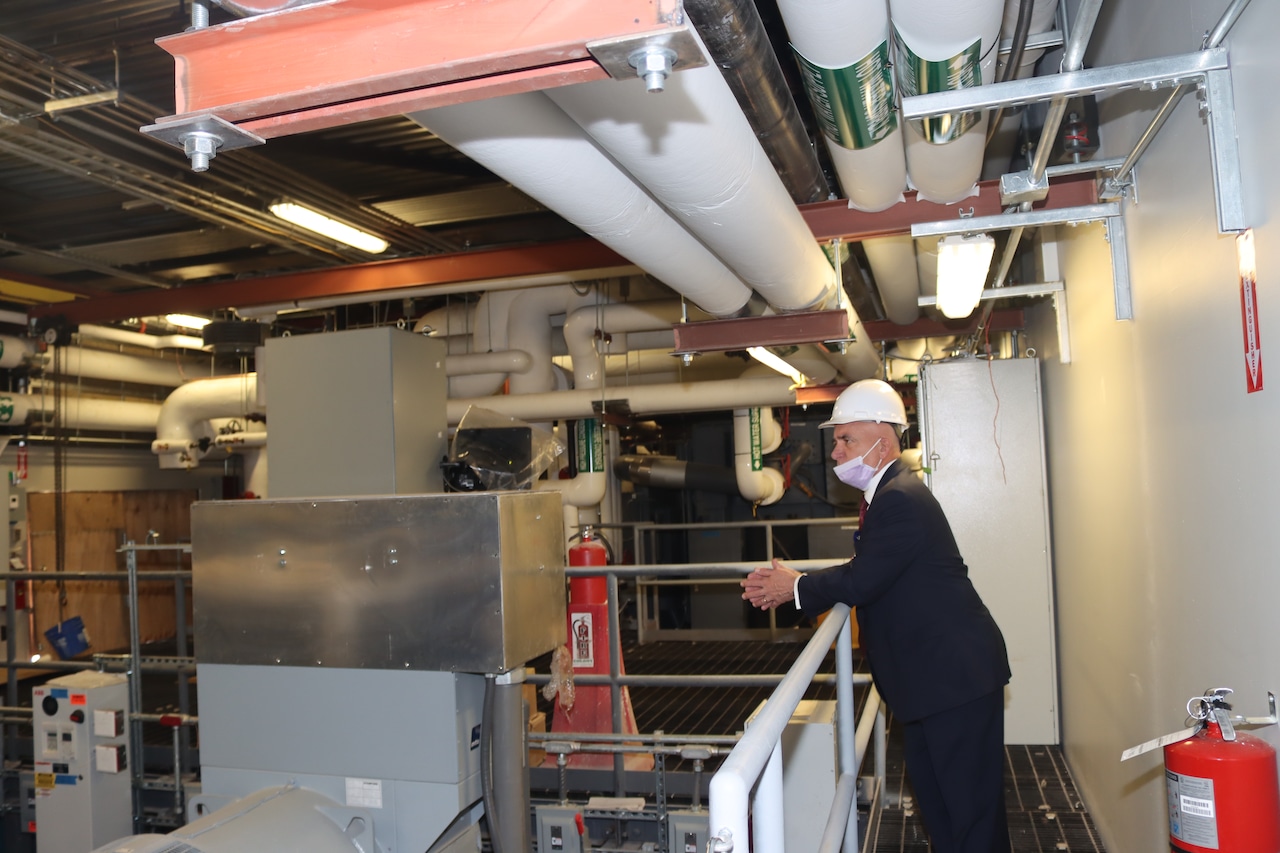 Opening later this year will be a $40 million cogeneration plant that will generate both electricity and thermal energy from a single natural gas source. Here, Dr. Daniel Messina, the hospital’s CEO and president, tours the site in 2022. (Advance/SILive.com | Jan Somma-Hammel)
Also in the works is a new $40 million cogeneration plant that will generate both electricity and thermal energy from a single natural gas source, which will ensure uninterrupted power in any crisis while lowering emissions and cutting energy costs.
“This is a very fast-paced health-care world and you can never just sit back and just rest on your laurels‚’’ Messina said. ”I mean, you have to be thinking of tomorrow every day.”
What’s next?
While initial design and construction has already begun, Phase Three will officially commence next year with projects slated to reach completion before 2030.
“When you finally reach the end of all these projects, RUMC itself is going to look entirely different, both internally and externally,’’ Messina said.
With support from New York City capital funding, RUMC is upgrading its CAT scan equipment and renovating its Emergency Department and Radiology Department scan suites — a combined $2.9 million project expected to be completed in 2026 or 2027.
And work on the Wayne Zenna Neonatal Intensive Care Unit is already underway. When complete, it will have 18 private infant bays, a new isolation room, a renovated nursing station, and a larger waiting area for families inside the Level III NICU, thanks to private grants and public funding.
“So rather than being in a big open room with bassinets like you would typically envision, these are little pods where the family and the baby will have their own protected space with half walls designed in a way that will ensure patient safety and staff monitoring ability,’’ Messina said, describing the unit for the tiniest patients.
“Not too long ago, we had a baby that was about 16 ounces, and that baby did really well‚’’ he said, proudly. ”So we do some amazing things. Our survival rate is something that’s out there on the internet — 997 out of a thousand newborns. So we have an amazing NICU survival rate of 99.7.”
Also, a $25 million redesign and expansion of the hospital’s Adult Psychiatric Unit aims to preserve and enhance critical inpatient mental health services on Staten Island.
It will include 10 new beds and enhanced communal spaces, Messina said, noting that the project is due to be wrapped up sometime in 2027 or 2028.
“One of my favorite sayings in the hospital is, ‘remember the power of one,’” Messina said. “You make a difference.”
All three phases of improvements have presented financial challenges, he explained, noting that those needs have been met by the hard work of staff, support of local elected officials and extraordinary private donations.
“If you wanted to talk to our foundation, just literally on Saturday, someone signed a $2.5 million pledge,” he said. “I’m most proud of what the board, the medical staff and the community have done together to really move the needle.”
If you purchase a product or register for an account through a link on our site, we may receive compensation. By using this site, you consent to our User Agreement and agree that your clicks, interactions, and personal information may be collected, recorded, and/or stored by us and social media and other third-party partners in accordance with our Privacy Policy.