
Quick Read
Chris Henry Jr. is the No. 1 wide receiver recruit for 2026, per 247Sports.He has been committed to Ohio State since July 2023.West Virginia and Oregon are aggressively pursuing him, with NIL offers exceeding $100,000.Several Mater Dei High School teammates now play for Oregon.Henry Jr.’s NIL valuation is over $565,000, including an Adidas deal.Chris Henry Jr.: College Football’s Top Wide Receiver Faces a Defining Decision
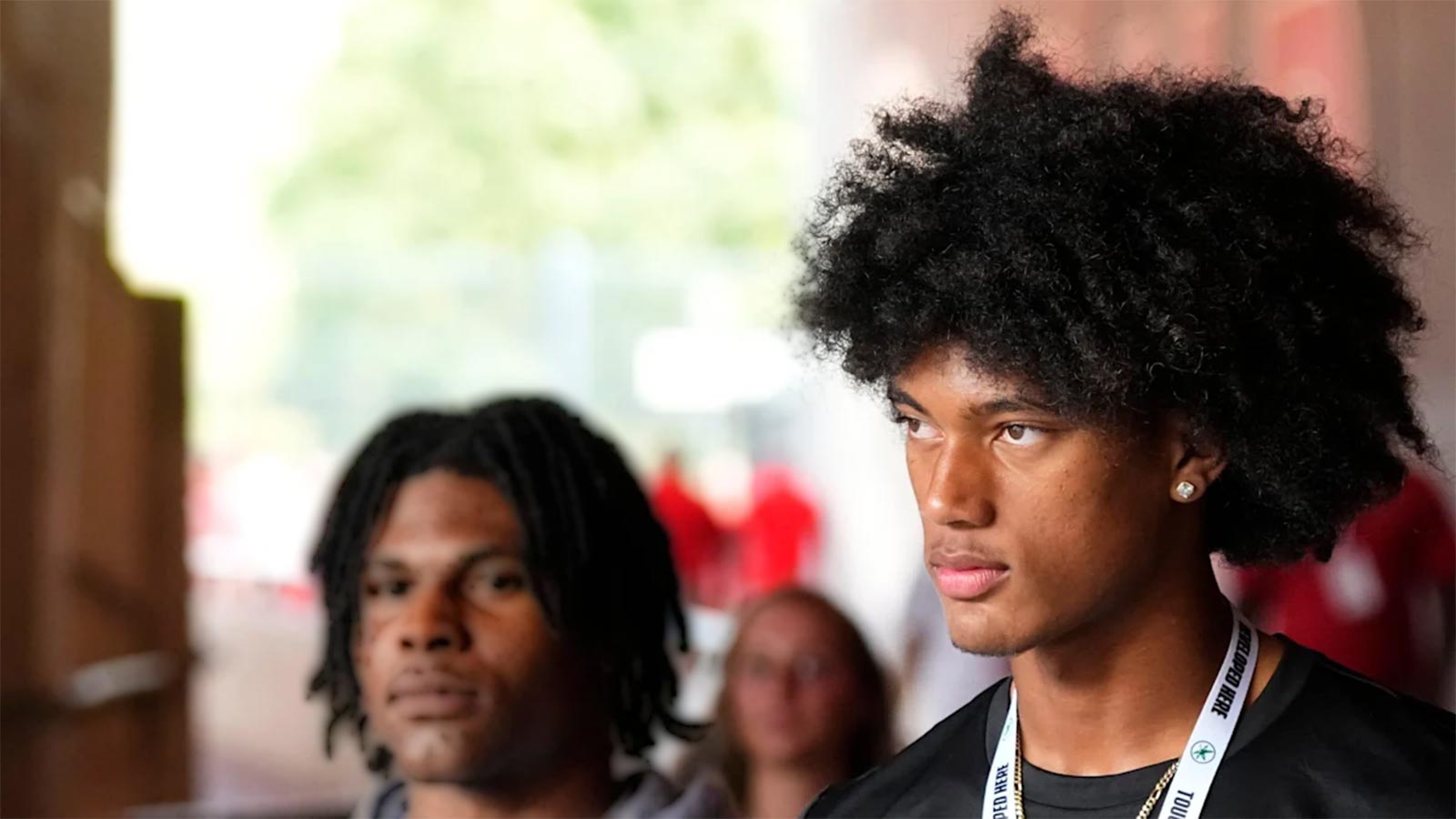
As the 2026 college football recruiting cycle heads into its final stretch, Chris Henry Jr. finds himself in the eye of a storm. The 6-foot-5, 205-pound wideout from Mater Dei High School in Santa Ana, California, is not just another highly touted prospect—he’s the consensus No. 1 wide receiver in his class, according to 247Sports. For more than two years, Henry Jr. has been publicly committed to Ohio State, seemingly immune to the turbulence that often surrounds star recruits.
But as the early December signing period approaches, the ground beneath Henry Jr. is shifting. Both West Virginia and Oregon have launched aggressive, and at times controversial, campaigns to lure him away from the Buckeyes. Their tactics aren’t just about persuasion—they’re also about dollars and cents, with name, image, and likeness (NIL) deals reportedly topping $100,000 as part of their pitch. In today’s college football landscape, such numbers are more than just headlines; they represent real opportunity and real risk for athletes and programs alike.
Personal Connections Fuel Oregon’s Pursuit
Oregon’s pitch to Henry Jr. isn’t just built on promises—it’s personal. The Ducks have created a pipeline from Mater Dei to Eugene, with three former teammates now on campus: Dakorien Moore, Jordon Davison, and Nasir Wyatt. Moore, a star freshman receiver, made his intentions clear on November 26, 2025, publicly calling out to Henry Jr. on social media: “Need you by my side family.” This isn’t just recruiting—it’s a reunion offer, one that leverages the comfort and chemistry of familiar faces in a new setting.
For Henry Jr., the lure of joining close friends in Oregon’s high-octane offense is real. It’s not every day that a program can offer both competitive opportunity and a sense of home. As Sports Illustrated noted, an Oregon receiver room featuring both Moore and Henry Jr. could instantly become the most formidable pass-catching corps in college football for 2026.
West Virginia’s Aggressive Moves and NIL Momentum
While Oregon relies on personal ties, West Virginia is making waves through bold, high-profile recruiting wins. Under coach Rich Rodriguez, the Mountaineers have shown they’re willing to take risks—and make statements. On November 18, 2025, they flipped four-star offensive tackle Kevin Brown from Penn State in dramatic fashion, with Brown celebrating his decision by burning a couch on video—a symbolic gesture that sent shockwaves through recruiting circles.
West Virginia’s approach isn’t subtle, and it’s not isolated. Multiple reports from November put the Mountaineers in serious contention for Henry Jr., especially as they quietly flipped several other recruits in the same period. Their aggressive posture signals a willingness to assemble substantial NIL packages—potentially exceeding $100,000—for the right talent. For Henry Jr., that means his value isn’t just theoretical; it’s backed by concrete financial offers and a program eager to build around him.
NIL: The $100K Question That Could Change Everything
At the heart of this recruiting battle is the evolving role of NIL in college sports. Henry Jr. has already inked an Adidas deal as part of the brand’s elite recruit initiative, and his overall NIL valuation sits at $565,000 according to On3. But the current-year packages being assembled by Oregon and West Virginia could shift the calculus. For a young athlete, $100,000 isn’t just a number—it’s a life-changing sum, a vote of confidence, and a challenge to old models of loyalty and commitment.
As programs race to assemble the most attractive deals, questions arise about the impact on recruiting integrity. Are schools pushing the envelope too far in pursuit of top talent? Is the system rewarding genuine connections, or simply the highest bidder? For Henry Jr., these are not abstract debates—they’re the realities shaping his future, both on and off the field.
Will Henry Jr. Stay Loyal to Ohio State?
Despite the noise, the odds still favor Henry Jr. sticking with Ohio State. He has reaffirmed his commitment multiple times, expressing loyalty to coach Ryan Day and the Buckeyes’ program. For two years, he’s turned away other suitors, and his track record suggests a level of maturity and focus rare among top recruits.
Yet, as every college football fan knows, nothing is certain until National Signing Day passes. The recruiting landscape is fluid, and the stakes for Henry Jr.—and the programs pursuing him—couldn’t be higher. If he opens the door even a crack, expect a feeding frenzy, with other schools rushing in to make their case.
For now, Henry Jr. remains the most watched name in the 2026 class, his decision poised to send ripples across the sport. Will he choose the comfort of friends at Oregon, the bold promise of West Virginia, or the steadfast tradition of Ohio State? The answer will shape not just his own future, but the recruiting strategies of programs nationwide.
Analysis: Chris Henry Jr.’s situation embodies the new reality of college football recruiting, where personal ties, financial incentives, and program loyalty collide. His decision will serve as a litmus test for the evolving power of NIL deals and the ability of relationships to sway top talent. As the sport adapts, the stories of athletes like Henry Jr. will define the next generation of college football.