
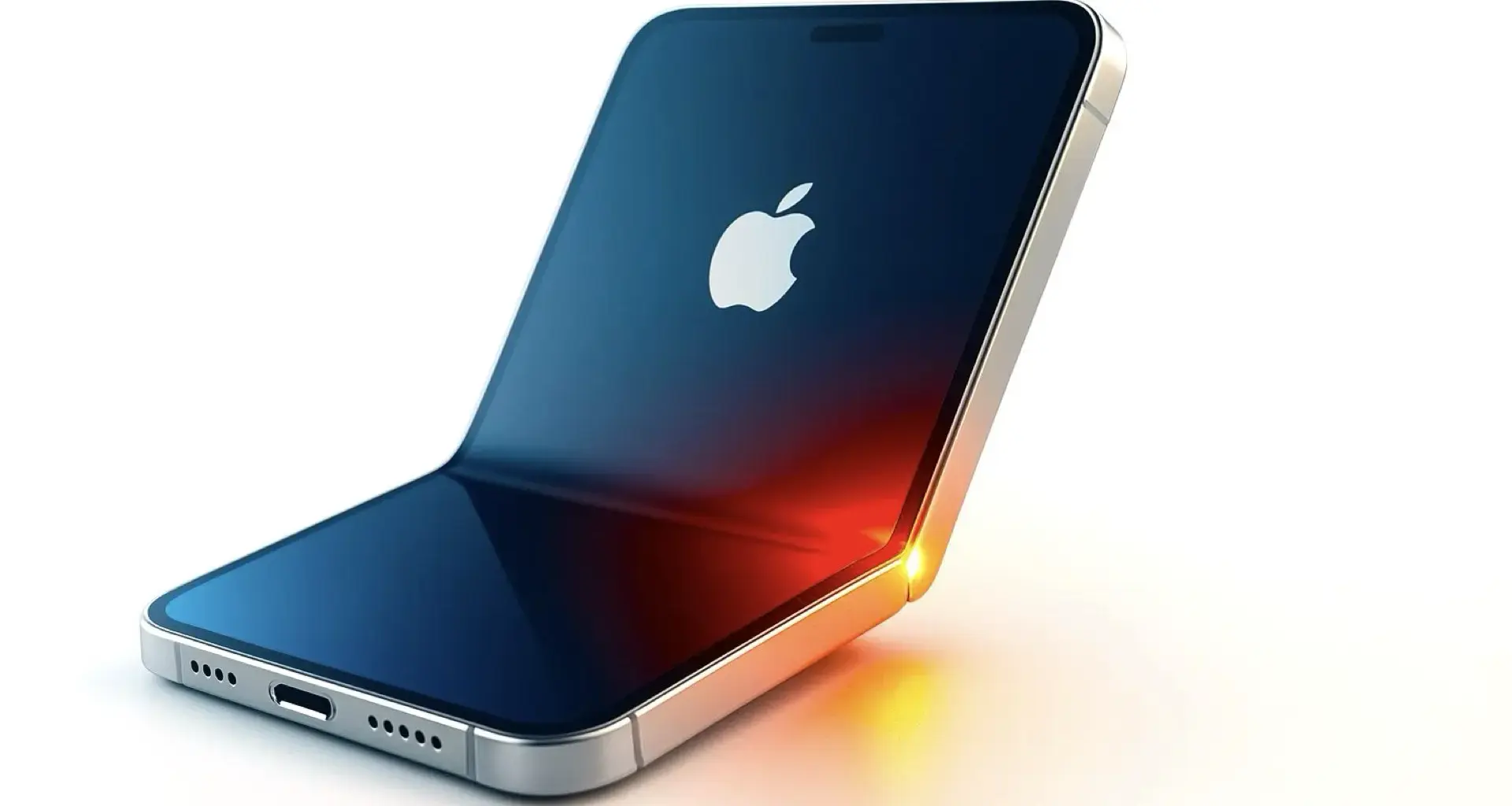
Every current foldable device has the same weakness. The display works thanks to a stack of very thin glass, polymers, adhesives, and OLED layers that bend thousands of times. These materials behave very differently at low temperatures. In cold weather the polymers stiffen, the cover layer loses flexibility, and there’s a strain concentrates at the fold line. If you force the device open or closed in that state, you risk microcracks, permanent creases, and eventually full display failure. Apple calls this out directly in the patent. The cover layer and some display layers have a modulus of elasticity that depends on temperature. When the temperature drops, the entire bend region becomes more fragile. This is unacceptable for a mainstream product that must survive real daily use, including winter, ski trips, and cold sets. So Apple proposes a simple but powerful idea: Warm the display itself before you fold it.
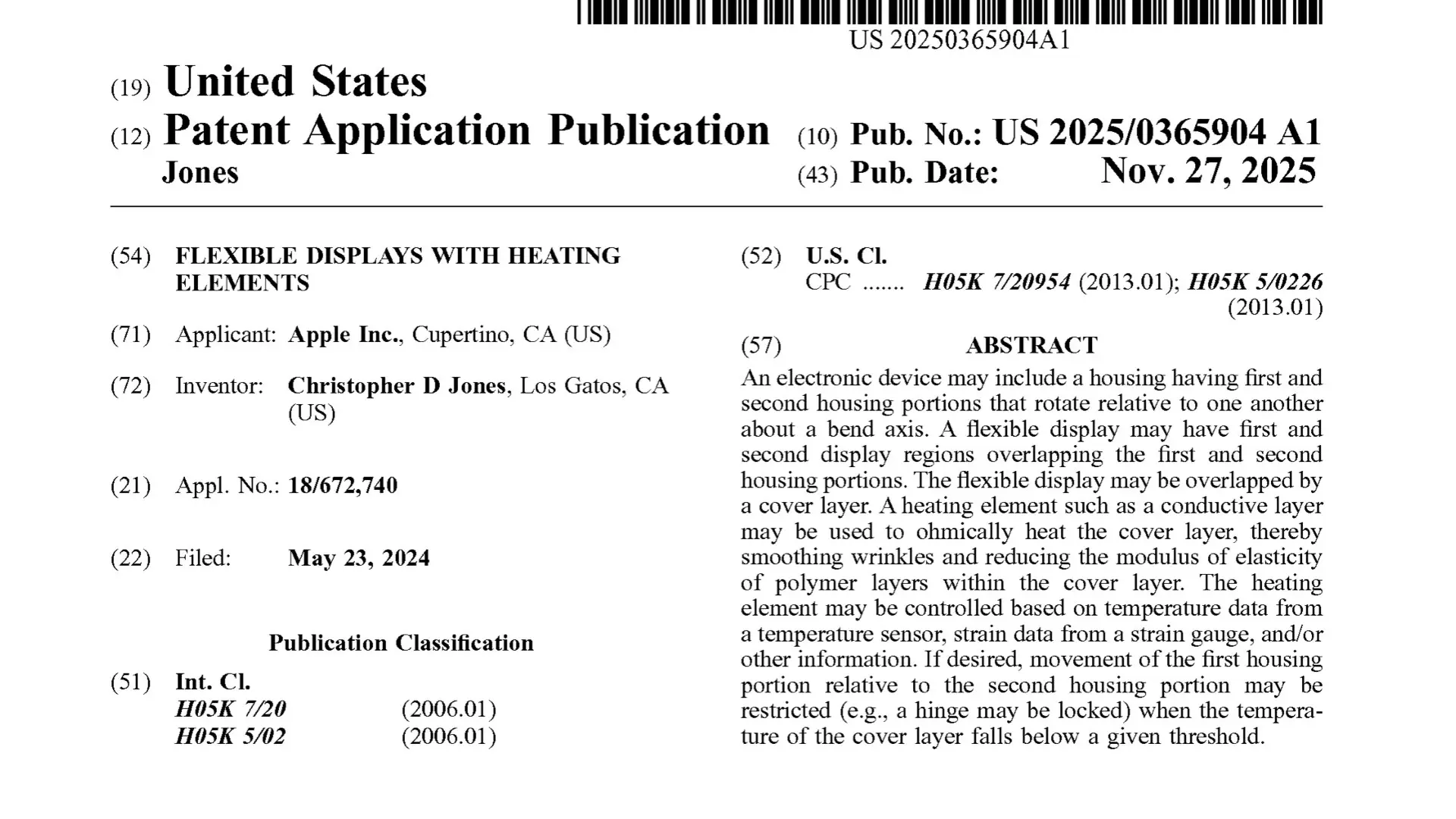 Apple’s patent : Flexible Displays With Heating Elements
At the heart of the patent is a transparent conductive layer used as a heating element inside the display cover stack. The cover layer sits on top of the flexible OLED and may include one or more thin glass layers, polymer layers, several adhesive layers, and a hard coat for scratch resistance Apple places a conductive layer inside this sandwich. It can be on the glass, between polymer and adhesive, or even on both sides of the glass. The material can be a transparent mesh of metal lines, silver, indium tin oxide, or other transparent conductors. When the system decides the display is too cold or too wrinkled, the control circuitry pushes an ohmic current through this layer. That current heats the conductive mesh and, by conduction, warms the surrounding glass and polymers. As the temperature rises the polymers soften slightly, modulus of elasticity drops, cover becomes more compliant, and wrinkles and micro buckles smooth out This makes it much safer to open and close the device in demanding conditions, with less stress on the OLED pixels and the adhesive stack. For a user, this is invisible. You simply open your device and it works. Under the hood, a thin transparent heater is working like a miniature defroster for the fold line.
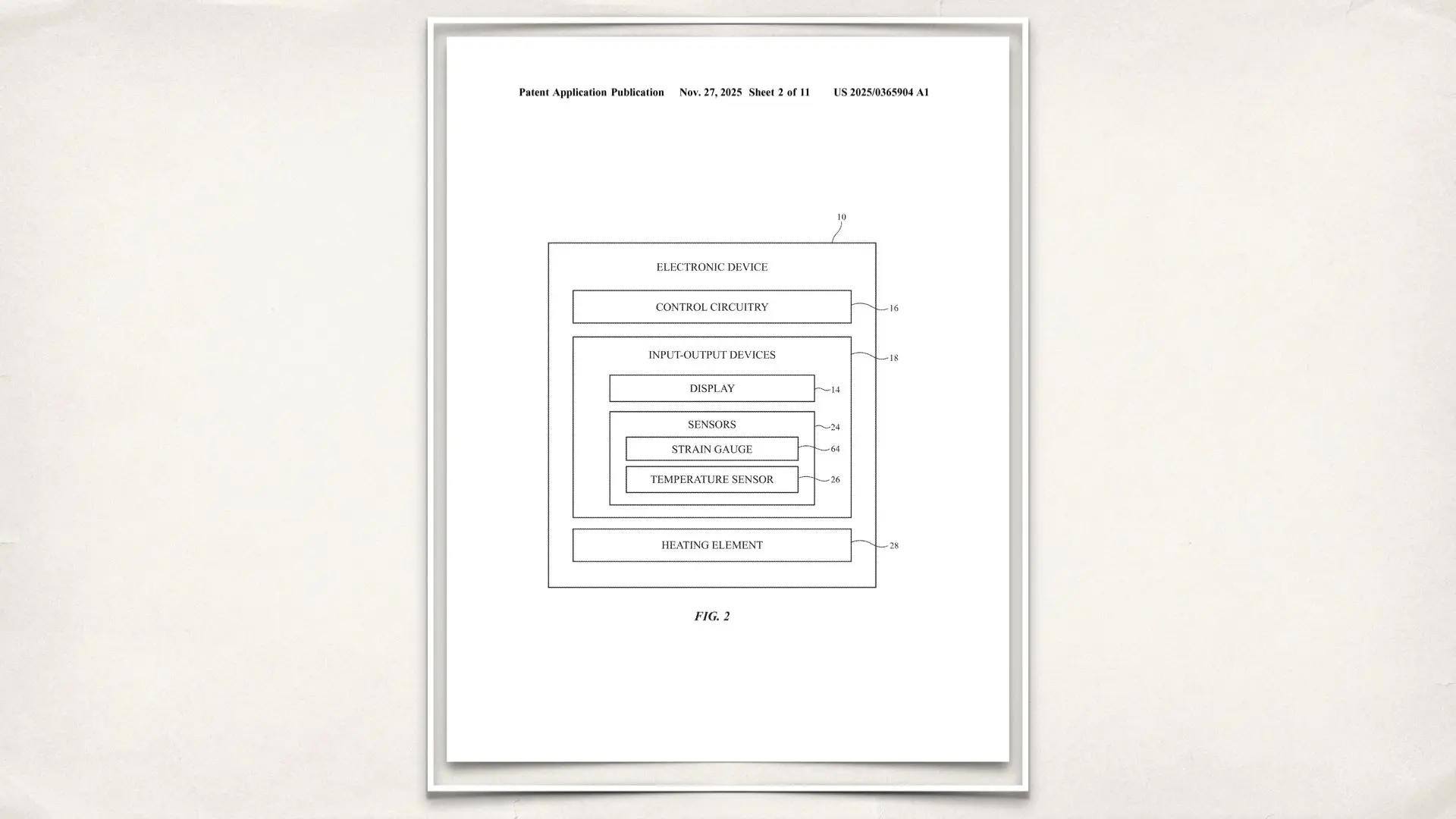 Apple’s patent : Flexible Displays With Heating Elements
The patent does not stop at passive warming. Apple adds a second line of defense that feels very Apple like. The hinge can physically refuse to move when it is not safe. The housing has first and second portions connected by a hinge. Inside that hinge sits an actuator that can lock the hinge, increase the required forcem, and hold the device at a safe angle. The actuator can be mechanical, electric, piezo, pneumatic, or any mix. The key part is the logic that drives it. When a temperature sensor detects that the display or cover layer is below a defined threshold, the control circuitry can command the actuator to lock the hinge. In that state you simply cannot snap the device fully open or closed until the display warms up. Once the system measures that the cover layer temperature has passed the safe level again, the hinge unlocks and the device returns to normal behavior. This is important. It shows Apple is not willing to trust users to always behave gently. Instead, the hardware enforces safe operation around the most fragile part of a foldable display. Cool!
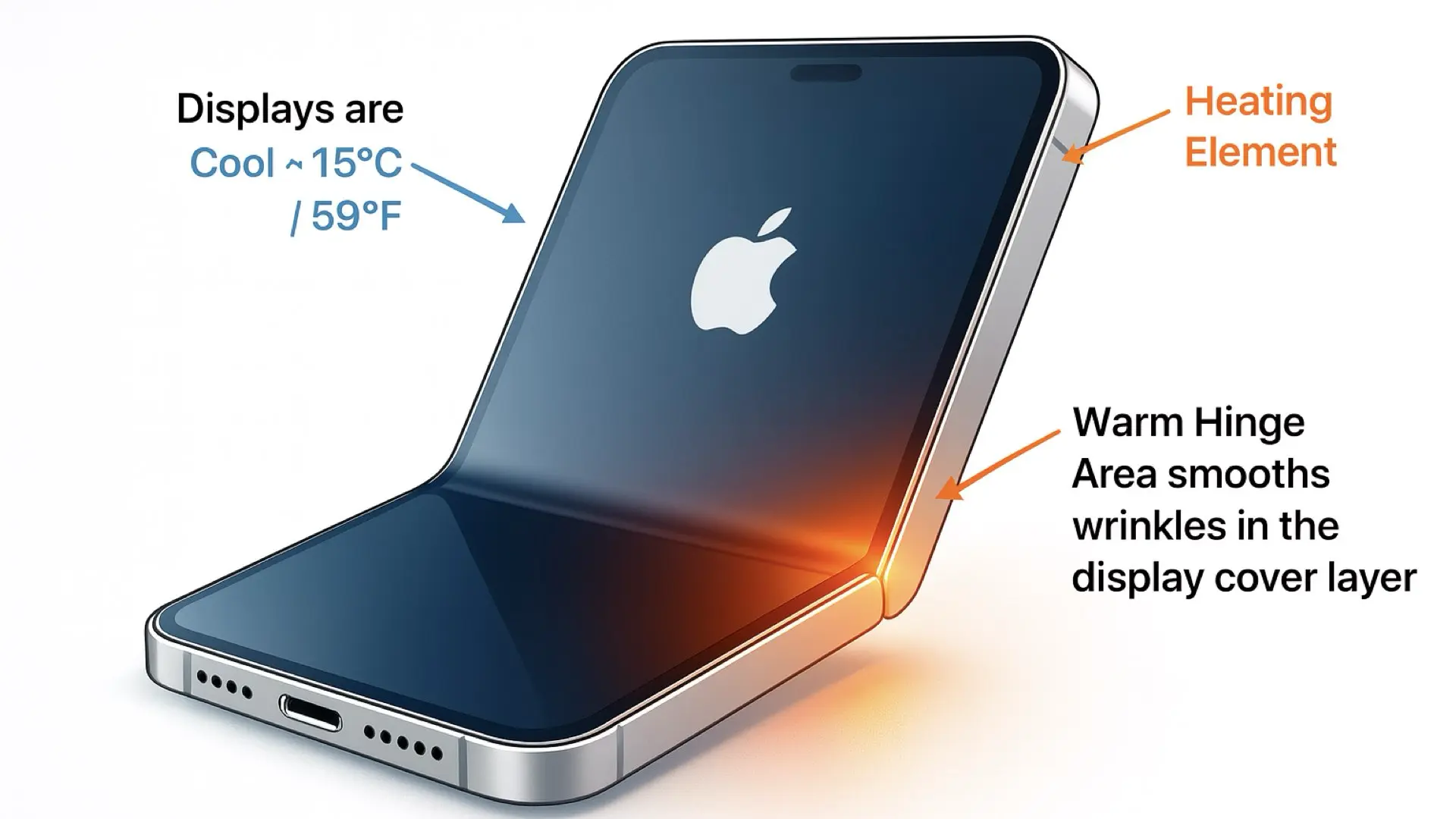 3d rendered mockeup of Apple’s patent Flexible Displays With Heating Elements
The classic foldable crease comes from repeated bending and tiny plastic deformations in the cover stack. Over time that region no longer fully recovers. Apple directly targets this. The patent describes sensors that monitor the bend region: strain gauges embedded in or near the cover layer, optical sensors that visually detect wrinkles or surface deformation, and temperature sensors inside the stack When the strain gauge sees unusual stretching or compression, or when an optical sensor detects visible wrinkles, the device can do two things at once. First, activate the heating layer to soften the polymers and allow the structure to relax back toward a smooth state. Second, temporarily restrict motion of the hinge so the user does not drive the damage further. In extreme cases, the display can show a warning message. A simple on screen alert that tells the user to slow down, wait for the display to warm, or move to a less extreme environment. For a future foldable iPhone, this system is clearly an attempt to deliver a crease that is less visible, more stable, and less sensitive to climate and heavy use.
For our readers, it always comes down to imaging. Why should filmmakers care if Apple heats its foldable displays? Larger on the device monitor for shooting, expanded view for manual focus and composition, more immersive canvas for editing on the go, flexible control surface for external cameras, and more. If the fold line is fragile or limited to certain temperatures, professionals will not trust it on set. Long exterior shooting days, travel between climates, and constant opening and closing can quickly reveal weak engineering. By building this kind of thermal and mechanical protection into the display, Apple is laying the groundwork for a foldable that behaves like a primary tool, not a fragile gadget. You can also link this to previous conversations about Apple camera ambitions in Will Apple Implement A Large Sensor In Its Next iPhone. A foldable iPhone with a larger sensor and a safe, durable internal monitor would move the device closer to a genuine pocket cinema camera for many creators.
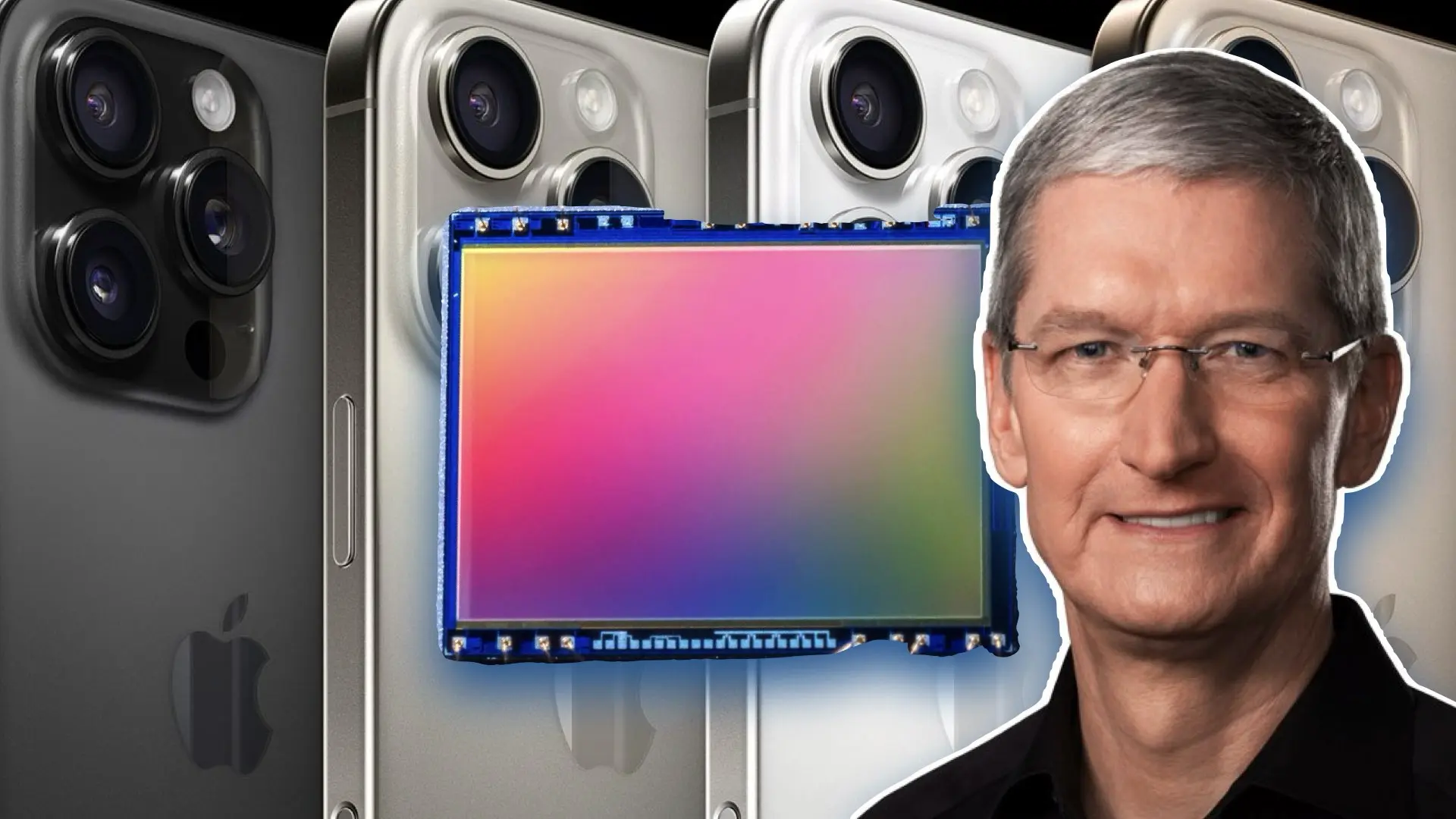 Will Apple Implement a Large Sensor in its Next iPhone?
Taken together with other recent Apple filings on foldables, including object detection on the display before closing, this new patent suggests a clear direction. Apple is trying to be the company that makes foldables feel boringly reliable. For us, the story is less about flexible glass as a cool trick and more about what that reliability unlocks:
foldable iPhones that creators can trust as daily cameras
foldable iPads that can act as rugged field monitors and editing stations
future Apple devices that blur the line between viewer, monitor, and control surface
The same philosophy that turns an iPhone into a serious cinema tool in Turn Your iPhone Into A RED Monstro is visible here on the display side. The hardware evolves so that cinematography workflows can safely sit on top of it.
 Turn your iPhone into a RED Monstro
This patent is about the invisible engineering that makes a foldable device feel trustworthy in the hands of demanding users. A flexible display that warms itself, senses wrinkles, locks its own hinge, and politely tells you to slow down is exactly the kind of silent protection that Apple likes to build under the surface. For us, this is a strong signal that when Apple finally enters the foldable race, it will do so with a display designed for real work in real conditions. That future foldable iPhone or iPad will not just fold. It will protect itself, and by extension, protect your images.