
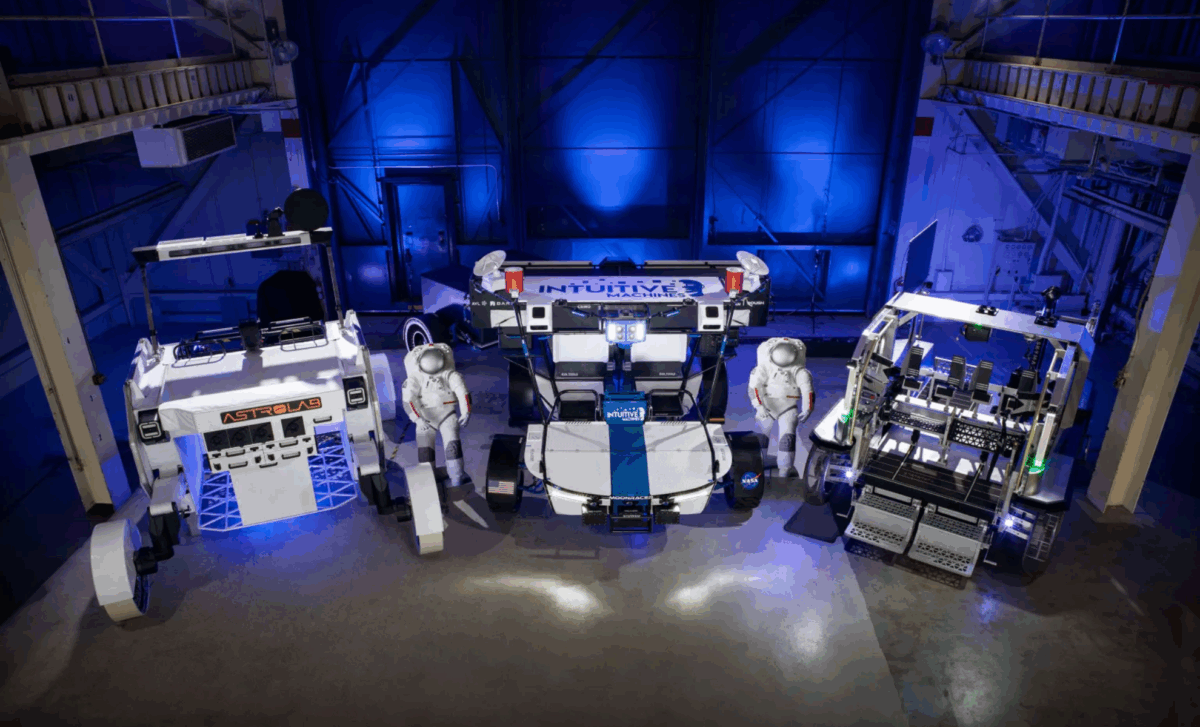
NASA’s Artemis mission is gearing up for an exciting next chapter, and a key part of that involves the development of cutting-edge lunar rovers. These new rovers will play a pivotal role in ensuring astronauts can explore and work on the Moon’s surface more effectively. With several companies in the running to provide these advanced vehicles, the stakes have never been higher. According to recent updates, NASA is already seeing impressive prototypes from these companies, signaling a big leap forward in space exploration.
The Race to Build the Next-Gen Lunar Rovers
The competition to design and build NASA’s next-generation lunar rovers is heating up. As the Artemis program moves closer to sending astronauts back to the Moon, the demand for a durable, efficient, and versatile rover has never been greater. These vehicles will not only serve as transportation across the Moon’s rugged terrain, but they will also carry essential supplies and equipment to astronauts working on the lunar surface. The rovers must withstand extreme conditions, including temperature swings of up to 300°F, making the technology and innovation behind them critical to the success of the mission.
Steve Munday, the Lunar Terrain Vehicle (LTV) project manager, expressed his enthusiasm about the progress so far:
“We are excited to have mockups from all three LTV commercial providers here at Johnson Space Center. This is the first major test milestone within the Lunar Terrain Vehicle Services contract and to have actual rovers delivered only four months after these companies were awarded is remarkable.”
This rapid progress signals a promising future for NASA’s lunar ambitions, with several companies already advancing their designs and meeting crucial milestones.
NASA’s Vision for Moon Exploration
NASA’s Artemis program is about much more than just landing astronauts on the Moon; it’s about creating a sustainable presence on the lunar surface. The goal is to lay the groundwork for future missions to Mars, and the successful deployment of these rovers will be a key component. NASA envisions a series of missions that will require robust transportation systems to help astronauts navigate the Moon’s challenging landscape. The lunar rovers are designed to help astronauts traverse difficult terrains, including craters, boulders, and hills, all while carrying crucial scientific equipment and samples back to the lunar lander.
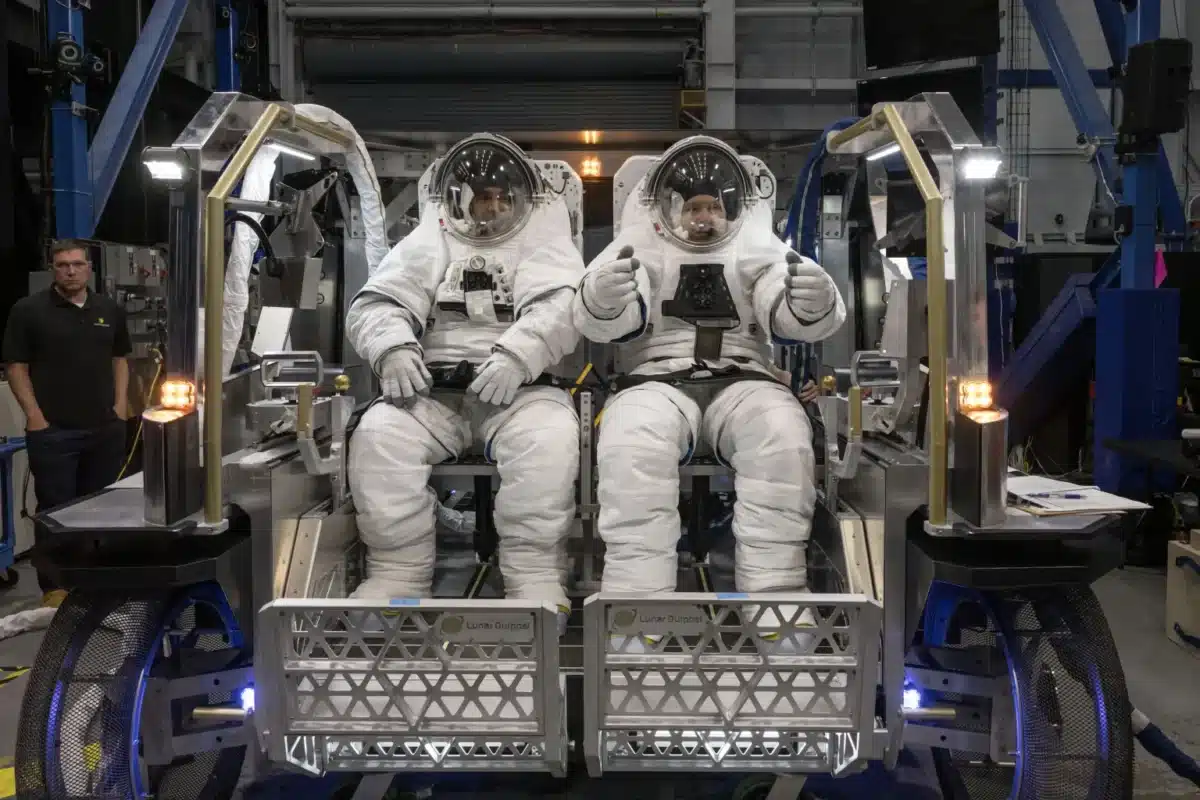 NASA astronauts RAJA Chari ( left) and Randy Bresnik (right) sit inside Lunar Outpost’s Eagle. Credit: NASA/ David DeHoys
These rovers will be equipped with technology designed to handle extreme lunar conditions. The mobility systems will allow astronauts to cover greater distances, while the rovers’ onboard labs and storage will make long-term exploration much more feasible. They will also serve as a platform for future experiments that could expand our understanding of the Moon and space itself.
The Companies Competing for a Spot on the Moon
The Lunar Terrain Vehicle (LTV) Services contract has attracted a number of private companies eager to contribute to NASA’s vision. The race is between three commercial providers, each offering unique designs and features. From rugged, all-terrain vehicles to sophisticated, high-tech machines, these rovers are not just modes of transportation but integral parts of the exploration mission. NASA has ensured that each contender meets rigorous requirements, including high mobility, energy efficiency, and the ability to operate in the harsh conditions of the Moon.
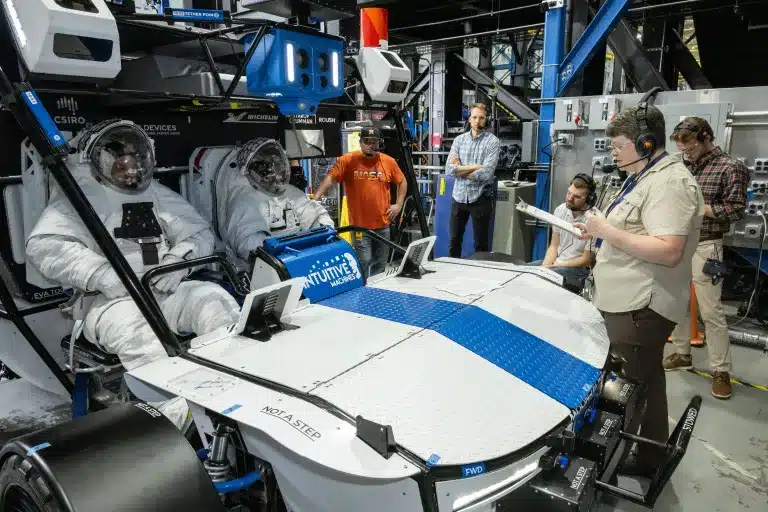 NASA engineer Dave Coan (left) and NASA astronaut Jessica Watkins (right) sit inside Intuitive Machines’ Moon RACER. Credit: NASA/ James Blair
Each company is working closely with NASA to refine their designs, ensuring that their rovers can carry out scientific objectives while also keeping astronauts safe. The technology being developed could revolutionize how we explore celestial bodies, with the potential to scale up for missions to other planets in the future. The cooperation between NASA and private industry marks a new era in space exploration, one that blends public and private efforts to achieve extraordinary goals.
A Leap Toward Mars and Beyond
While the lunar rovers are a major part of NASA’s Artemis program, they are also seen as stepping stones toward even more ambitious goals. The lessons learned from the Moon missions will inform the agency’s next big goal: sending humans to Mars. The rovers designed for lunar exploration will provide critical insights into building vehicles capable of surviving the even more challenging environment of the Red Planet. As such, the technology being tested on the Moon today may very well play a role in humanity’s journey to Mars and beyond.
Steve Munday also highlights the importance of speed and efficiency in meeting the timeline for the Artemis mission: “To have actual rovers delivered only four months after these companies were awarded is remarkable.” This rapid pace is crucial in maintaining the momentum of NASA’s ambitious space exploration goals, particularly as the agency works to establish a long-term human presence on the Moon.