
Even after the worst season in franchise history, I still miss baseball.
In the offseason, there are plenty of other sports to watch that keep you entertained, but it’s not the same as baseball.
This year, about two months after the Rockies 2025 season ended and about four months before the 2026 season begins, I am grateful for Rocky Mountain PBS and its recent “Colorado Experience” episode, United by Baseball, which looks at the treasured and diverse history of baseball in the Centennial State.
If you’ve never watched “Colorado Experience,” the series is comprised of amazing 30-minute mini-documentaries, spanning 12 seasons that explore different parts of Colorado’s past: from “South Park City” and “Camp Hale” to “Palisade Peaches” and “Return of the Buffalo,” I have never seen one that wasn’t interesting.
When I heard there was a new episode about baseball, I couldn’t wait to watch. And United by Baseball didn’t disappoint.
If you wondered how it looked at the time, Paul Langendorfer, the commissioner of the Colorado Vintage Base Ball Association, provides the details. Formed by a group of Civil War reenactors, who decided to combine their passion for history with their love of baseball in creating the league in 1993, they play by 1864 rules, meaning no gloves, a ball with a “lemon peel” stitch pattern, underhand pitching, wonderful cheers, and much more.
With commentary from historians, generational baseball families and people of all ages who love the game, it was a lovely homage to America’s pastime in Colorado. Covering the slow creep of the game West, which was accelerated by the Civil War, the game came to Colorado with the gold rush in 1858 — 18 years before the territory even became a state.
The show then highlights the diversity of teams that popped up in mining towns (like the Leadville Blues), farming communities (like the legendary Greeley Grays) and by companies around Denver (like the renowned White Elephants).
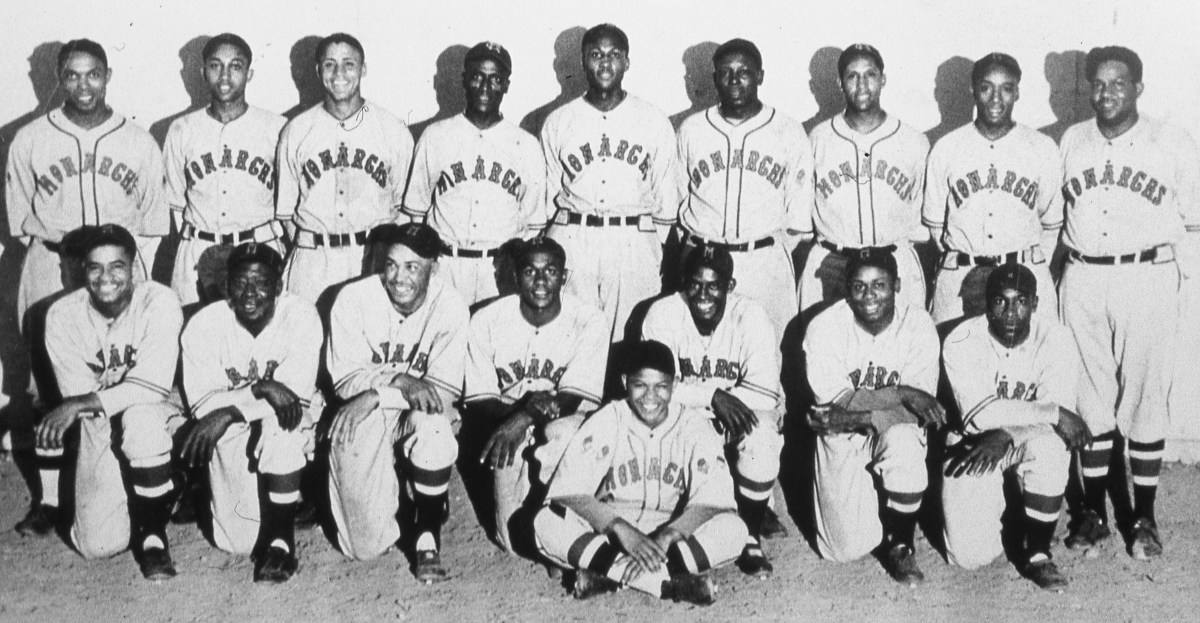
It also shows newspaper clips and photos from the famous Denver Post Tournament, which was known as the Little World Series of the West because it drew the best non-MLB teams from all around the country at a time when the MLB didn’t stretch beyond St. Louis. In 1934, the Kansas City Monarchs (pictured above) from the Negro Leagues were invited to the tournament, marking the first major tournament where Black and white teams played together.
Drawing press from around the country, the tournament made a significant mark on the baseball world, according to historian Jay Sanford.
“Without the Denver Post Tournament, Jackie Robinson would not have broken the color barrier in 1947,” Sanford said in the episode. “It would have been later. It is a crown for this city to have done something like that.”
In 2022, when the lockout delayed the start of the MLB season, I used the opportunity to explore the history of baseball in Colorado in a five-part series. It was so much fun to learn about the game that brought people from all walks of life together.
While it was great to see photos and hear experts talk about the teams I highlighted in that series, United by Baseball also taught me much more. As hard as it was seeing footage of and hearing stories about Japanese Americans being rounded up and put into internment camps in 1942, it was powerful to see photos of the baseball teams they formed after they had been removed from their homes with only what they could carry and sent to Amache and other camps across the country.
Thousands of Japanese Americans were forced to live in military-style barracks at Amache, near Granada in southeastern Colorado, from 1942 to 1945. One expert in the show, April Kamp-Whittaker, Co-Director Amache Community Archaeology Project, says Amache “historically was talked about as a relocation center, but this is really a euphemistic term for what is essentially a concentration camp for about 8,000 American legal residents and citizens of Japanese ancestry.”
With Japanese Americans playing baseball throughout the United States starting in the late 1800s, they formed teams and set up leagues for a sense of community and for joy in terrible circumstances.
“The Japanese and Japanese Americans thought baseball was their show of loyalty to the United States,” said Millie Kenko Morimoto King, board member of the Japanese American Resource Center of Colorado, in the episode. “They did everything they could to prove that they were loyal American citizens.”
For those who then moved to Denver after the internment camps were closed, Japanese American baseball became a staple at Sonny Lawson Park at 23rd and Welton streets on the edge of Five Points in Denver.
The show then flashed forward to today, highlighting immigrants from Venezuela who are able to coach and play on youth teams as a way to honor their former home and their new one by playing a game that is beloved in both places. Even in a time when politics are greatly divided, the show served as a testament to the fact that we are all human beings with more in common than we have differences — and that baseball can be one of the best ways to unite us.
“Baseball is just a really wonderful lens for understanding our shared history together and how we got to now,” Jason Hanson, the chief creative officer and director of interpretation and research at History Colorado, said in the episode. “This is what the game can do for us. It can take us out of our everyday worries and help us appreciate these really extraordinary moments. And they are moments that come just like that, and then they are gone again. That’s another beautiful part of the game, you can’t look away.”
During this holiday season of gratitude, I am grateful for PBS for telling this story, for the power of the game to bring people together, and for the amazing past, present, and future of baseball in Colorado.
For the Rockies, it’s “a new beginning.” Having change going into 2026 is very exciting, and I am very grateful.
Recent Projection Sees Rockies Infielder Return to High-End Form | SI.com
Ezequiel Tovar struggled wtih injuries and performance in 2025 compared to his previous seasons. This examines FanGraphs’ projections for the shortstop and how he could be better than ever in 2026.
One Black Friday 2025 free-agent deal for every MLB team | The Athletic ($)
Andy McCullough pairs up a free agent with every team, including the Rockies. He suggested that the Rockies pick up former Houston Astros outfielder Chas McCormick.
Please keep in mind our Purple Row Community Guidelines when you’re commenting. Thanks!