
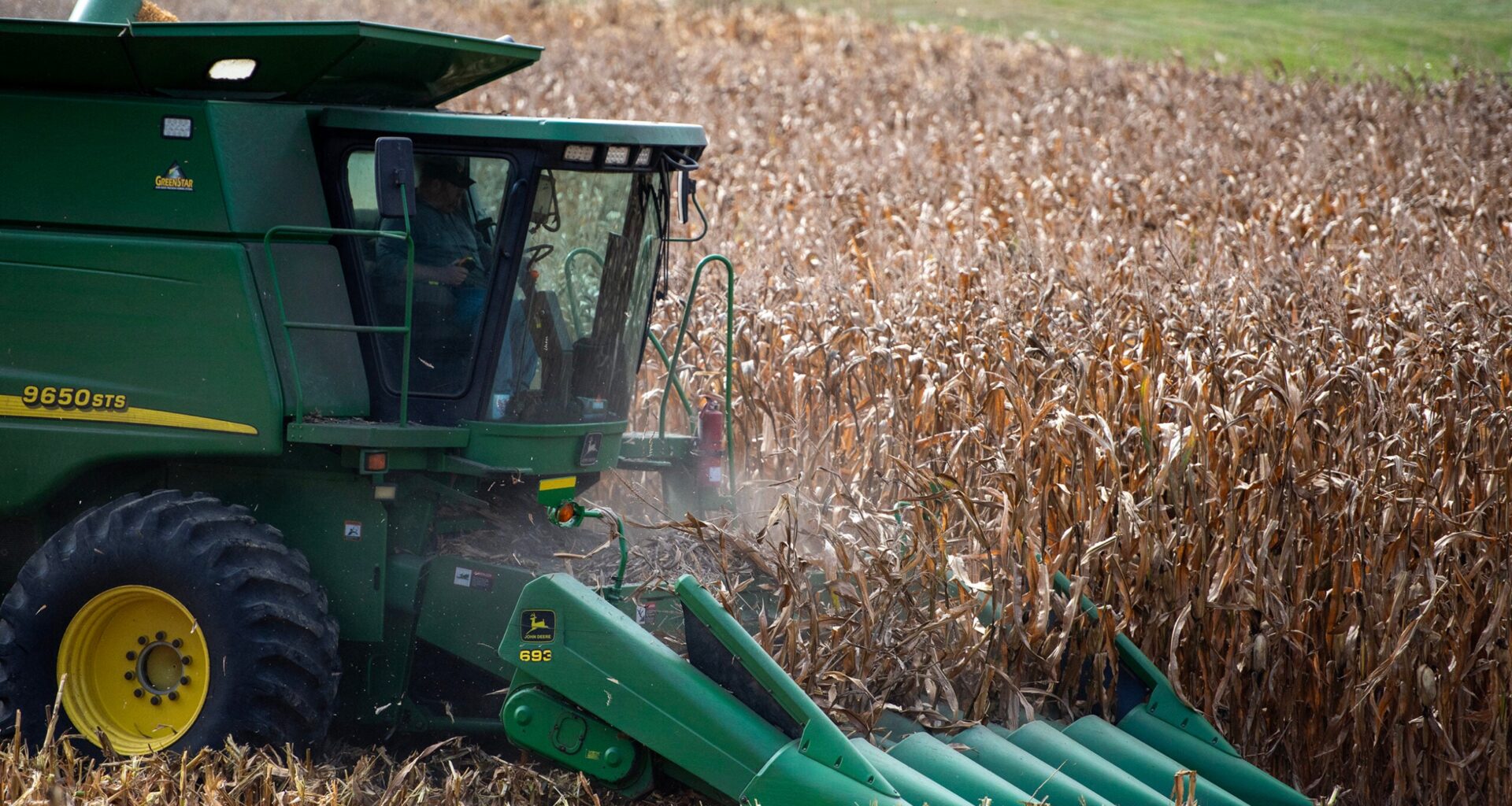
Agricultural bankers in Wisconsin and neighboring states report feeling pessimistic about farmers’ profitability at the end of 2025.
Surveys by the Federal Reserve Banks of Minneapolis and Chicago found tougher farm credit conditions in the third quarter of 2025. Surveyed farm lenders reported lower rates of loan repayment and higher demand for extensions and new loans.
The bankers projected those trends to continue for the final quarter of the year, despite the expectation for a strong corn and soybean harvest this fall. More than 80 percent of respondents to one survey expected farm income to be lower than a year ago.
News with a little more humanity
WPR’s “Wisconsin Today” newsletter keeps you connected to the state you love without feeling overwhelmed. No paywall. No agenda. No corporate filter.
Joe Mahon, regional outreach director for the Federal Reserve Bank of Minneapolis, said during a webinar on the data that a continued slump in crop prices is driving farm incomes down.
“We’re seeing, overall, the market conditions are sort of dominating,” Mahon said during the presentation. “Strong production should offset some of (the lower prices), so that’s good news to farmers. But we’re not necessarily seeing that balance out in terms of higher income because prices are so low.”
Rene Johnson, senior vice president of agricultural lending at Lake Ridge Bank, told WPR that the farmers she works with in southern Wisconsin are eager to see what their balance sheets look like at the end of harvest.
Producers who were able to lock in a profitable sale price at the start of the year or who found discounts on fertilizer and other inputs will be better off, she said. Like most industries, farmers have felt the squeeze of higher prices for labor, fuel and equipment thanks to inflation.
“The profit margin is tighter than it has been in a long time,” Johnson said.
But Johnson said lower repayment rates or more loan renewals don’t mean that farms are unable to pay their bills. She said the farmers who she works with are simply being more conservative with the cash they do have by making minimum payments on their loans instead of paying ahead.
Johnson said some producers have sought out ways to add income to their farm through trucking services or finishing beef cattle.
“They are being very creative and adding things that they can add easily to their farm without a lot of investment,” she said. “They’re also looking at non-productive assets that maybe they could sell to generate cash.”
The Federal Reserve Bank of Chicago found nearly half of surveyed bankers are predicting an increase in forced sales or liquidations of farm assets in the next three to six months compared to a year ago. The report highlighted that one banker in Illinois suggested profit losses in 2025 could lead to “liquidation of farmland to inject additional working capital into farming operations.”
Both Federal Reserve surveys found that farmland in the region has held steady despite tougher market conditions. In southern, central and eastern Wisconsin, lenders reported good farmland was 4 percent higher than the same time last year. Bankers in western and northern parts of the state reported a nearly 5 percent decline in land values, but Mahon cautioned that lower survey response rates in the region could affect the accuracy of that number.
Johnson said strong land values have provided more equity for farms to balance their books during a challenging market. And she said low crop prices haven’t held back the demand for land in the state.
“There is still farmland selling, and there’s still qualified buyers out there who are able to buy it,” she said.
Wisconsin Public Radio, © Copyright 2025, Board of Regents of the University of Wisconsin System and Wisconsin Educational Communications Board.