
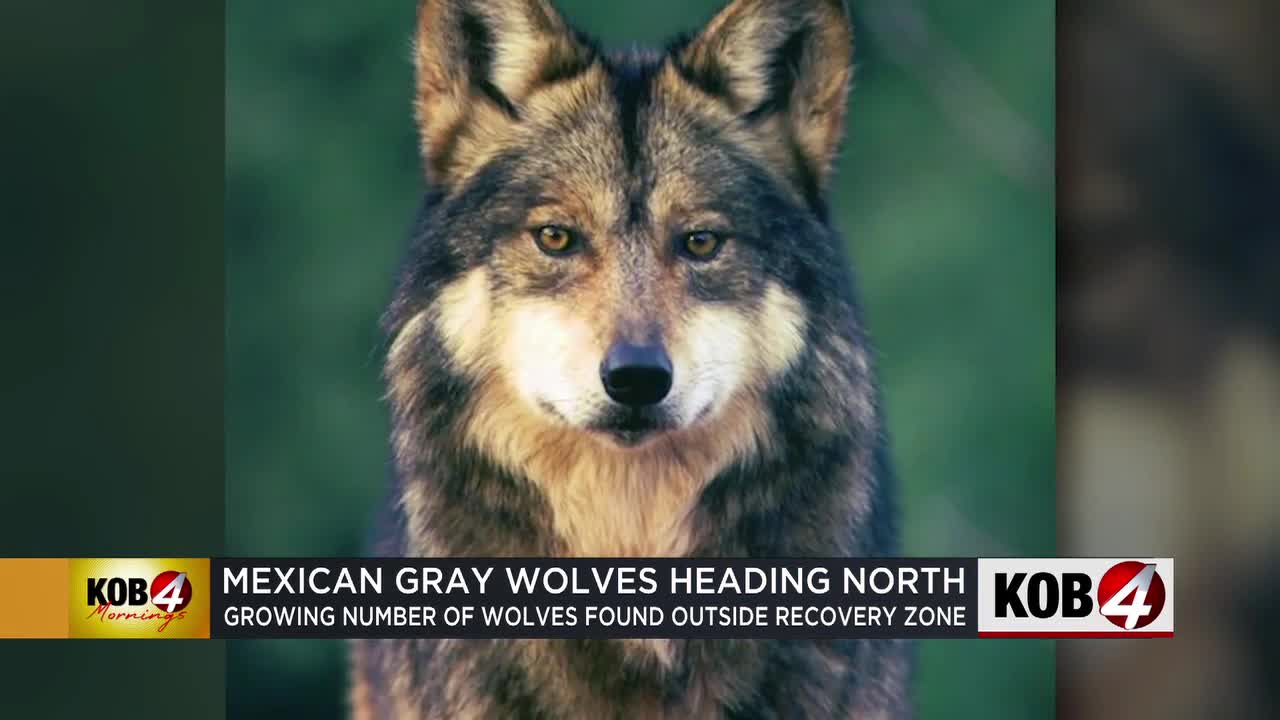
ALBUQUERQUE, N.M. – Mexican gray wolves are venturing north of their designated recovery zone, settling near Mount Taylor, about 90 miles west of Albuquerque.
Advocates say a wolf named Taylor has been spotted in the Mount Taylor area three times since May. New Mexico Game and Fish crews captured him, placed a tracking collar on him, and released him back to the Gila National Forest, where most Mexican gray wolves reside.
By July, Taylor returned to Mount Taylor. Game and Fish left him alone until October when they moved him back to the Gila. Two weeks later, Taylor was back near Mount Taylor.
Wildlife advocates respond
Greta Anderson, deputy director of Western Watersheds Project, said, “Humans need to stop being so heavy handed, and we need to let these really intelligent, independent animals exist on the landscape on their own terms.”
The Mexican gray wolf recovery program aims to help the critically endangered species recover. The recovery zone spans 98 million acres across New Mexico and Arizona.
Anderson said, “It’s pretty ridiculous that we keep enforcing this boundary, which isn’t a boundary to him.” Taylor is the fifth Mexican gray wolf to noticeably venture north of I-40, the northern border of the recovery zone.
The estimated 286 wolves in the recovery zone are supposed to stay there. Anderson noted that as the population grows, more wolves seek territories of their own by heading north.
“Allowing connectivity with the Northern Rockies wolves that have been reintroduced into Colorado will allow some of the gene flow that Mexican gray wolves really need,” Anderson also noted.
What New Mexico Game and Fish says
A spokesperson for New Mexico Game and Fish said, “Wolves may roam north of I-40 in search of a mate, however, there are no other known Mexican wolves in the area.”
New Mexico Game and Fish says decisions to capture and relocate wolves found outside the recovery zone are unique. The U.S. Fish and Wildlife Service aims to see at least 320 wolves in the wild before potentially reducing regulations.
Anderson said, “Right now they say they don’t have any plans to relocate him, but, and they shouldn’t. The wolves are defining their own recovery, and the agencies have to let them do that.”
The U.S. Fish and Wildlife Service says the recovery zone covers the wolves’ historical range, but advocates point out that Mount Taylor’s “Lobo Canyon” suggests wolves were there in the relatively recent past.
For Related Stories: Griffin Rushton