
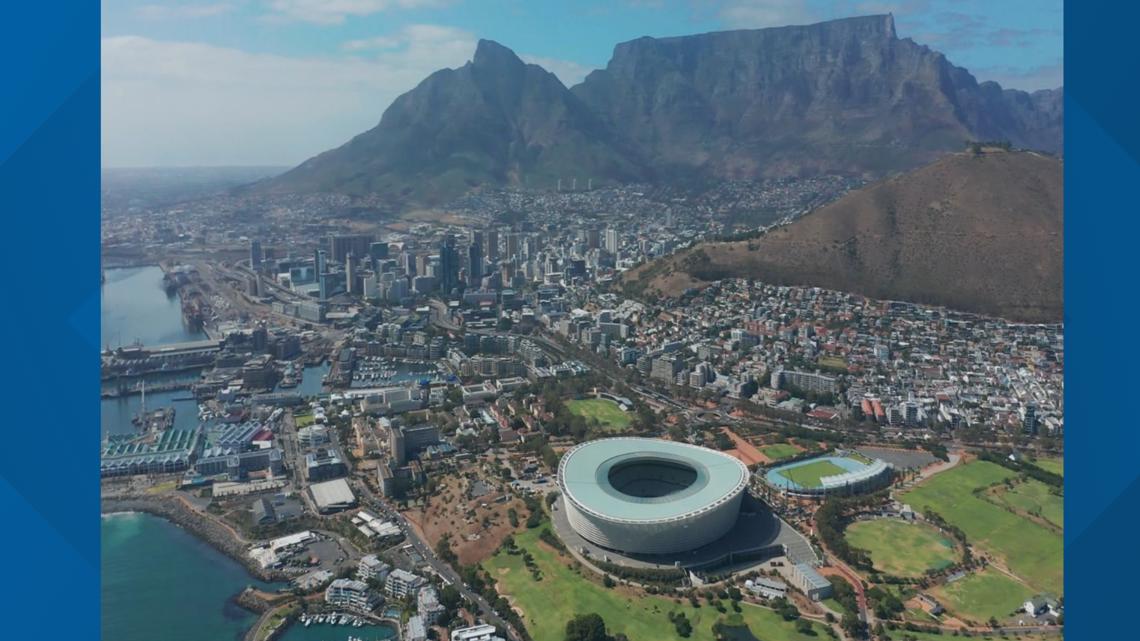
The United States did not attend last week’s G20 summit in South Africa, the first time the global economic gathering was hosted by an African country.
WASHINGTON — The United States did not attend last week’s G20 summit in South Africa—the first time the global economic gathering was hosted by the country and by the African continent.
President Donald Trump said Friday on X that the U.S. delegation skipped the summit because, in his view, “the South African Government refuses to acknowledge or address the horrific Human Rights Abuses endured by Afrikaners, and other descendants of Dutch, French, and German settlers.” He added, “They are killing white people and randomly allowing their farms to be taken from them.”
Those claims—long disputed and not substantiated by independent data—were swiftly rejected by South African President Cyril Ramaphosa.
Trump further announced that when the U.S. hosts the 2026 G20 summit in Miami, South Africa “will NOT receive an invitation.”
Ramaphosa’s office called Trump’s remarks “regrettable.”
“We’ve heard talk of Poland being invited instead of South Africa,” said Dr. Phiwokuhle Mnyandu, Assistant Director of the Center for African Studies at Howard University. “It may appear South Africa is being replaced, but several European leaders—including Germany’s chancellor—have stated clearly that no G20 member can simply be excluded.”
A Year of Strained U.S.–South Africa Relations
Tensions between the two nations escalated earlier this year after President Ramaphosa signed legislation allowing for the seizure of private land without compensation under certain limited conditions. The law is intended to address deep economic inequalities rooted in apartheid, but critics—including U.S. officials—say it disproportionately targets White landowners.
WUSA9’s Larry Miller reported from Johannesburg in 2022, where both Black and White farmers described the complex history and high-stakes future of land reform.
“I support land expropriation without compensation,” said Phori Ntsane, a young Black farmer in Pretoria. “My worry is what we do with the land we have currently.”
White farmers expressed concern that uncompensated land seizures could destabilize the agricultural sector.
“I’ve paid for my land by working very hard for it,” said farmer Koos De La Rey. “I didn’t inherit it. I started with nothing, worked long days for many years, and paid for the land I own.”
Outrage over alleged discrimination against White South Africans prompted the Trump administration to grant asylum to a group of applicants earlier this year. A plane carrying the refugees landed at Dulles International Airport in May.
Trump also said he would halt all U.S. payments and subsidies to South Africa.
“The United States is more important to South Africa than the country is economically,” Dr. Mnyandu said.
The U.S. is South Africa’s second-largest trading partner, but South Africa is considered a vital strategic ally as Washington works to strengthen diplomatic, security, and economic engagement across the African continent.
“South Africa and the United States are indispensable to one another,” Dr. Mnyandu added.